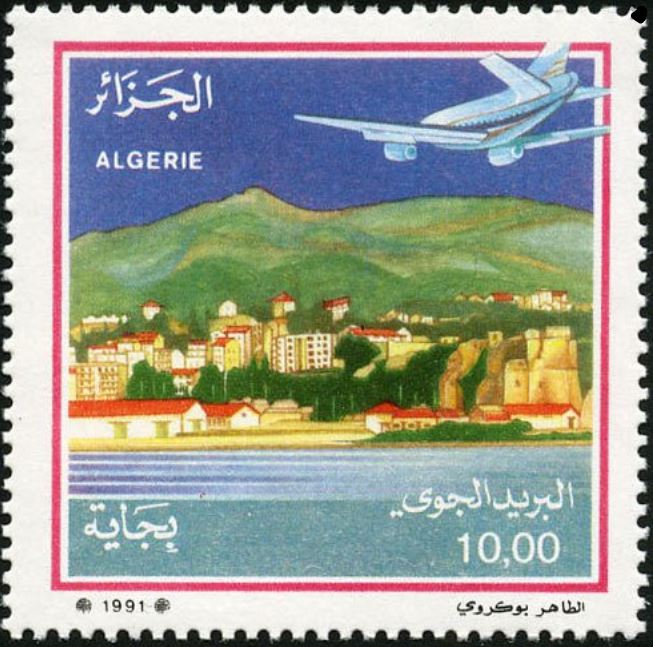
Béjaïa Aerial views
In the current economic context, succeeding in international economic competition requires being at the cutting edge of information technologies and services. The post office has always been present and attentive to needs by offering offers for the delivery of mail on an occasional or regular basis, the sending of parcels or the development of its customer base through marketing campaigns, the primary objective being to consolidate its position as a privileged partner by offering a complete set of services. For the delivery of its mail, the Algerian post uses all means and routes of land and air transport. The national air transport and work company Air Algérie is responsible, in accordance with the National Economic and Social Development Plan and the provisions of Law No. 64-166 of June 8, 1964, of ensuring, among other things, regular and non-regular public transport of people, luggage, mail, as well as activity related to freight. The Air Algérie fleet includes 43 aircraft for passenger transport and 2 for freight and mail. It provides daily connections over a length of 13,000 km on the national network, divided into 3 zones: north-north, north-south and south-south. For the international market, the trend is dominated by a significant flow towards France then Europe (Europe 1 and Europe 2), the Maghreb and the Middle East and, finally, Africa. The overall volume of freight traffic is estimated at 30,000 tonnes. Air Algérie provided nearly 26,000 tonnes of postal traffic for this year. Created in the same way as 19 other state aerodromes, by decree of April 1, 1982, and confirmed in their classification by executive decree n°89-50 dated April 18, 1989, the Béjaïa and Annaba aerodromes have experienced regular international traffic since their opening. The new status of these aerodromes dictates a new equipment plan which must meet material and safety requirements. The infrastructure component is covered by the extension of repair work on landing strips and taxiways.