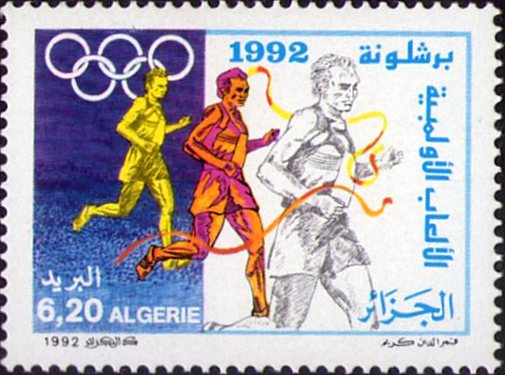
Summer Olympic Games, Barcelona (Spain)
Many global geopolitical events occurred during the few years preceding the major event of the 25th Olympic Games in Barcelona, in 1992. These changes influenced the Olympic Games. In the years following 1988, apartheid was abolished in South Africa, allowing the country to participate in the Olympic Games again for the first time since 1960.
Then there was the fall of the Berlin Wall and the reunification of West and East Germany, as well as North and South Yemen. The USSR was divided into fifteen distinct countries. Thus, the independent teams of Estonia and Latvia made their first appearance after their participation in 1936 and Lithuania entered its first team since 1928.
The other former Soviet republics participated as a "unified team", although each winner was honored by raising the flag of their own republic. With the exception of Palestine, still without a national Olympic committee, 169 nations found themselves in the games family. The great images of the Barcelona games were illustrated by the victory of the British Linford Christie who, at 32 years old, became the oldest champion in history in the 100m, the mastery of the Belarusian Vitaly Scherbo, conqueror in the gymnastics competition by totaling six medals, without forgetting the supremacy of the Dream Team which illuminated the basketball tournament.
The domination of the Hungarian Kristina Egerszegi, three-time Olympic swimming champion, also marked the Barcelona Olympics. For Algeria, the victory of Algerian Hassiba Boulmerka in the 1,500m gives our country its first Olympic title.
Then there was the fall of the Berlin Wall and the reunification of West and East Germany, as well as North and South Yemen. The USSR was divided into fifteen distinct countries. Thus, the independent teams of Estonia and Latvia made their first appearance after their participation in 1936 and Lithuania entered its first team since 1928.
The other former Soviet republics participated as a "unified team", although each winner was honored by raising the flag of their own republic. With the exception of Palestine, still without a national Olympic committee, 169 nations found themselves in the games family. The great images of the Barcelona games were illustrated by the victory of the British Linford Christie who, at 32 years old, became the oldest champion in history in the 100m, the mastery of the Belarusian Vitaly Scherbo, conqueror in the gymnastics competition by totaling six medals, without forgetting the supremacy of the Dream Team which illuminated the basketball tournament.
The domination of the Hungarian Kristina Egerszegi, three-time Olympic swimming champion, also marked the Barcelona Olympics. For Algeria, the victory of Algerian Hassiba Boulmerka in the 1,500m gives our country its first Olympic title.