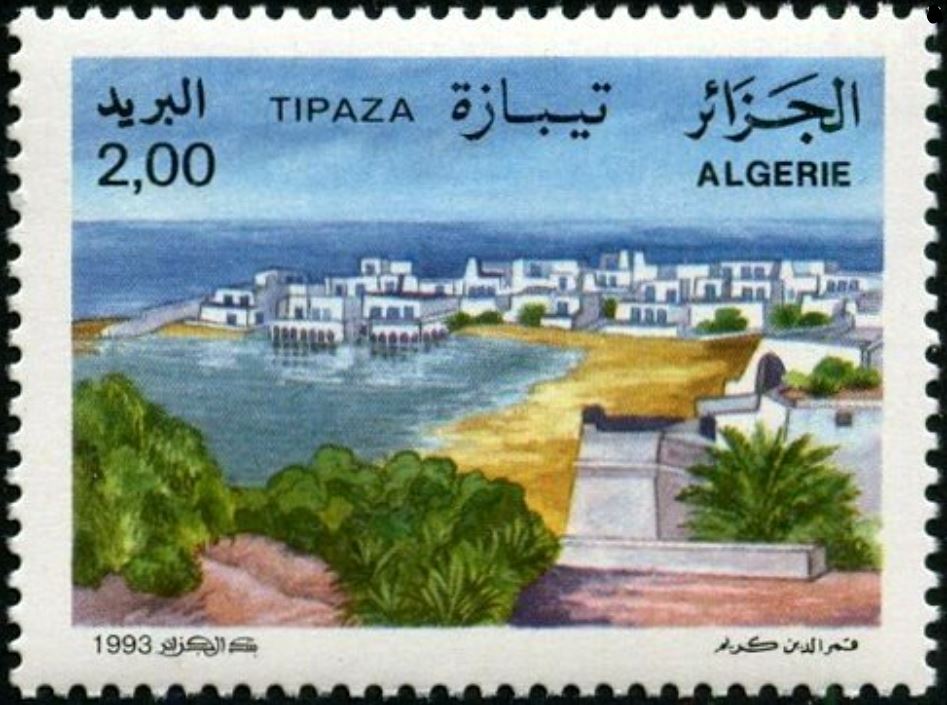
Tipaza
Tipaza was one of the most beautiful residential towns on the Mediterranean coast. Its ruins bear witness to its ancient splendor. The most important part of the archaeological park is made up of Roman ruins and monuments, but it also contains vestiges of the Punic period which dates from the 5th and 6th centuries BC.
The location of the Punic necropolis, outside the city wall, suggests that the dimensions of the city, at this time, were significant and that the Numidians found there a basis for the establishment of a complementary urban center which became Caesarea, capital of Caesarian Mauretania.
The monumental western gate, called the Caesarea Gate, shows us the interest shown by Juba Il in this city which experienced true splendor under his reign. Like all Roman towns, Tipaza has two main streets: the Decumanus Maximus and the Cardo. The Decumanus Maximus starts from the monumental western gate and constitutes a section of the road which linked Caesarea to Icosium.
The Cardo is the perpendicular road which angles with the Decumanus in the center of the city. It extends towards the sea. This path, paved with flagstones, gives an underground glimpse of the remarkable sewers and pipes. From the Cardo which overlooks the sea, the view is of extraordinary beauty.
Following the Decumanus Way towards the east, still close to the sea, a small stepped path enters the oldest sector of Tipaza, covered in maquis. There is a judicial basilica dating from the 3rd century, where the magnificent slave mosaic was discovered, currently on display at the Tipaza museum. The forum, above the judicial basilica, has very well preserved all its slabs, its outbuildings, its stable, its tribune and a temple.
The location of the Punic necropolis, outside the city wall, suggests that the dimensions of the city, at this time, were significant and that the Numidians found there a basis for the establishment of a complementary urban center which became Caesarea, capital of Caesarian Mauretania.
The monumental western gate, called the Caesarea Gate, shows us the interest shown by Juba Il in this city which experienced true splendor under his reign. Like all Roman towns, Tipaza has two main streets: the Decumanus Maximus and the Cardo. The Decumanus Maximus starts from the monumental western gate and constitutes a section of the road which linked Caesarea to Icosium.
The Cardo is the perpendicular road which angles with the Decumanus in the center of the city. It extends towards the sea. This path, paved with flagstones, gives an underground glimpse of the remarkable sewers and pipes. From the Cardo which overlooks the sea, the view is of extraordinary beauty.
Following the Decumanus Way towards the east, still close to the sea, a small stepped path enters the oldest sector of Tipaza, covered in maquis. There is a judicial basilica dating from the 3rd century, where the magnificent slave mosaic was discovered, currently on display at the Tipaza museum. The forum, above the judicial basilica, has very well preserved all its slabs, its outbuildings, its stable, its tribune and a temple.