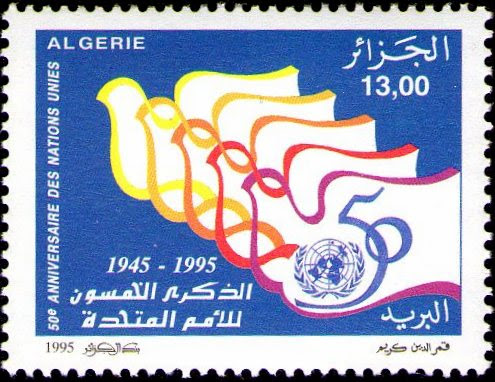
Fiftieth anniversary of the UN
Founded in 1945 in San Francisco (United States of America), the United Nations is celebrating its fiftieth anniversary this year as an international institution with a universal dimension. The objectives and principles that prevailed at the creation of the UN still remain the purpose of this institution today, even if the landscapes offered by the international community have evolved over time.
Indeed, “maintaining international peace and security, developing friendly relations between nations, achieving international cooperation by resolving economic, social, cultural or humanitarian problems and developing respect for human rights and fundamental freedoms” remain the essential goals assigned to the UN by the international community. Through the dialogue and consultation that it offers to the nations of the planet, the UN is based on the sovereign equality of all its members who must fulfill the obligations listed in the Charter of the United Nations. The UN has organs charged with missions and powers necessary to carry out its functions and achieve its objectives.
This is how the General Assembly, the Security Council, the Economic and Social Council, the Trusteeship Council, the International Court of Justice, the General Secretariat and seven major commissions summarize the prerogatives linked to the multiple aspects and subjects enshrined in the Charter of the United Nations. The various questions of political life and the economic, social and cultural problems of the international community are investigated and dealt with by the competent structures of the United Nations system which also has institutions specialized in the definition and implementation of particular programs in favor of States or groups of Member States.
To date, the specialized agencies of the UN have initiated significant programs of cooperation, mutual aid, expertise and assistance for its member states on issues of general interest for the economic and cultural balance of member nations, as well as the safeguarding of the various heritages of humanity. During its four decades of existence, the UN has equipped itself with organs and institutions as the world and its community problems have evolved, in the direction of a dynamic approach to realities.
This constant requirement to listen to today's world with its apprehensions and hopes makes the UN an institution with arduous and complex tasks facing the challenges of ignorance, disease, poverty and domination still present in many regions of the world. At the dawn of the 21st century, the UN, as an institution fundamentally focused on peace and cooperation, still has several missions to accomplish even though, fifty years later, all of humanity owes it a lot.
Indeed, “maintaining international peace and security, developing friendly relations between nations, achieving international cooperation by resolving economic, social, cultural or humanitarian problems and developing respect for human rights and fundamental freedoms” remain the essential goals assigned to the UN by the international community. Through the dialogue and consultation that it offers to the nations of the planet, the UN is based on the sovereign equality of all its members who must fulfill the obligations listed in the Charter of the United Nations. The UN has organs charged with missions and powers necessary to carry out its functions and achieve its objectives.
This is how the General Assembly, the Security Council, the Economic and Social Council, the Trusteeship Council, the International Court of Justice, the General Secretariat and seven major commissions summarize the prerogatives linked to the multiple aspects and subjects enshrined in the Charter of the United Nations. The various questions of political life and the economic, social and cultural problems of the international community are investigated and dealt with by the competent structures of the United Nations system which also has institutions specialized in the definition and implementation of particular programs in favor of States or groups of Member States.
To date, the specialized agencies of the UN have initiated significant programs of cooperation, mutual aid, expertise and assistance for its member states on issues of general interest for the economic and cultural balance of member nations, as well as the safeguarding of the various heritages of humanity. During its four decades of existence, the UN has equipped itself with organs and institutions as the world and its community problems have evolved, in the direction of a dynamic approach to realities.
This constant requirement to listen to today's world with its apprehensions and hopes makes the UN an institution with arduous and complex tasks facing the challenges of ignorance, disease, poverty and domination still present in many regions of the world. At the dawn of the 21st century, the UN, as an institution fundamentally focused on peace and cooperation, still has several missions to accomplish even though, fifty years later, all of humanity owes it a lot.