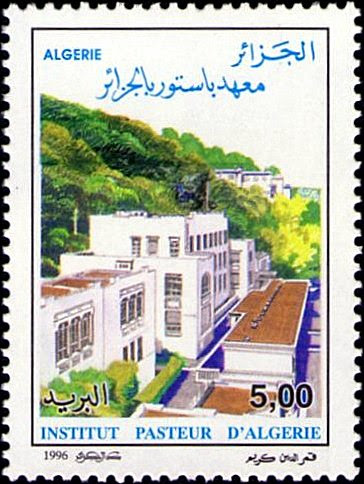
Pasteur Institute of Algiers
Created in November 1894 for the anti-rabies treatment of bitten people, the Pasteur Institute of Algiers became, on December 31, 1909, the Pasteur Institute of Algeria. On a national level, it constitutes a research and reference center in the field of infectious diseases both from the point of view of human and animal health.
The missions assigned to the Pasteur Institute of Algeria to respond to all these problems concern different areas: the development and production of vaccines, serums, reactive culture media intended for the prevention, treatment and diagnosis of infectious diseases (anti-rabies vaccine and serum for human use, anti-rabies vaccine for veterinary use, antiscorpion serum, antiviperin serum, etc.); the development of diagnostic techniques in the field of human and animal microbiology and immunology, and the standardization of these methods to make them accessible to national laboratories; the training of high-level scientific executives and health personnel focused on public health needs.
The Pasteur Institute of Algeria provides a certain number of consultation services, anti-rabies treatment and international vaccinations; supply and distinction of serums, vaccines and biological products of national interest; microbiological control of water, food products, cosmetics, etc.
The Pasteur Institute of Algeria has a main establishment, located in Hamma in Algiers, housing the various diagnostic and research laboratories, production, consultation and vaccination services, the library; two annexes in Kouba, one of which is focused on the production of rabies vaccines. There is also the breeding of small laboratory animals and what is necessary for the production of therapeutic serums, as well as the vaccine and serum control laboratory. The other annex houses the veterinary microbiology center (rabies diagnosis in particular) and the anti-clavicle vaccine manufacturing center; an annex in Sidi Fredj, made up of virology and primatology centers.
The missions assigned to the Pasteur Institute of Algeria to respond to all these problems concern different areas: the development and production of vaccines, serums, reactive culture media intended for the prevention, treatment and diagnosis of infectious diseases (anti-rabies vaccine and serum for human use, anti-rabies vaccine for veterinary use, antiscorpion serum, antiviperin serum, etc.); the development of diagnostic techniques in the field of human and animal microbiology and immunology, and the standardization of these methods to make them accessible to national laboratories; the training of high-level scientific executives and health personnel focused on public health needs.
The Pasteur Institute of Algeria provides a certain number of consultation services, anti-rabies treatment and international vaccinations; supply and distinction of serums, vaccines and biological products of national interest; microbiological control of water, food products, cosmetics, etc.
The Pasteur Institute of Algeria has a main establishment, located in Hamma in Algiers, housing the various diagnostic and research laboratories, production, consultation and vaccination services, the library; two annexes in Kouba, one of which is focused on the production of rabies vaccines. There is also the breeding of small laboratory animals and what is necessary for the production of therapeutic serums, as well as the vaccine and serum control laboratory. The other annex houses the veterinary microbiology center (rabies diagnosis in particular) and the anti-clavicle vaccine manufacturing center; an annex in Sidi Fredj, made up of virology and primatology centers.