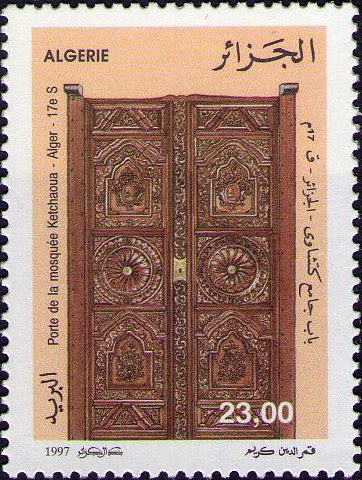
Door of the Ketchaoua Mosque - Algiers (17th century)
In Algeria, the trade of woodwork, woodwork and wood decoration constituted an activity which reflects and conveys in a very beautiful way two values: aesthetic demands and practical utility. Several types of wood were used in this trade such as thuja, cedar, pine, holm oak, cork oak, pear and olive.
The main centers of timber were in Algiers, Kabylia, Tlemcen and certain regions in the south. The main wooden works produced are: painted or carved chests, coffee tables, painted cradles, Koran doors, doors and preaching pulpits, etc.
Door of the Ketchaoua Mosque (Algiers)
This large carved wooden door is a work attributed to Ahmed Ben Lablatchi who was Amine (trustee) of the carpenter's corporation in Algiers at the end of the 18th century. This door made for the Katchaoua mosque was, in 1843, after the transformation of this building, transported to the Ali Betchine Mosque, then placed in storage at the National Museum of Antiquities in Algiers, where it is exhibited in the so-called dome room.
The main centers of timber were in Algiers, Kabylia, Tlemcen and certain regions in the south. The main wooden works produced are: painted or carved chests, coffee tables, painted cradles, Koran doors, doors and preaching pulpits, etc.
Door of the Ketchaoua Mosque (Algiers)
This large carved wooden door is a work attributed to Ahmed Ben Lablatchi who was Amine (trustee) of the carpenter's corporation in Algiers at the end of the 18th century. This door made for the Katchaoua mosque was, in 1843, after the transformation of this building, transported to the Ali Betchine Mosque, then placed in storage at the National Museum of Antiquities in Algiers, where it is exhibited in the so-called dome room.