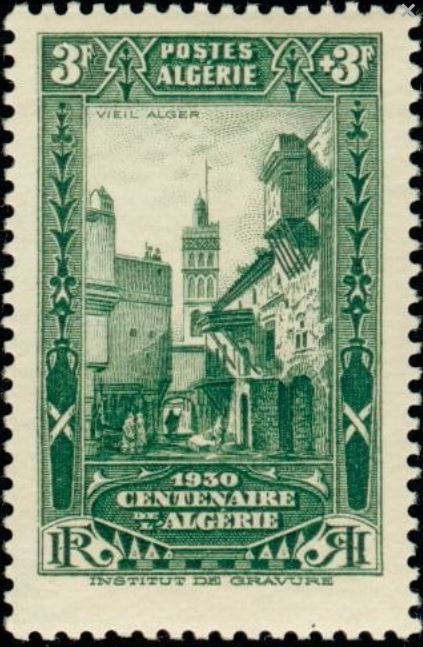
Old Algiers
Algiers (Arabic: الجزائر العاصمة), nicknamed El Bahdja ("the joyful"), El Mahrussa ("the well-guarded") or El Beida ("the white"), is the capital of Algeria and is its most populated city.
Founded in the 4th century BC. BC, as a Phoenician counter in Berber country, under the name of Ikosim, it was occupied by the Romans, the Vandals, the Byzantines and the Arabs then at the beginning of the Middle Ages by the Berber tribe of Beni-Mezghana. It was the Berber sovereign of the Zirid dynasty Bologhine ibn Ziri, in the middle of the 10th century, who founded current Algiers, under his name El-Djazaïr or Lezzayer, still used today to designate it in Arabic and Berber. It only took on its role as capital of Algeria from the period of the regency of Algiers in 1515. It was then one of the most important cities in the Mediterranean Sea between the 16th century and the beginning of the 19th century, practicing the corso, and to which the maritime powers paid a tax for the passage of their fleet. Its role as capital of the country will be confirmed during French colonization where it becomes the seat of the governor general of Algeria. Algiers was the capital of Free France from 1942 to 1944. Since the independence of Algeria in 1962, having become the capital of the Algerian state, it has housed the headquarters of the country's political institutions in addition to playing a leading role economically.
Founded in the 4th century BC. BC, as a Phoenician counter in Berber country, under the name of Ikosim, it was occupied by the Romans, the Vandals, the Byzantines and the Arabs then at the beginning of the Middle Ages by the Berber tribe of Beni-Mezghana. It was the Berber sovereign of the Zirid dynasty Bologhine ibn Ziri, in the middle of the 10th century, who founded current Algiers, under his name El-Djazaïr or Lezzayer, still used today to designate it in Arabic and Berber. It only took on its role as capital of Algeria from the period of the regency of Algiers in 1515. It was then one of the most important cities in the Mediterranean Sea between the 16th century and the beginning of the 19th century, practicing the corso, and to which the maritime powers paid a tax for the passage of their fleet. Its role as capital of the country will be confirmed during French colonization where it becomes the seat of the governor general of Algeria. Algiers was the capital of Free France from 1942 to 1944. Since the independence of Algeria in 1962, having become the capital of the Algerian state, it has housed the headquarters of the country's political institutions in addition to playing a leading role economically.