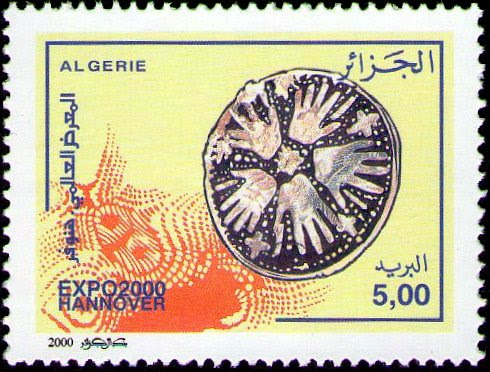
Universal Exhibition in Hannover (Germany) 2000
World's Fairs have their origins in a gigantic international industrial exhibition held at the Crystal Palace, London, in 1851, with the participation of 13,000 exhibitors and during which 5,000 prizes were awarded. A pioneer in international exhibitions - the first took place in 1756 - Great Britain made the event a success, even generating a profit of 200,000 pounds sterling. Other European and American cities host exhibitions which, depending on their scale and the quality of foreign participation, are qualified as international or universal.
In 1928, the major exhibiting countries signed the Paris Convention which stipulated the creation of an organization called upon to regulate, supervise and label exhibitions. The International Exhibition Bureau (BIE) was thus created and active from 1931. It defined a universal exhibition as one in which the participating countries build their pavilions in an architectural manner consistent with their culture and traditions, unlike specialized international exhibitions.
The Universal Exhibition, whose maximum duration is six months, must be a vast international gathering where understanding between peoples in progress should be highlighted. This noble ideal is maintained by as wide a participation as possible and the multiplication of congresses, seminars, round tables, symposia and thematic conferences during the holding of the event.
The Universal Exhibition in Hanover (Germany), from June to October 2000, will have as its dominant theme "Man, nature and technology", or the difficult cohabitation between technology, environment and protection of humanity which constitutes the major challenge of the new millennium.
In 1928, the major exhibiting countries signed the Paris Convention which stipulated the creation of an organization called upon to regulate, supervise and label exhibitions. The International Exhibition Bureau (BIE) was thus created and active from 1931. It defined a universal exhibition as one in which the participating countries build their pavilions in an architectural manner consistent with their culture and traditions, unlike specialized international exhibitions.
The Universal Exhibition, whose maximum duration is six months, must be a vast international gathering where understanding between peoples in progress should be highlighted. This noble ideal is maintained by as wide a participation as possible and the multiplication of congresses, seminars, round tables, symposia and thematic conferences during the holding of the event.
The Universal Exhibition in Hanover (Germany), from June to October 2000, will have as its dominant theme "Man, nature and technology", or the difficult cohabitation between technology, environment and protection of humanity which constitutes the major challenge of the new millennium.