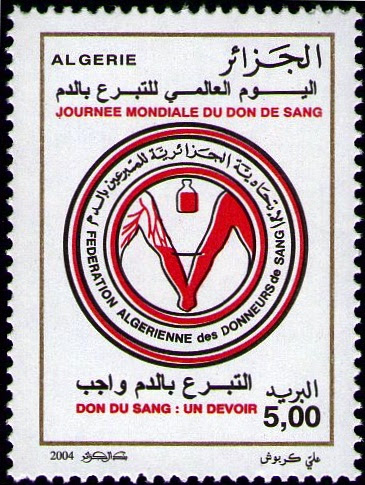
World Blood Donor Day
Blood transfusion, as everyone knows, consists of passing a quantity of blood from a healthy subject, called a donor, to a sick subject, called a recipient. This therapeutic operation saves many human lives every day.
Without it, delicate surgical interventions (cardiac surgery, neurosurgery, organ transplants, etc.) would be impossible.
Today, blood transfusion constitutes a true institution of public utility and is an integral part of the health organizations of each country.
Blood donation has become a common act of daily life, practiced by all social categories, provided they are in good health and aged between 18 and 65 years old.
In 1975, the World Health Assembly already adopted resolution WHA28.72 inviting WHO Member States to establish national blood transfusion services based on voluntary and free blood donation and to take the necessary measures to govern the operation of these services and protect the health of blood donors and its derivatives.
On a national scale, the Algerian Federation of Blood Donors (F.A.D.S) was created and approved on February 17, 1977. It established its national headquarters at 52, Bd.Mohamed V, in Algiers, and has 27 Wilaya committees.
With the help of the authorities, the FADS was able to acquire around ten clino-mobiles designed for local collections which made it possible to collect the precious liquid in the most remote areas.
Seeking a large-scale socio-solidarity impact, the FADS produced a television spot regularly broadcast on the national channel, and participates in television and radio meetings. It has also established a rich awareness program through the production of posters, leaflets, stickers and other media materials distributed across the national territory. Study and information days are organized with the participation of eminent professors for mass organizations, youth movements, scouts and the student community.
It also takes the opportunity of major fundraising campaign days to symbolically reward donors by awarding diplomas of honor, medals and small gifts.
Finally, the Federation is working in collaboration with the Ministry of Health and the National Blood Agency to raise the level of blood supply, currently estimated at 300,000 bags per year.
Without it, delicate surgical interventions (cardiac surgery, neurosurgery, organ transplants, etc.) would be impossible.
Today, blood transfusion constitutes a true institution of public utility and is an integral part of the health organizations of each country.
Blood donation has become a common act of daily life, practiced by all social categories, provided they are in good health and aged between 18 and 65 years old.
In 1975, the World Health Assembly already adopted resolution WHA28.72 inviting WHO Member States to establish national blood transfusion services based on voluntary and free blood donation and to take the necessary measures to govern the operation of these services and protect the health of blood donors and its derivatives.
On a national scale, the Algerian Federation of Blood Donors (F.A.D.S) was created and approved on February 17, 1977. It established its national headquarters at 52, Bd.Mohamed V, in Algiers, and has 27 Wilaya committees.
With the help of the authorities, the FADS was able to acquire around ten clino-mobiles designed for local collections which made it possible to collect the precious liquid in the most remote areas.
Seeking a large-scale socio-solidarity impact, the FADS produced a television spot regularly broadcast on the national channel, and participates in television and radio meetings. It has also established a rich awareness program through the production of posters, leaflets, stickers and other media materials distributed across the national territory. Study and information days are organized with the participation of eminent professors for mass organizations, youth movements, scouts and the student community.
It also takes the opportunity of major fundraising campaign days to symbolically reward donors by awarding diplomas of honor, medals and small gifts.
Finally, the Federation is working in collaboration with the Ministry of Health and the National Blood Agency to raise the level of blood supply, currently estimated at 300,000 bags per year.