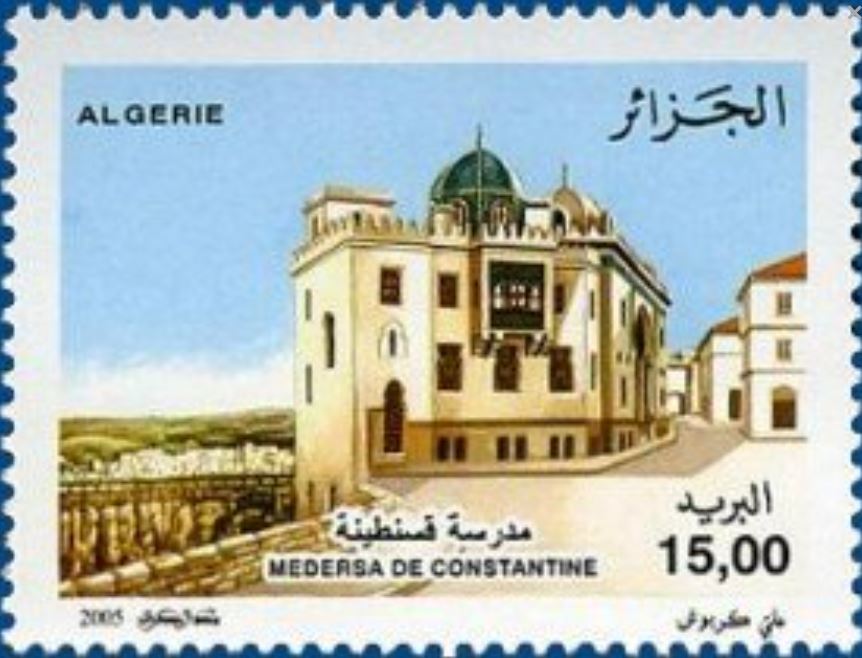
Koranic Schools The Madrasa of Constantine
Inaugurated in 1906 by the colonial authorities of the time, it was entrusted with the training of Muslim auxiliaries who were to liaise with the Muslim masses for more effective domination. The colonial administration had just taken over an ancestral tradition.
Madrasas existed and functioned before colonization. They provided higher level education to the brightest students from the primary and secondary schools adjacent to the mosques and zaouïa.
The essential historical value of this building, with its pretentiously Muslim architecture, lies in its name: madrasa, name of the higher education establishments of pre-colonial Algeria.
The Madrasa of Constantine has trained generations of Muslim auxiliaries, in four-year teaching cycles. In 1951, it was established as a French-Muslim teaching high school, before becoming a national high school eight years later.
After independence, it housed the university center and then the University of Constantine until 1970. Today, it is occupied by the 'AbdelHamid Ibn Badis' foundation.
The Zaouïas
In the 15th century, numerous zaouïas (brotherhoods), such as those of Tidjaniya, Rahmaniya, Derqaouiya, Kadiriya, Djazouliya, Senoussiya, etc. emerge in the Maghreb. The zaouïa is a real institution around which life in the region is organized. It is a place of prayer, of dikr (ritual of litanies particular to each zaouïa and each religious order). Religious knowledge is provided there and, first of all, the learning of the Koran. The zaouïas radiate throughout the country. They are chaired by a moqaddem, bearer of his message to his disciples, or khouan. The zaouïas, which have long constituted a real net enclosing in its meshes the entire social body of the country, live thanks to donations from zakat and other sadaqate.
Madrasas existed and functioned before colonization. They provided higher level education to the brightest students from the primary and secondary schools adjacent to the mosques and zaouïa.
The essential historical value of this building, with its pretentiously Muslim architecture, lies in its name: madrasa, name of the higher education establishments of pre-colonial Algeria.
The Madrasa of Constantine has trained generations of Muslim auxiliaries, in four-year teaching cycles. In 1951, it was established as a French-Muslim teaching high school, before becoming a national high school eight years later.
After independence, it housed the university center and then the University of Constantine until 1970. Today, it is occupied by the 'AbdelHamid Ibn Badis' foundation.
The Zaouïas
In the 15th century, numerous zaouïas (brotherhoods), such as those of Tidjaniya, Rahmaniya, Derqaouiya, Kadiriya, Djazouliya, Senoussiya, etc. emerge in the Maghreb. The zaouïa is a real institution around which life in the region is organized. It is a place of prayer, of dikr (ritual of litanies particular to each zaouïa and each religious order). Religious knowledge is provided there and, first of all, the learning of the Koran. The zaouïas radiate throughout the country. They are chaired by a moqaddem, bearer of his message to his disciples, or khouan. The zaouïas, which have long constituted a real net enclosing in its meshes the entire social body of the country, live thanks to donations from zakat and other sadaqate.