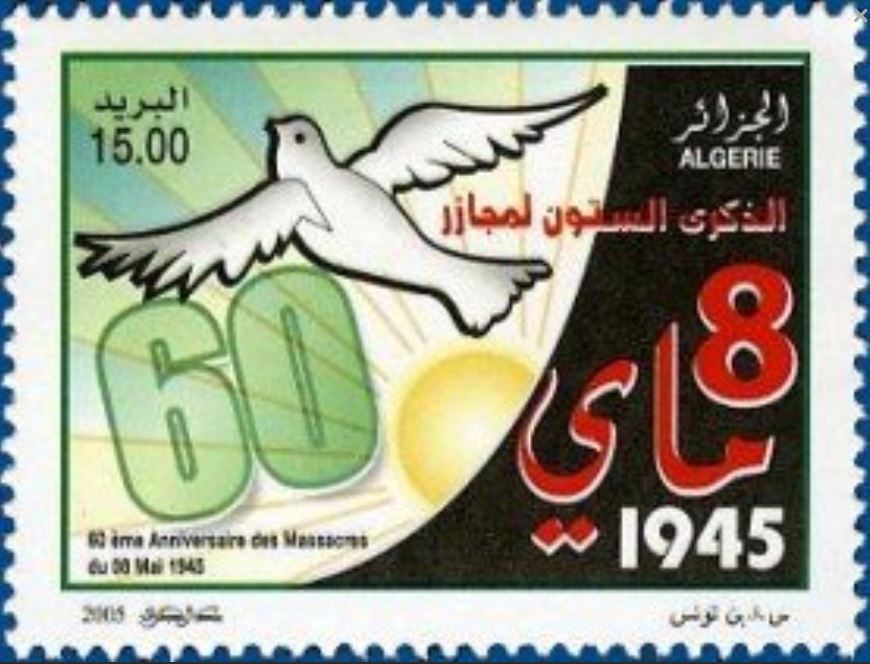
60th Anniversary of the Massacres of May 8, 1945
Efforts had been made by members of the Friends of the Manifesto and Liberty party to coordinate action and form a unified front. To do this, a propaganda campaign began in January 1945, calling on people to adhere to the demands of the Manifesto.
The AML Congress had in fact resulted in the demand for the cancellation of the system of mixed communes, of the military government in the south, of the officialization of the Arabic language as well as the release of MESALI El Hadj.
This nationwide activism had created fears among the French and they attempted to stop it through committees that aimed at reformism. But their concern to liberate their country had pushed them to silence their anger. Convinced of the need to put an end to the national movement, they were simply waiting for the right moment to deal with the Algerians.
The leaders of the national movement were preparing to celebrate the victory of the allies over Nazism, through the organization of demonstrations which would constitute a means of pressure on the French through the demonstration of the strength of the national movement and the awareness by the people of its demands.
Demonstrations took place across the entire Algerian territory on May 1, 1945 during which Algerians demanded the liberation of MESSALI El Hadj, the independence of Algeria, denouncing oppression and brandishing the Algerian flag.
These demonstrations were peaceful in nature but the French claimed to have discovered a 'revolution project' in Bougie, particularly after the assassination of two police officers in Algiers. Arrests and beatings then began and many Algerians were injured.
When the official celebration was announced for May 7, the colonists began to organize the festivities while the Algerians prepared their own festival, calling for freedom and independence after obtaining permission from the French administration to participate in the celebration of the Allied victory.
On May 8, 1945, the Algerians came out to demonstrate their joy on the occasion of the victory of the Allies which represented for them the victory of democracy over dictatorship, expressing their joy, claiming the independence of their country and the application of the principles of freedom whose standard the Allies had brandished throughout the Second World War.
The demonstrations spread across the country and intensified in Sétif, which happens to be the headquarters of the Friends of the Manifesto and Freedom. During these demonstrations, Algerians called for the liberation of Algeria and its independence.
The French reacted to the peaceful demonstrations organized by the Algerians by committing the massacres of May 8, 1945, by resorting to repression and collective massacres, using land, air and maritime forces for this. Entire villages, dechras and douars were destroyed. The repression lasted about an entire year and resulted in the deaths of more than 45,000 Algerians whose villages and property were completely destroyed. Foreign statistics counted between 50,000 and 70,000 civilians killed. It was a horrible massacre perpetrated by the French who often prided themselves on civilization, freedom and humanism.
At the end of this day of May 8, 1945, the Algerian people understood that they would only be free and independent by responding to oppressive violence with organized revolutionary violence. The blood shed would sow the seeds of resurrection and prepare for the glorious November 1, 1954.
It has been sixty years and Algeria remembers its martyrs, those who died to stop dispossession, exploitation and injustice. The place occupied by May 8, 1945 in popular memory is immense.
May 8, 1945 and November 1, 1954 are two closely linked dates which will leave an indelible mark on the history of the Algerian people.
The AML Congress had in fact resulted in the demand for the cancellation of the system of mixed communes, of the military government in the south, of the officialization of the Arabic language as well as the release of MESALI El Hadj.
This nationwide activism had created fears among the French and they attempted to stop it through committees that aimed at reformism. But their concern to liberate their country had pushed them to silence their anger. Convinced of the need to put an end to the national movement, they were simply waiting for the right moment to deal with the Algerians.
The leaders of the national movement were preparing to celebrate the victory of the allies over Nazism, through the organization of demonstrations which would constitute a means of pressure on the French through the demonstration of the strength of the national movement and the awareness by the people of its demands.
Demonstrations took place across the entire Algerian territory on May 1, 1945 during which Algerians demanded the liberation of MESSALI El Hadj, the independence of Algeria, denouncing oppression and brandishing the Algerian flag.
These demonstrations were peaceful in nature but the French claimed to have discovered a 'revolution project' in Bougie, particularly after the assassination of two police officers in Algiers. Arrests and beatings then began and many Algerians were injured.
When the official celebration was announced for May 7, the colonists began to organize the festivities while the Algerians prepared their own festival, calling for freedom and independence after obtaining permission from the French administration to participate in the celebration of the Allied victory.
On May 8, 1945, the Algerians came out to demonstrate their joy on the occasion of the victory of the Allies which represented for them the victory of democracy over dictatorship, expressing their joy, claiming the independence of their country and the application of the principles of freedom whose standard the Allies had brandished throughout the Second World War.
The demonstrations spread across the country and intensified in Sétif, which happens to be the headquarters of the Friends of the Manifesto and Freedom. During these demonstrations, Algerians called for the liberation of Algeria and its independence.
The French reacted to the peaceful demonstrations organized by the Algerians by committing the massacres of May 8, 1945, by resorting to repression and collective massacres, using land, air and maritime forces for this. Entire villages, dechras and douars were destroyed. The repression lasted about an entire year and resulted in the deaths of more than 45,000 Algerians whose villages and property were completely destroyed. Foreign statistics counted between 50,000 and 70,000 civilians killed. It was a horrible massacre perpetrated by the French who often prided themselves on civilization, freedom and humanism.
At the end of this day of May 8, 1945, the Algerian people understood that they would only be free and independent by responding to oppressive violence with organized revolutionary violence. The blood shed would sow the seeds of resurrection and prepare for the glorious November 1, 1954.
It has been sixty years and Algeria remembers its martyrs, those who died to stop dispossession, exploitation and injustice. The place occupied by May 8, 1945 in popular memory is immense.
May 8, 1945 and November 1, 1954 are two closely linked dates which will leave an indelible mark on the history of the Algerian people.