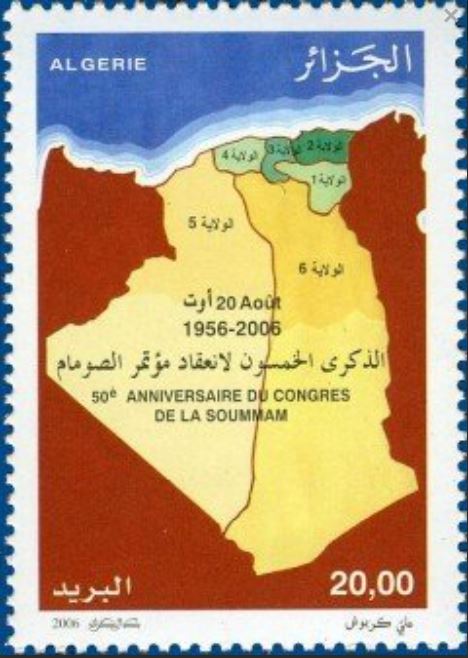
50th Anniversary of the Soummam Congress
The Soummam congress is a politico-military platform which proved essential for evaluating the first stage of the fight, for drawing the main lines for continuing armed action and for developing a plan for a peaceful solution with a view to recovering national sovereignty. It constituted an essential step in order to provide the revolution with a unified central leadership, capable of both organizing and managing the armed struggle, of unifying the military organization and of defining the political and ideological principles which will mark the path for the struggle.
He also had to think about ways to fill the gaps in supply, financing and communication gaps between regions.
After a series of meetings between the commands of the different zones, zone III, which met the conditions of security, organization and clandestinity, was chosen to accommodate and for the first time all the leaders of the FLN from the interior. The Congress took place from August 20, 1956 in a country house located in the village of Ifri, commune of Ouzelaguen, daïra of Akbou, wilaya of Bejaia.
The work of the Congress was chaired by the martyr Larbi Ben M'hidi, assisted by the martyr Abane Ramdane as Secretary General. An in-depth study of the results of the 22 months of revolutionary process was presented by the delegates of each zone (apart from zone I and the external delegation which were unable to attend), the South region had, for its part, transmitted its report to the Congress.
The delegates reviewed the weaknesses and negative aspects which had marked the outbreak of the Revolution as well as their repercussions on the internal and external scenes. After ten days of discussions, the Congress sessions resulted in the definition of important organizational frameworks which must be enriched. These frameworks were presented in the form of decisive political and military decisions, encompassing the political, military, social and ideological aspects of the Algerian Revolution. They focused on the following:
-The promulgation of a global political document likely to define the methodology of the Armed Revolution, accompanied by a vision of the perspectives, principles and bases of the Algerian State after regaining independence.
-The structuring of the Liberation Front (FLN) and the National Liberation Army (ALN) by dividing the national territory into six wilayates, each encompassing a number of zones, sectors and divisions. Algiers was established as an autonomous zone in order to facilitate communication and coordination between the zones.
-The unification of the military organization through the adoption of the same military criteria in the different combat units of the National Liberation Army.
-The creation of the legislative body which is the National Council of the Algerian Revolution (CNRA) and the executive body, the Coordination and Execution Committee (CCE) for the administration of the affairs of the Revolution.
-The affirmation of the primacy of politics over the military, and of the interior over the exterior.
These decisions largely contributed to achieving the support of all political forces having accepted the objectives of the National Liberation Front.
The Soummam Congress was a decisive turning point in the course of the National Revolution.
He also had to think about ways to fill the gaps in supply, financing and communication gaps between regions.
After a series of meetings between the commands of the different zones, zone III, which met the conditions of security, organization and clandestinity, was chosen to accommodate and for the first time all the leaders of the FLN from the interior. The Congress took place from August 20, 1956 in a country house located in the village of Ifri, commune of Ouzelaguen, daïra of Akbou, wilaya of Bejaia.
The work of the Congress was chaired by the martyr Larbi Ben M'hidi, assisted by the martyr Abane Ramdane as Secretary General. An in-depth study of the results of the 22 months of revolutionary process was presented by the delegates of each zone (apart from zone I and the external delegation which were unable to attend), the South region had, for its part, transmitted its report to the Congress.
The delegates reviewed the weaknesses and negative aspects which had marked the outbreak of the Revolution as well as their repercussions on the internal and external scenes. After ten days of discussions, the Congress sessions resulted in the definition of important organizational frameworks which must be enriched. These frameworks were presented in the form of decisive political and military decisions, encompassing the political, military, social and ideological aspects of the Algerian Revolution. They focused on the following:
-The promulgation of a global political document likely to define the methodology of the Armed Revolution, accompanied by a vision of the perspectives, principles and bases of the Algerian State after regaining independence.
-The structuring of the Liberation Front (FLN) and the National Liberation Army (ALN) by dividing the national territory into six wilayates, each encompassing a number of zones, sectors and divisions. Algiers was established as an autonomous zone in order to facilitate communication and coordination between the zones.
-The unification of the military organization through the adoption of the same military criteria in the different combat units of the National Liberation Army.
-The creation of the legislative body which is the National Council of the Algerian Revolution (CNRA) and the executive body, the Coordination and Execution Committee (CCE) for the administration of the affairs of the Revolution.
-The affirmation of the primacy of politics over the military, and of the interior over the exterior.
These decisions largely contributed to achieving the support of all political forces having accepted the objectives of the National Liberation Front.
The Soummam Congress was a decisive turning point in the course of the National Revolution.