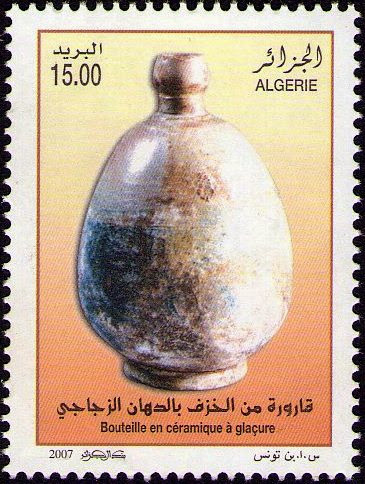
Glazed Ceramic Bottle
Algerian ceramics are a more refined and artistic form of rural pottery. Marked by Phoenician and Roman influences, this art flourished especially during the Muslim era with the Kalaa of Beni Hammad, ancient capital of the Hammadites.
Ceramics borrows many techniques from pottery. It is a very resistant material that archaeological excavations have made it possible to find in large quantities and over a very long period. It can serve as a characteristic fossil for dating and interpretation of discoveries.
During the Roman period handmade ceramics predominated in various techniques. Production marks its peak and it is above all utilitarian objects of remarkable sobriety.
Algerian ceramics mainly developed during the reign of the Hammadite dynasty in the Kalaa of Beni Hammad. This Berber dynasty made this city in the Hauts Plateaux its capital and a true cultural and civilizational center. The Kalaa was unfortunately destroyed by the Hilalian tribes, but in the ruins of the city, we can still find traces of the splendid ceramics that were made there.
Green bricks, Moorish balustrades and truncated tiles bear witness to a glorious past.
Other urban centers preserved the art of ceramics and this craft was further enriched with the return of Muslims from Andalusia. From this period, ceramics were widely used in the luxurious homes of large Algerian cities, and the manufacture of ceramic objects, originally inspired by pottery objects, provided a very rich range of utensils, which decorated the interiors of homes and which were used in the wealthy families of the cities. The ceramics were decorated either by stamping or by sculpture, using techniques known for centuries among the Persians.
Innovations and new forms continue to enrich this craft, marked by the arrival of new manufacturing techniques, multiple and multicolored shapes, decorated with very rich decorations.
Art ceramics remains one of the most productive craft sectors in Algeria. Today it is mainly based in Algeria, but it is also found in other cities such as Tlemcen in the west of the country.
Ceramics borrows many techniques from pottery. It is a very resistant material that archaeological excavations have made it possible to find in large quantities and over a very long period. It can serve as a characteristic fossil for dating and interpretation of discoveries.
During the Roman period handmade ceramics predominated in various techniques. Production marks its peak and it is above all utilitarian objects of remarkable sobriety.
Algerian ceramics mainly developed during the reign of the Hammadite dynasty in the Kalaa of Beni Hammad. This Berber dynasty made this city in the Hauts Plateaux its capital and a true cultural and civilizational center. The Kalaa was unfortunately destroyed by the Hilalian tribes, but in the ruins of the city, we can still find traces of the splendid ceramics that were made there.
Green bricks, Moorish balustrades and truncated tiles bear witness to a glorious past.
Other urban centers preserved the art of ceramics and this craft was further enriched with the return of Muslims from Andalusia. From this period, ceramics were widely used in the luxurious homes of large Algerian cities, and the manufacture of ceramic objects, originally inspired by pottery objects, provided a very rich range of utensils, which decorated the interiors of homes and which were used in the wealthy families of the cities. The ceramics were decorated either by stamping or by sculpture, using techniques known for centuries among the Persians.
Innovations and new forms continue to enrich this craft, marked by the arrival of new manufacturing techniques, multiple and multicolored shapes, decorated with very rich decorations.
Art ceramics remains one of the most productive craft sectors in Algeria. Today it is mainly based in Algeria, but it is also found in other cities such as Tlemcen in the west of the country.