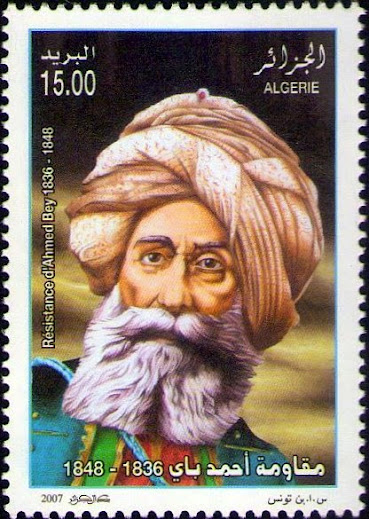
Resistance of Ahmed Bey 1836-1848
Born in Constantine around 1784, El Hadj Ahmed was the last Bey of Constantine and one of the great figures of resistance to colonialism in Eastern Algeria, from 1836 to 1848.
His father, Mohamed Cherif held the position of lieutenant (Khalifa) of Bey Hassan. His grandfather, Ahmed El Kolli, governed the Eastern Beylik for sixteen years. His mother, El Hadja Chérifa comes from the Ben Ghana family known in the Biskra region.
After the death of his father, his mother was forced to flee with him from Constantine to the Sahara. Ahmed Bey was raised by his maternal uncles where he received an exemplary education: he learned the Koran, equestrian art and trained in the combat arts.
Ahmed Bey held the position of Caïd of the guard corps of the Herakta tribes in 1809, and was promoted to the position of lieutenant (Khalifa) under the authority of Bey Ahmed El Memlouk. In 1826, and upon the intervention of Agha Yahia, Commander of the army, Ahmed Bey was designated by Dey Hussein as Bey of the eastern beylik.
During the French expedition of 1830, he was in Algiers and after the fall of the city following the battle of Staouéli on June 19, 1830, he returned to Constantine. The latter lived, during her mandate, a good time which lasted until 1837, the date of her fall.
An expedition against Constantine under the command of Marshal Clauzel, bringing together 8700 men was prepared from the base of Annaba on November 8, 1836, it then camped in Guelma, from where it advanced to arrive in Constantine on November 21, 1836. Ahmed Bey's forces were organized as follows: A part commanded by Benaissa Ali El Fergani and Mohamed Ben El Bedjaoui, responsible for the defense of the city; a second part commanded by Ahmed Bey, responsible for monitoring the enemy's lines of communication and attacking its rear guard.
The French army undertook two assaults by the bridge which broke in front of the El Kantara gate. Retreating, pursued by the Algerians, the French soldiers abandoned their weapons, baggage and wounded on the ground. After three days of combat, on November 21, 22 and 23, the French army retreated on November 24, 1836. However, Ahmed Bey succeeded in unifying the large and powerful tribes of eastern Algeria. He thus demonstrated his military and political skills. In order to erase the crushing defeat of its forces, the French general staff decided to lead a second expedition against Constantine under the command of the Count of Damrémont on October 1, 1837. The latter had a large number of men, including 16,000 combatants, a large artillery commanded by General Valée and a corps of engineers.
The army in question arrived in Constantine on October 7, 1837. From the first confrontation between the forces of the occupier and the army of Ahmed Bey, the Count of Damrémont, among other commanders, was injured and replaced by General Volée. After fierce resistance, the city of Constantine fell on October 13, 1837, having suffered a significant number of material and human losses. However, Hadj Ahmed Bey did not give up his fight. He left the city with a number of horsemen, gathered tribes from the region and headed towards the Aures to then go to Batna in Menâa, Biskra and Ouled Derraj while inciting the populations to struggle and combat. In June 1848, and after a long period of resistance, Ahmed Bey surrendered. He was placed under house arrest in Algiers until his death in 1850.
His father, Mohamed Cherif held the position of lieutenant (Khalifa) of Bey Hassan. His grandfather, Ahmed El Kolli, governed the Eastern Beylik for sixteen years. His mother, El Hadja Chérifa comes from the Ben Ghana family known in the Biskra region.
After the death of his father, his mother was forced to flee with him from Constantine to the Sahara. Ahmed Bey was raised by his maternal uncles where he received an exemplary education: he learned the Koran, equestrian art and trained in the combat arts.
Ahmed Bey held the position of Caïd of the guard corps of the Herakta tribes in 1809, and was promoted to the position of lieutenant (Khalifa) under the authority of Bey Ahmed El Memlouk. In 1826, and upon the intervention of Agha Yahia, Commander of the army, Ahmed Bey was designated by Dey Hussein as Bey of the eastern beylik.
During the French expedition of 1830, he was in Algiers and after the fall of the city following the battle of Staouéli on June 19, 1830, he returned to Constantine. The latter lived, during her mandate, a good time which lasted until 1837, the date of her fall.
An expedition against Constantine under the command of Marshal Clauzel, bringing together 8700 men was prepared from the base of Annaba on November 8, 1836, it then camped in Guelma, from where it advanced to arrive in Constantine on November 21, 1836. Ahmed Bey's forces were organized as follows: A part commanded by Benaissa Ali El Fergani and Mohamed Ben El Bedjaoui, responsible for the defense of the city; a second part commanded by Ahmed Bey, responsible for monitoring the enemy's lines of communication and attacking its rear guard.
The French army undertook two assaults by the bridge which broke in front of the El Kantara gate. Retreating, pursued by the Algerians, the French soldiers abandoned their weapons, baggage and wounded on the ground. After three days of combat, on November 21, 22 and 23, the French army retreated on November 24, 1836. However, Ahmed Bey succeeded in unifying the large and powerful tribes of eastern Algeria. He thus demonstrated his military and political skills. In order to erase the crushing defeat of its forces, the French general staff decided to lead a second expedition against Constantine under the command of the Count of Damrémont on October 1, 1837. The latter had a large number of men, including 16,000 combatants, a large artillery commanded by General Valée and a corps of engineers.
The army in question arrived in Constantine on October 7, 1837. From the first confrontation between the forces of the occupier and the army of Ahmed Bey, the Count of Damrémont, among other commanders, was injured and replaced by General Volée. After fierce resistance, the city of Constantine fell on October 13, 1837, having suffered a significant number of material and human losses. However, Hadj Ahmed Bey did not give up his fight. He left the city with a number of horsemen, gathered tribes from the region and headed towards the Aures to then go to Batna in Menâa, Biskra and Ouled Derraj while inciting the populations to struggle and combat. In June 1848, and after a long period of resistance, Ahmed Bey surrendered. He was placed under house arrest in Algiers until his death in 1850.