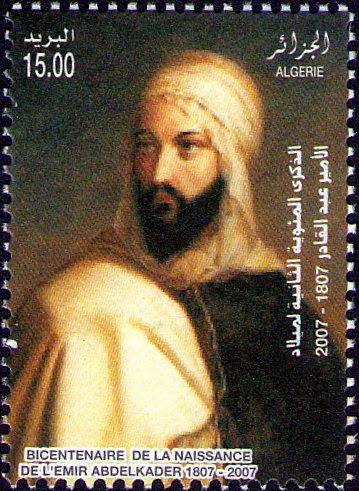
Bicentenary of the Birth of Emir Abdelkader
The year 2007 marks the two hundredth anniversary of the birth of Emir Abdelkader, founder of the contemporary Algerian state based on the separation between the executive power, the legislative power and the judicial power. This anniversary symbolizes a milestone in the evolution of the Algerian nation which has asserted itself since antiquity under the leadership of illustrious leaders such as Massinissa.
Emir Abdelkader was an emblematic figure symbolizing national unity whose leadership was recognized by the population across Algeria faced with a foreign invasion. He knew how to maintain this unity by being guided in the choice of his collaborators, from all regions of the country, based solely on the criteria of integrity and competence. It is thanks to this national cohesion that the Emir was able to successfully lead, as Jugurtha once did, a heroic resistance for more than 15 years against an invader whose numbers and war material were far superior to his own.
This anniversary is also that of youth since it concerns a leader brought to the head of Algeria when he was only 27 years old.
The 200th anniversary is evocative, moreover, of the high cultural level of pre-colonial Algeria, the Emir having made an important contribution through his works of poetry, literature and religious exegesis to Arab culture, even to world culture. It also evokes the deep roots of Islam in the Algerian personality at the same time as the tolerance in which the Emir like his compatriots lived and continue to live their Faith.
The anniversary of the birth of the Emir is also a reminder of Algeria's pioneering role in the field of humanitarian law, the first Code in the modern world for the protection of prisoners having been adopted by a congress of Algerian leaders at the initiative of the Emir in 1843.
This anniversary is finally intended to share with Emir Abdelkader his commitment to human rights. In 1860, the Emir, symbol of Algeria ravaged by the French invasion, saved the lives of 12,000 Christians and Jews from certain death in Damascus at the hands of groups manipulated by foreigners. He had done this, he explained, “out of loyalty to the Muslim faith and to respect the rights of humanity”.
Main stages in the life of Emir Abdelkader
- 1807: Birth of the Emir at “El Guetna” near Mascara.
- 1812: Entry into the Koranic school run by his father.
- 1812-1820: Studies at Mascara.
- 1820-1823: Continuation of studies at Arzew.
- 1823-1824: Continuation of studies in Oran.
- 1825-1826: Residence under surveillance in Oran in the company of his father by order of the Bey.
- 1826-1828: Pilgrimage to the holy places of Islam and journey to the Middle East.
- 1830-1832: Participation in the resistance led by his father against the occupation of Oran by the French.
- 11/27/1832: Investiture of the Emir in Dardara by the tribal leaders.
- 04/02/1833: Popular investiture at the “Sidi Hassan” Mosque in Mascara.
- 1833: Death of his father Hadj Mahieddine.
- 02/26/1834: Treaty of Tafna.
- 1837-1839: The emir structures and strengthens the modern Algerian state.
- 1847: Besieged on the Moroccan border, the Emir decides to stop the fighting and negotiates his exile to the Mashreq.
- 1848-1852: Captivity of the Emir in France (Toulon, Pau and Amboise).
- 1852: The Emir, freed by Napoleon III, leaves France for Turkey.
- 1854: The Emir writes his book “Dhikra El Akel” (Letter to the French).
- 1855: Establishment of the Emir in Damascus.
- 1860: The Emir saves the Christians and Jews of Damascus from a massacre.
- 1862: Death of the Emir’s mother.
- 1865: Travel to Istanbul then to Paris.
- 1869: The Emir attends the inauguration of the Suez Canal.
- 1877: The Emir supports the nationalist movement in Syria.
- 1877-1883: He writes his work “The Book of Stops” and gives public comments.
- 05/26/1883: Death of Emir Abdelkader in Damascus.
The written work:
The Emir wrote a lot. We can cite in particular:
- Dhikrâ al-âqiI, translated in 1856, then again in 1977 this second translation by R. KhawAm bears the title of 'letter to the French' (reissued. Rahma. Algiers). The Emir demonstrates great culture there.
- AI-miqràdh aI-hâdd (reed. Rahma. Algiers). This is a refutation of those who attack Islam.
- AI-Sayra aI-dhàtiyya (autobiography), published in Algiers (Dar-al-Umma)
- AI-mawâqif (mystical mediations) edited, from Damascus and Algiers (ENAG. 1996) 3 volumes.
- Correspondence scattered in several works or in libraries and which should be edited.
Emir Abdelkader was an emblematic figure symbolizing national unity whose leadership was recognized by the population across Algeria faced with a foreign invasion. He knew how to maintain this unity by being guided in the choice of his collaborators, from all regions of the country, based solely on the criteria of integrity and competence. It is thanks to this national cohesion that the Emir was able to successfully lead, as Jugurtha once did, a heroic resistance for more than 15 years against an invader whose numbers and war material were far superior to his own.
This anniversary is also that of youth since it concerns a leader brought to the head of Algeria when he was only 27 years old.
The 200th anniversary is evocative, moreover, of the high cultural level of pre-colonial Algeria, the Emir having made an important contribution through his works of poetry, literature and religious exegesis to Arab culture, even to world culture. It also evokes the deep roots of Islam in the Algerian personality at the same time as the tolerance in which the Emir like his compatriots lived and continue to live their Faith.
The anniversary of the birth of the Emir is also a reminder of Algeria's pioneering role in the field of humanitarian law, the first Code in the modern world for the protection of prisoners having been adopted by a congress of Algerian leaders at the initiative of the Emir in 1843.
This anniversary is finally intended to share with Emir Abdelkader his commitment to human rights. In 1860, the Emir, symbol of Algeria ravaged by the French invasion, saved the lives of 12,000 Christians and Jews from certain death in Damascus at the hands of groups manipulated by foreigners. He had done this, he explained, “out of loyalty to the Muslim faith and to respect the rights of humanity”.
Main stages in the life of Emir Abdelkader
- 1807: Birth of the Emir at “El Guetna” near Mascara.
- 1812: Entry into the Koranic school run by his father.
- 1812-1820: Studies at Mascara.
- 1820-1823: Continuation of studies at Arzew.
- 1823-1824: Continuation of studies in Oran.
- 1825-1826: Residence under surveillance in Oran in the company of his father by order of the Bey.
- 1826-1828: Pilgrimage to the holy places of Islam and journey to the Middle East.
- 1830-1832: Participation in the resistance led by his father against the occupation of Oran by the French.
- 11/27/1832: Investiture of the Emir in Dardara by the tribal leaders.
- 04/02/1833: Popular investiture at the “Sidi Hassan” Mosque in Mascara.
- 1833: Death of his father Hadj Mahieddine.
- 02/26/1834: Treaty of Tafna.
- 1837-1839: The emir structures and strengthens the modern Algerian state.
- 1847: Besieged on the Moroccan border, the Emir decides to stop the fighting and negotiates his exile to the Mashreq.
- 1848-1852: Captivity of the Emir in France (Toulon, Pau and Amboise).
- 1852: The Emir, freed by Napoleon III, leaves France for Turkey.
- 1854: The Emir writes his book “Dhikra El Akel” (Letter to the French).
- 1855: Establishment of the Emir in Damascus.
- 1860: The Emir saves the Christians and Jews of Damascus from a massacre.
- 1862: Death of the Emir’s mother.
- 1865: Travel to Istanbul then to Paris.
- 1869: The Emir attends the inauguration of the Suez Canal.
- 1877: The Emir supports the nationalist movement in Syria.
- 1877-1883: He writes his work “The Book of Stops” and gives public comments.
- 05/26/1883: Death of Emir Abdelkader in Damascus.
The written work:
The Emir wrote a lot. We can cite in particular:
- Dhikrâ al-âqiI, translated in 1856, then again in 1977 this second translation by R. KhawAm bears the title of 'letter to the French' (reissued. Rahma. Algiers). The Emir demonstrates great culture there.
- AI-miqràdh aI-hâdd (reed. Rahma. Algiers). This is a refutation of those who attack Islam.
- AI-Sayra aI-dhàtiyya (autobiography), published in Algiers (Dar-al-Umma)
- AI-mawâqif (mystical mediations) edited, from Damascus and Algiers (ENAG. 1996) 3 volumes.
- Correspondence scattered in several works or in libraries and which should be edited.