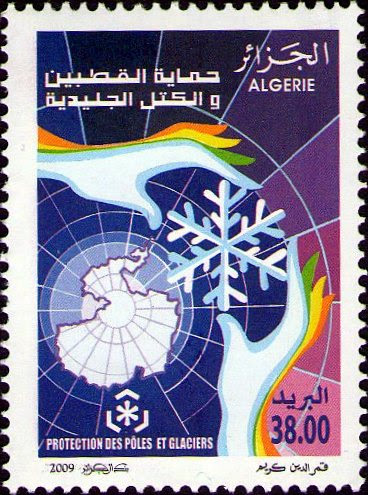
Protection of poles and glaciers
Over the millennia, glaciers have experienced phases of growth and melting of their mass, as dictated by the natural fluctuation dictated by climatic cycles. In recent decades, they began the decline which continues today.
As the ice melts, there is less and less solar energy that is reflected by the ice and more and more absorbed by the ocean.
A considerable decrease in glaciers and sea ice cover in polar regions has been recorded. Thus, the thickness of the ice in the Arctic Ocean went from 4.88m on average in the 1980s to 2.75m in the year 2000, a reduction of 2.13m in 20 years. According to studies carried out during 2003 by the National Aeronautics and Space Administration (NASA), the Arctic is losing around 10% of its permanent ice cover.
Over the last century, the temperature in the northern regions has increased on average by 1.51° C, which has led to the phenomenon of atmospheric warming, a phenomenon linked essentially to the concentration of greenhouse gases in the atmosphere. The largest temperature rise expected this century will vary between 2°C and 6°C and will primarily affect the northern regions of the planet. Also, the production methods of different energies have clearly demonstrated their close connection with the phenomenon of warming which threatens the planet.
However, the polar regions play an important role in the global climate system by storing energy from all the warm zones existing across the world, and by exchanging heat flows from the Equator for cold water flows to the north and vice versa.
The polar regions, also considered as a regulating factor of the climate of the entire world, make it possible to study multiple questions linked to the planet such as climate, biodiversity, the ozone hole, the chemistry of the atmosphere, the dynamics of the oceans, the structure of the globe, etc.
Our planet appears as a whole where the climate depends in part on complex interactions between the ocean, the atmosphere, the biosphere, the cryosphere and human activity. The question that concerns humanity at the moment and how to slow down the progress of climate change throughout the planet in order to reduce their impact on living beings.
In order to reduce the rapid progress of the phenomenon of atmospheric warming, optimal use of different energies is necessary. Algeria, for its part, subscribes, whatever the dangers that may be caused to nature, to all the efforts made by the international community to protect and safeguard our planet.
As the ice melts, there is less and less solar energy that is reflected by the ice and more and more absorbed by the ocean.
A considerable decrease in glaciers and sea ice cover in polar regions has been recorded. Thus, the thickness of the ice in the Arctic Ocean went from 4.88m on average in the 1980s to 2.75m in the year 2000, a reduction of 2.13m in 20 years. According to studies carried out during 2003 by the National Aeronautics and Space Administration (NASA), the Arctic is losing around 10% of its permanent ice cover.
Over the last century, the temperature in the northern regions has increased on average by 1.51° C, which has led to the phenomenon of atmospheric warming, a phenomenon linked essentially to the concentration of greenhouse gases in the atmosphere. The largest temperature rise expected this century will vary between 2°C and 6°C and will primarily affect the northern regions of the planet. Also, the production methods of different energies have clearly demonstrated their close connection with the phenomenon of warming which threatens the planet.
However, the polar regions play an important role in the global climate system by storing energy from all the warm zones existing across the world, and by exchanging heat flows from the Equator for cold water flows to the north and vice versa.
The polar regions, also considered as a regulating factor of the climate of the entire world, make it possible to study multiple questions linked to the planet such as climate, biodiversity, the ozone hole, the chemistry of the atmosphere, the dynamics of the oceans, the structure of the globe, etc.
Our planet appears as a whole where the climate depends in part on complex interactions between the ocean, the atmosphere, the biosphere, the cryosphere and human activity. The question that concerns humanity at the moment and how to slow down the progress of climate change throughout the planet in order to reduce their impact on living beings.
In order to reduce the rapid progress of the phenomenon of atmospheric warming, optimal use of different energies is necessary. Algeria, for its part, subscribes, whatever the dangers that may be caused to nature, to all the efforts made by the international community to protect and safeguard our planet.