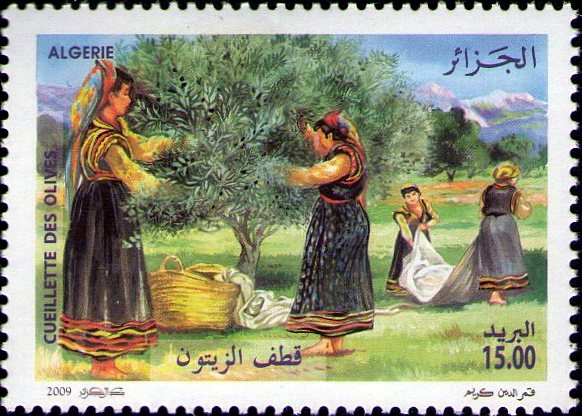
Algerian olive growing
Olive growing occupies a prominent place in Algerian arboriculture and represents a third of the total area of perennial crops, including the date palm. Present throughout the territory from East to West and from North to South, whether in the mountains or the plains, olive growing is in first place before citrus fruits and vines.
Its spread shows the ancestral attachment of the Algerian to the cultivation of the olive tree and its products.
Symbol of peace and glory and emblem of fertility, the olive tree is among the oldest species in the Mediterranean basin. Its history is intertwined with that of Algeria and goes back very far into the past. It is reported that true oleaster has existed in Algeria since the 12th millennium BC. During the Phoenician period, the trade in olive oil allowed the development of olive growing and during the Roman period Algeria supplied Rome with olive oil and wheat.
This blessed tree with its fruits cited for its benefits in numerous verses of the Koran adapts to the most diverse climatic conditions. Its cultivation is present on poor soils in an arid climate and on rich soils in a humid climate. Its cultivation has become possible in pre-Saharan regions where it can exploit very large areas.
Algerians show a particular attachment to the olive tree and its fruit, appreciated for the precious oil that comes from it. It occupies a favorable place in Mediterranean culture and culinary art for its nutritional virtues and its health benefits long approved by modern science.
The production of olive oil is done through numerous oil mills that exist across the country. Traditional or modern, these oil mills strive to extract the precious liquid intended either for family consumption or to be offered on market stalls.
Algerian olive growing represents an area of 230,000 hectares spread across the territory, thus occupying a special place in the country's economic process. It is one of the greatest riches of Algeria; it is also probably the oldest. However, our olive growing heritage requires sustained efforts and bold measures to make it more efficient in terms of production and productivity, quality and labeling to establish sustainable olive growing in harmony with its environment.
Its spread shows the ancestral attachment of the Algerian to the cultivation of the olive tree and its products.
Symbol of peace and glory and emblem of fertility, the olive tree is among the oldest species in the Mediterranean basin. Its history is intertwined with that of Algeria and goes back very far into the past. It is reported that true oleaster has existed in Algeria since the 12th millennium BC. During the Phoenician period, the trade in olive oil allowed the development of olive growing and during the Roman period Algeria supplied Rome with olive oil and wheat.
This blessed tree with its fruits cited for its benefits in numerous verses of the Koran adapts to the most diverse climatic conditions. Its cultivation is present on poor soils in an arid climate and on rich soils in a humid climate. Its cultivation has become possible in pre-Saharan regions where it can exploit very large areas.
Algerians show a particular attachment to the olive tree and its fruit, appreciated for the precious oil that comes from it. It occupies a favorable place in Mediterranean culture and culinary art for its nutritional virtues and its health benefits long approved by modern science.
The production of olive oil is done through numerous oil mills that exist across the country. Traditional or modern, these oil mills strive to extract the precious liquid intended either for family consumption or to be offered on market stalls.
Algerian olive growing represents an area of 230,000 hectares spread across the territory, thus occupying a special place in the country's economic process. It is one of the greatest riches of Algeria; it is also probably the oldest. However, our olive growing heritage requires sustained efforts and bold measures to make it more efficient in terms of production and productivity, quality and labeling to establish sustainable olive growing in harmony with its environment.