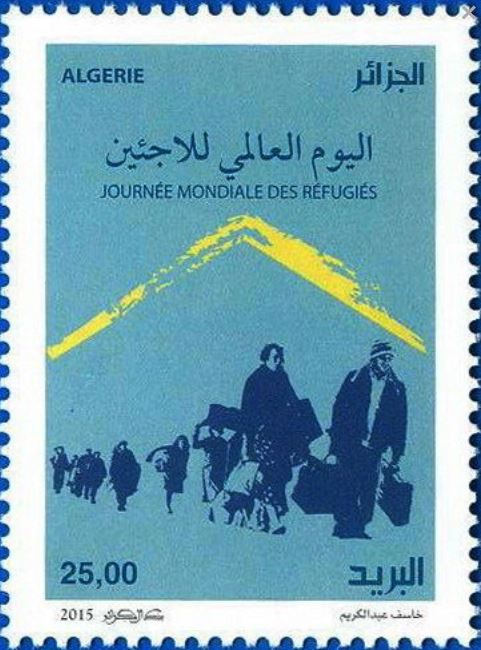
World Refugee Day
Multiple wars and conflicts across the world have resulted in an increase in the number of refugees across different regions of the world.
African Refugee Day, celebrated on June 20 each year, is one of the best-known days around the world. The United Nations General Assembly adopted resolution 55/76 on December 4, 2000, in which it was noted that the year 2001 would mark the fiftieth anniversary of the 1951 Convention relating to the Status of Refugees.
From 2001, the United Nations General Assembly established the celebration of World Refugee Day on June 20 each year, after the Organization of African Unity (OAU) accepted that World Refugee Day coincides with African Refugee Day.
The 1951 convention, which marks the celebration of World Refugee Day and the creation of the United Nations High Commissioner for Refugees, defines a refugee as any person “who has a well-founded fear of being persecuted because of his race, his religion, his nationality, his membership in a certain social group or his political opinions, is outside the country of his nationality and who cannot or, because of this fear, does not want to claim the protection of this country.”
Unlike immigrants, especially economic immigrants, who choose to leave their country in order to improve their future prospects and those of their families, refugees are forced to leave their country in order to save their lives and preserve their freedom. Therefore, they do not enjoy the protection of their country, because more often than not their government is the very source of their oppression in case they are not allowed to enter other countries. And even when they obtain authorization to enter another country, they receive neither protection nor assistance.
In Algeria, like other countries in the world, the number of refugees continues to increase, due to the stability experienced by the country which is thus becoming a transit center for refugees coming from Africa and the Middle East.
African Refugee Day, celebrated on June 20 each year, is one of the best-known days around the world. The United Nations General Assembly adopted resolution 55/76 on December 4, 2000, in which it was noted that the year 2001 would mark the fiftieth anniversary of the 1951 Convention relating to the Status of Refugees.
From 2001, the United Nations General Assembly established the celebration of World Refugee Day on June 20 each year, after the Organization of African Unity (OAU) accepted that World Refugee Day coincides with African Refugee Day.
The 1951 convention, which marks the celebration of World Refugee Day and the creation of the United Nations High Commissioner for Refugees, defines a refugee as any person “who has a well-founded fear of being persecuted because of his race, his religion, his nationality, his membership in a certain social group or his political opinions, is outside the country of his nationality and who cannot or, because of this fear, does not want to claim the protection of this country.”
Unlike immigrants, especially economic immigrants, who choose to leave their country in order to improve their future prospects and those of their families, refugees are forced to leave their country in order to save their lives and preserve their freedom. Therefore, they do not enjoy the protection of their country, because more often than not their government is the very source of their oppression in case they are not allowed to enter other countries. And even when they obtain authorization to enter another country, they receive neither protection nor assistance.
In Algeria, like other countries in the world, the number of refugees continues to increase, due to the stability experienced by the country which is thus becoming a transit center for refugees coming from Africa and the Middle East.