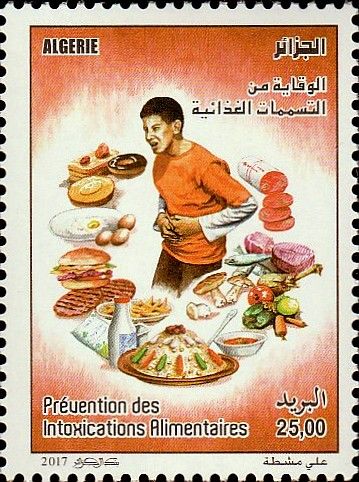
Prevention of Food Poisoning
Food poisoning corresponds to the appearance of an infection or a disturbance in the body after the ingestion of food infected by bacterial agents or a toxic substance.
Food poisoning is generally benign. However, it can be dangerous, causing kidney complications and leading to death.
Poisoning is due to contamination of food by: a bacteria, a virus, a fungus or a parasite.
Food poisoning can also be caused by the ingestion of toxic substances: poisonous mushrooms, toxic berries and plants, contaminants from materials in contact with food, agricultural products, etc.
Certain factors increase the risk of food poisoning:
• Failure to respect expiration dates
• Failure to respect storage temperatures
• A break in the cold chain
• Eating food that has been kept warm for too long
• Improper cooking of food….
To deal with the problems of food poisoning recorded each year and whose health and economic consequences are considerable, the various actors concerned by the problem display their firm desire to strengthen measures relating to health safety and food quality, through the establishment of a legislative, regulatory and organizational system, in line with international standards relating to hygiene and safety.
It is in this context that the Ministry of Commerce, in collaboration with consumer protection associations, is organizing national food poisoning awareness and prevention days.
Food poisoning is generally benign. However, it can be dangerous, causing kidney complications and leading to death.
Poisoning is due to contamination of food by: a bacteria, a virus, a fungus or a parasite.
Food poisoning can also be caused by the ingestion of toxic substances: poisonous mushrooms, toxic berries and plants, contaminants from materials in contact with food, agricultural products, etc.
Certain factors increase the risk of food poisoning:
• Failure to respect expiration dates
• Failure to respect storage temperatures
• A break in the cold chain
• Eating food that has been kept warm for too long
• Improper cooking of food….
To deal with the problems of food poisoning recorded each year and whose health and economic consequences are considerable, the various actors concerned by the problem display their firm desire to strengthen measures relating to health safety and food quality, through the establishment of a legislative, regulatory and organizational system, in line with international standards relating to hygiene and safety.
It is in this context that the Ministry of Commerce, in collaboration with consumer protection associations, is organizing national food poisoning awareness and prevention days.