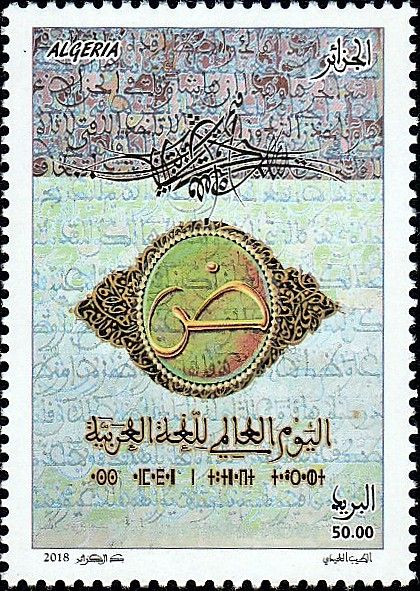
World Arabic Language Day
Before the Arabic language was recognized by the UN as an international language, it went through multiple difficulties, seeing that since the holding of the UNESCO general assembly in the year 1948, the calls have not stopped and continue to proclaim the Arabic language as an official working language at the UN assemblies such as the case of English and French... so that in 1973 part of this request began to see the light of day, it was used the for the first time at the United Nations General Assembly from September 1 to December 31, 1973, it will be included at the request of the governments of Arab countries, including
Algeria, on the agenda in 1974, and subsequently ratified by the United Nations as well as UNESCO in order to strengthen its position in the field of translation. Until December 18 was chosen as International Arabic Language Day, in accordance with the United Nations resolution that it is necessary to celebrate the six universally used languages where each language has its own day and its own stigma.
Each state has symbolically chosen its International Day, December 18 concerning the Arab countries, because this date refers to the very first use of Arabic in the corridors of the United Nations, since 2012 this language has been official to the United Nations organization and its twenty-one agencies (21) related.
Thus, UNESCO recognizes the importance of the Arabic language which is endowed with a linguistic system with a human civilization existing in no other language and extending geographically over five continents.
The importance of the Arabic language is combined with the fact that it is the official national language of twenty-two (22) member countries of the United Nations, being the mother language of more than
500 million people and used by nearly 2 billion inhabitants during their daily prayers, As well as twelve (12) countries using it as the first official foreign language and twenty-six (26) states as the second official foreign language, it is also an official language within the Arab Organization for Education, Science and Culture (ALESCO), the Islamic Organization for Science and Culture (ISESCO) and the Organization of African Unity, In addition to the fact that several states Islamic people adapt its letters for writing knowing that they respond to all natural sounds which allows it to occupy its status among the languages of the world.
The allocation of December 18 of each year to the International celebration of the Arabic language is in itself proof of the scientific and civilizational value of this language which has served humanity so much through Arabic and non-Arabic writings and religious transcriptions, as incredible as it may be! It is the original language.
Algeria, on the agenda in 1974, and subsequently ratified by the United Nations as well as UNESCO in order to strengthen its position in the field of translation. Until December 18 was chosen as International Arabic Language Day, in accordance with the United Nations resolution that it is necessary to celebrate the six universally used languages where each language has its own day and its own stigma.
Each state has symbolically chosen its International Day, December 18 concerning the Arab countries, because this date refers to the very first use of Arabic in the corridors of the United Nations, since 2012 this language has been official to the United Nations organization and its twenty-one agencies (21) related.
Thus, UNESCO recognizes the importance of the Arabic language which is endowed with a linguistic system with a human civilization existing in no other language and extending geographically over five continents.
The importance of the Arabic language is combined with the fact that it is the official national language of twenty-two (22) member countries of the United Nations, being the mother language of more than
500 million people and used by nearly 2 billion inhabitants during their daily prayers, As well as twelve (12) countries using it as the first official foreign language and twenty-six (26) states as the second official foreign language, it is also an official language within the Arab Organization for Education, Science and Culture (ALESCO), the Islamic Organization for Science and Culture (ISESCO) and the Organization of African Unity, In addition to the fact that several states Islamic people adapt its letters for writing knowing that they respond to all natural sounds which allows it to occupy its status among the languages of the world.
The allocation of December 18 of each year to the International celebration of the Arabic language is in itself proof of the scientific and civilizational value of this language which has served humanity so much through Arabic and non-Arabic writings and religious transcriptions, as incredible as it may be! It is the original language.