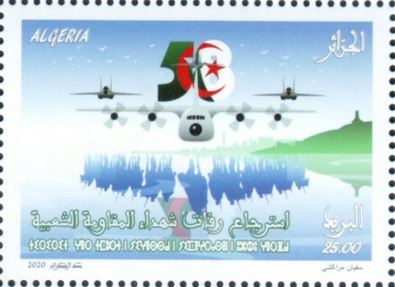
Repatriation of the mortuary remains of the martyred leaders of the popular resistance and their companions
After a long wait which lasted one hundred and seventy (170) years, the Algerian State recovered the first part of the mortuary remains of 24 martyrs among the leaders of the popular resistance against the French occupation of Algeria, which were kept at the natural history museum in Paris, thanks to significant efforts crowned by the announcement of the President of the Republic, Abdelmajid Tebboune, of the repatriation of the mortuary remains of our valiant martyrs in the country, Friday July 4, 2020, aboard a military plane escorted by a squadron of fighter planes of the Algerian air armed forces, coming from France.
The remains of Algeria's heroes were entitled to an official welcome from major state officials, headed by the President of the Republic, supreme leader of the armed forces, minister of national defense. They were buried in the martyrs' square of the EL Alia cemetery in Algiers, after a last tribute was paid to them by the people, in a solemn atmosphere marked by feelings of pride, respect and reverence, on July 5 coinciding with the celebration of the fifty-eighth anniversary of independence.
Among the valiant repatriated national resistance fighters, who bathed the land of Algeria with their blood, we find the martyrs Mohamed Elamdjed Ben Abdelmalek better known as “Cherif Boubaghla”, and the commander of the Zâatcha revolt, Sheikh Ahmed Bouziane.
As for Mohamed Elamdjed Ben Abdelmalek, better known under the nickname “Cherif Boubaghla”. Coming from the western regions, he settled in Sour El Ghozlane in 1849. He first taught the Koran to children, and at the same time treated the sick. Known for his disapproval and his total rejection of the French occupation, he did not fail to incite his compatriots to resist and fight it, thus attracting the attention of the colonial authorities at the beginning of the year 1851, by his assiduous activism, and an arrest warrant was issued against him accusing him of subversion and incitement to rebellion. He managed to escape and took refuge in Kalaat Beni Abbes, which he subsequently left for the tribe of Melikech, on February 24, 1851, making it his rear base to confront the occupying forces. He won his first victory on March 2 of the same year against the forces of officer Beauprêtre, Governor of Beni Mansour.
The martyr intensified his attacks on villages subject to French authorities during the period from March 24 to April 4, achieving impressive victories. Also, wanting to extend resistance to different corners of the country, he charged a group of messengers to go to Médéa, El Asnam, Miliana, and other regions to call for resistance to the French occupation.
Mohamed Elmdjed Ben Abdelmalek also led the resistance in Kabylia from August 1851, resistance which expanded after the valiant martyr Lala Fatma N' Soumer joined him. He was martyred on December 26, 1854, his head was decapitated and displayed on a stake.
For his part, the leader of the Zâatcha revolt, Cheikh Ahmed Bouziane, began his resistance action in May 1849 when he wrote to several tribal leaders in the Zâatcha region in Biskra (south-eastern Algeria) to incite them to revolt.
Cheikh Bouziane made the Zâatcha oasis, located near the town of Tolga which is around 40 km from Biskra, the stronghold of resistance to the French occupation. With the support of free men, he fortified it and prepared to face the enemy. The oasis was besieged for the first time on July 16, 1849, a siege which ended in failure thanks to the fierce resistance of the oasis and the arrival of reinforcements from the âarchs, tribes and zaouias.
The French recorded heavy losses in their ranks, and the governor of Biskra “Saint Germain” in particular was killed during the battle of Oued Braz in the eastern Zab, on September 21, 1849. This debacle provoked the ire of the French occupying forces who dispatched the Governor of Constantine in person, officer Herbillon, and sent with him around 4,000 soldiers to crush the resistance of the Zâatcha.
The plan adopted by this officer, made up of extermination operations and methodical sabotage of the palm trees of the oasis, its houses and its inhabitants, on November 28, 1849, gave rise to a odious and ignoble massacre. The French cut down around 10,000 palm trees, killed around 1000 inhabitants of the oasis, and finished off the wounded, old people and infants, in a macabre and disgusting scene.
The French executed Cheikh Bouziane and Cheikh Moussa El Derkaoui, as well as Bouziane's son, aged barely 17, then beheaded them. Ignoring the sacredness of the bodies of the deceased, the occupation soldiers exposed the skulls of the valiant martyrs at the gates of Biskra, as a form of revenge but also in order to spread fear and terror among the population. The skulls were then transferred to the Musée de l'Homme in Paris.
The remains of Algeria's heroes were entitled to an official welcome from major state officials, headed by the President of the Republic, supreme leader of the armed forces, minister of national defense. They were buried in the martyrs' square of the EL Alia cemetery in Algiers, after a last tribute was paid to them by the people, in a solemn atmosphere marked by feelings of pride, respect and reverence, on July 5 coinciding with the celebration of the fifty-eighth anniversary of independence.
Among the valiant repatriated national resistance fighters, who bathed the land of Algeria with their blood, we find the martyrs Mohamed Elamdjed Ben Abdelmalek better known as “Cherif Boubaghla”, and the commander of the Zâatcha revolt, Sheikh Ahmed Bouziane.
As for Mohamed Elamdjed Ben Abdelmalek, better known under the nickname “Cherif Boubaghla”. Coming from the western regions, he settled in Sour El Ghozlane in 1849. He first taught the Koran to children, and at the same time treated the sick. Known for his disapproval and his total rejection of the French occupation, he did not fail to incite his compatriots to resist and fight it, thus attracting the attention of the colonial authorities at the beginning of the year 1851, by his assiduous activism, and an arrest warrant was issued against him accusing him of subversion and incitement to rebellion. He managed to escape and took refuge in Kalaat Beni Abbes, which he subsequently left for the tribe of Melikech, on February 24, 1851, making it his rear base to confront the occupying forces. He won his first victory on March 2 of the same year against the forces of officer Beauprêtre, Governor of Beni Mansour.
The martyr intensified his attacks on villages subject to French authorities during the period from March 24 to April 4, achieving impressive victories. Also, wanting to extend resistance to different corners of the country, he charged a group of messengers to go to Médéa, El Asnam, Miliana, and other regions to call for resistance to the French occupation.
Mohamed Elmdjed Ben Abdelmalek also led the resistance in Kabylia from August 1851, resistance which expanded after the valiant martyr Lala Fatma N' Soumer joined him. He was martyred on December 26, 1854, his head was decapitated and displayed on a stake.
For his part, the leader of the Zâatcha revolt, Cheikh Ahmed Bouziane, began his resistance action in May 1849 when he wrote to several tribal leaders in the Zâatcha region in Biskra (south-eastern Algeria) to incite them to revolt.
Cheikh Bouziane made the Zâatcha oasis, located near the town of Tolga which is around 40 km from Biskra, the stronghold of resistance to the French occupation. With the support of free men, he fortified it and prepared to face the enemy. The oasis was besieged for the first time on July 16, 1849, a siege which ended in failure thanks to the fierce resistance of the oasis and the arrival of reinforcements from the âarchs, tribes and zaouias.
The French recorded heavy losses in their ranks, and the governor of Biskra “Saint Germain” in particular was killed during the battle of Oued Braz in the eastern Zab, on September 21, 1849. This debacle provoked the ire of the French occupying forces who dispatched the Governor of Constantine in person, officer Herbillon, and sent with him around 4,000 soldiers to crush the resistance of the Zâatcha.
The plan adopted by this officer, made up of extermination operations and methodical sabotage of the palm trees of the oasis, its houses and its inhabitants, on November 28, 1849, gave rise to a odious and ignoble massacre. The French cut down around 10,000 palm trees, killed around 1000 inhabitants of the oasis, and finished off the wounded, old people and infants, in a macabre and disgusting scene.
The French executed Cheikh Bouziane and Cheikh Moussa El Derkaoui, as well as Bouziane's son, aged barely 17, then beheaded them. Ignoring the sacredness of the bodies of the deceased, the occupation soldiers exposed the skulls of the valiant martyrs at the gates of Biskra, as a form of revenge but also in order to spread fear and terror among the population. The skulls were then transferred to the Musée de l'Homme in Paris.