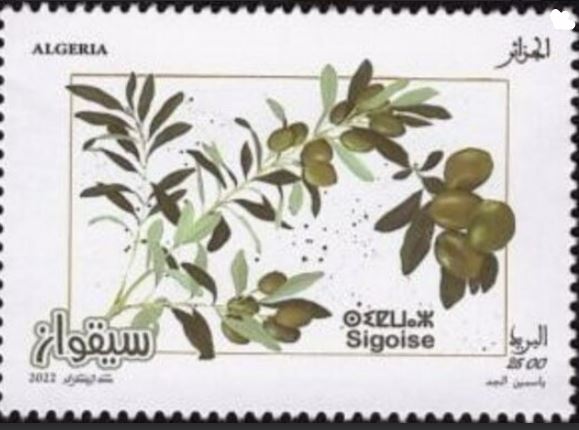
The Sigoise
Algerian olive growing is considered today as a strategic sector; it plays a very important role in the agricultural sector as a source of employment, foreign exchange and the fight against desertification.
The olive tree has always been part of people's lives and has participated in the survival economy of communities over time. Already well established before the Romans, this species boomed with the Roman presence, whose interest in olive oil is still visible through the now abandoned Roman oil mills. From this point of view, the olive tree constitutes a heritage to be preserved and safeguarded in terms of history and memory.
The olive tree is well known for its edible oil or for the use of its wood in cabinetmaking. It is a source of many benefits, olives contain provitamin A, the oil is rich in vitamins with therapeutic properties.
The national olive plantations contain a fairly rich assortment of varieties which characterize its area of establishment. table olive varieties, oil varieties and mixed varieties.
We mainly remember:
1 · Chemlal: dominant in Kabylia, intended for crushing, 40% of the national olive orchard extending from the Atlas and Mitidja to Bibans and Guergour.
2 · Sigoise: double-purpose variety constitutes nearly 25% of the olive tree population.
3 · Azeradj: 10% of olive trees in association with the Chemlal variety.
4 · Limli: 8% of the Algerian olive grove,
5·Blanquette of Guelma,
6· Bouchouk Soummam,
7 · Rougette de Mitidja.
The olive tree has always been part of people's lives and has participated in the survival economy of communities over time. Already well established before the Romans, this species boomed with the Roman presence, whose interest in olive oil is still visible through the now abandoned Roman oil mills. From this point of view, the olive tree constitutes a heritage to be preserved and safeguarded in terms of history and memory.
The olive tree is well known for its edible oil or for the use of its wood in cabinetmaking. It is a source of many benefits, olives contain provitamin A, the oil is rich in vitamins with therapeutic properties.
The national olive plantations contain a fairly rich assortment of varieties which characterize its area of establishment. table olive varieties, oil varieties and mixed varieties.
We mainly remember:
1 · Chemlal: dominant in Kabylia, intended for crushing, 40% of the national olive orchard extending from the Atlas and Mitidja to Bibans and Guergour.
2 · Sigoise: double-purpose variety constitutes nearly 25% of the olive tree population.
3 · Azeradj: 10% of olive trees in association with the Chemlal variety.
4 · Limli: 8% of the Algerian olive grove,
5·Blanquette of Guelma,
6· Bouchouk Soummam,
7 · Rougette de Mitidja.