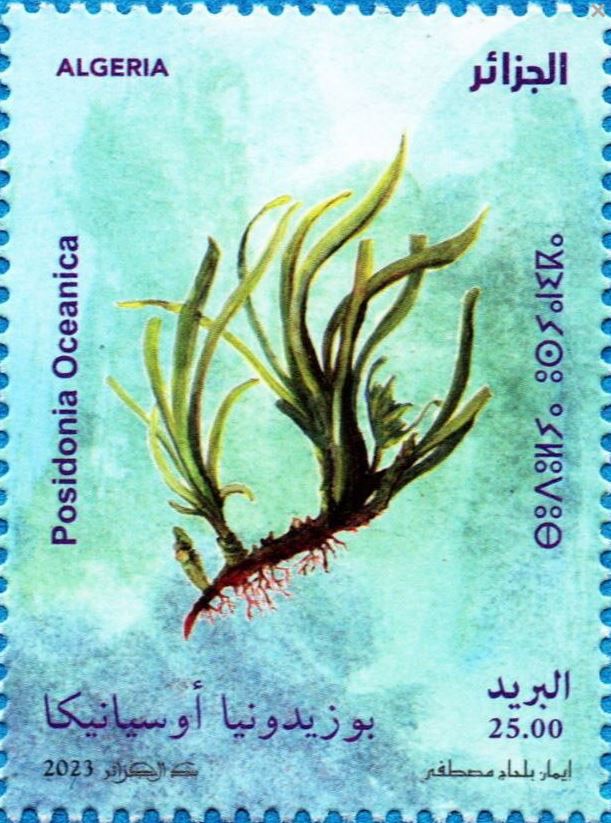
Mediterranean posidonia (Posidonia oceanica)
Posidonia oceanica is an endemic species of the Mediterranean Sea, Posidonia is the most widespread aquatic plant in its waters, represents one of the main marine riches of this sea. It is the most distributed species on the Algerian coasts.
Posidonia oceanica is a marine plant which forms parts called “seagrass beds” on the sandy bottoms of the Mediterranean. Posidonia is a species of aquatic flowering plant (underwater monocot angiosperm)
It has roots, a stem which is rhizomatous, ribbon leaves measuring up to one meter long and arranged in tufts of 6 to 7.
It flowers in autumn and produces floating fruits in spring, commonly called sea olives.
Among its many functions, the Posidonia herbarium plays a role in stabilizing the seabed, dampening swells and waves, and promoting the deposition of sediment particles. Posidonia debris (benches), which can reach more than 2 m in height and up to 20 m in width, form compact and resistant structures along the banks, which offers very effective protection against erosion.
Posidonia is considered an indicator species for the overall quality of coastal waters because it is very sensitive to pollution and can only grow in clean, unpolluted waters. It also supports a wide variety of animal species that use these habitats for breeding, food and shelter.
In addition, its underwater meadows represent significant carbon sinks.
They absorb carbon dioxide, storing carbon at an average rate of 83 g/m2 per year.
They therefore play a vital role in reducing as much as possible the presence of this element in the atmosphere and therefore slow down global warming.
Posidonia oceanica is a marine plant which forms parts called “seagrass beds” on the sandy bottoms of the Mediterranean. Posidonia is a species of aquatic flowering plant (underwater monocot angiosperm)
It has roots, a stem which is rhizomatous, ribbon leaves measuring up to one meter long and arranged in tufts of 6 to 7.
It flowers in autumn and produces floating fruits in spring, commonly called sea olives.
Among its many functions, the Posidonia herbarium plays a role in stabilizing the seabed, dampening swells and waves, and promoting the deposition of sediment particles. Posidonia debris (benches), which can reach more than 2 m in height and up to 20 m in width, form compact and resistant structures along the banks, which offers very effective protection against erosion.
Posidonia is considered an indicator species for the overall quality of coastal waters because it is very sensitive to pollution and can only grow in clean, unpolluted waters. It also supports a wide variety of animal species that use these habitats for breeding, food and shelter.
In addition, its underwater meadows represent significant carbon sinks.
They absorb carbon dioxide, storing carbon at an average rate of 83 g/m2 per year.
They therefore play a vital role in reducing as much as possible the presence of this element in the atmosphere and therefore slow down global warming.