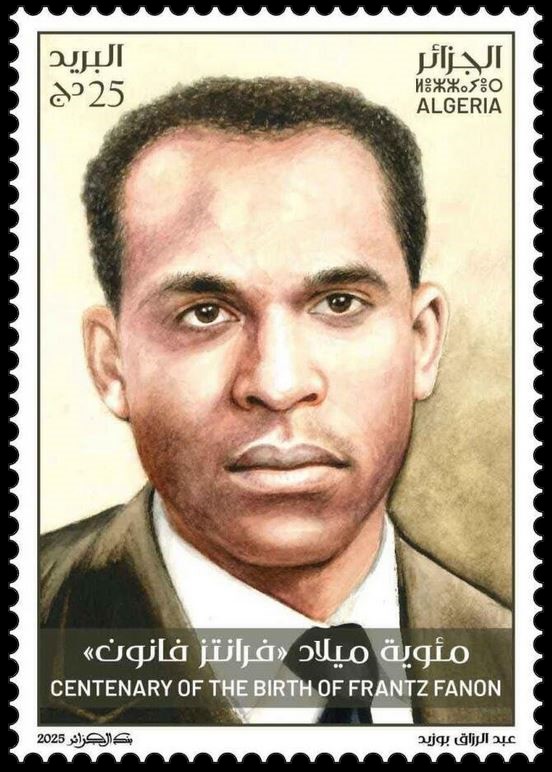
Centenary of Frantz Fanon
Frantz Fanon is among the most committed left-wing intellectuals, refusing any form of neutrality or passive sympathy with regard to the Algerian Revolution. He adopted a firm and resolutely anti-colonialist position, putting his knowledge, his pen and his professional practice at the service of denouncing the systemic racial structures which hindered human freedom - in particular that of the Algerian people.
Coming from the island of Martinique, Frantz Fanon was born in 1925 in Fort-de-France. In 1936, at the age of eleven, he joined a school for black children, then continued his secondary studies at the Schoelcher high school, where he received classical training in the French language. From this period, he showed himself eager for knowledge, curious about the world, and marked by the influence of several political figures.
On July 13, 1943, in the middle of the Second World War, he enlisted
in the Free French Forces from the island of Dominica. He
then joined, on March 12, 1944, the 5th West Indian regiment, formed
to participate in the liberation of France from the Nazi yoke. This
regiment is successively deployed in Rabat, Meknes, Cherchell
and Béjaïa, before taking part in the landing in Toulon on the 29th
June 1944. Fanon was seriously injured while crossing the Rhine.
For his courage, on November 15, 1944 in Rouen, he received a
decoration signed by Colonel Raoul Salan. He comes in
Martinique on September 12, 1945 and was officially demobilized
January 12, 1946.
After this significant military experience, Fanon decided to
pursue higher education in France. In 1947, he moved
in Lyon where he began studying medicine and specialized in
psychiatry. He completed a fifteen-month internship at the Saint-Alban psychiatric hospital, where he was particularly interested in
therapeutic approaches focused on the social reintegration of
patients.
In 1953, after several unsuccessful attempts to integrate a
African hospital establishment, he accepted a position in Algeria. He
settled in Blida in December of the same year, as
psychiatrist at the Joinville hospital, then considered one of the
largest psychiatric centers in Africa.
Fanon discovered there a colonial society marked by
mechanisms of oppression similar to those he had experienced in
the West Indies, but in an even more brutal context. The exercise of
his profession directly confronts him with psychological effects
devastating effects of colonialism on Algerian patients. This observation
leads him to question the very foundations of
psychiatry practiced in a colonial context. Very quickly, he becomes a
major intellectual and activist figure in Blida, working towards a
overhaul of psychiatric practices from a perspective
anti-colonial.
The Algerian experience constitutes a decisive turning point in
the evolution of his thinking. The outbreak of the war
liberation in 1954 crystallized his commitment. The troubles
psychic that he observes in his patients are, according to him,
inseparable from colonial violence. From then on, he becomes convinced
that individual healing requires collective liberation:
only the destruction of the colonial system would allow a
psychological and social reconstruction. He also notes that
the relationship of the colonizer to the Algerian differs fundamentally from
that which he had with the Black West Indian, which reinforces his
conviction of the legitimacy of the Algerian cause. He will make her his,
on an intellectual, professional and humanitarian level.
Coming from the island of Martinique, Frantz Fanon was born in 1925 in Fort-de-France. In 1936, at the age of eleven, he joined a school for black children, then continued his secondary studies at the Schoelcher high school, where he received classical training in the French language. From this period, he showed himself eager for knowledge, curious about the world, and marked by the influence of several political figures.
On July 13, 1943, in the middle of the Second World War, he enlisted
in the Free French Forces from the island of Dominica. He
then joined, on March 12, 1944, the 5th West Indian regiment, formed
to participate in the liberation of France from the Nazi yoke. This
regiment is successively deployed in Rabat, Meknes, Cherchell
and Béjaïa, before taking part in the landing in Toulon on the 29th
June 1944. Fanon was seriously injured while crossing the Rhine.
For his courage, on November 15, 1944 in Rouen, he received a
decoration signed by Colonel Raoul Salan. He comes in
Martinique on September 12, 1945 and was officially demobilized
January 12, 1946.
After this significant military experience, Fanon decided to
pursue higher education in France. In 1947, he moved
in Lyon where he began studying medicine and specialized in
psychiatry. He completed a fifteen-month internship at the Saint-Alban psychiatric hospital, where he was particularly interested in
therapeutic approaches focused on the social reintegration of
patients.
In 1953, after several unsuccessful attempts to integrate a
African hospital establishment, he accepted a position in Algeria. He
settled in Blida in December of the same year, as
psychiatrist at the Joinville hospital, then considered one of the
largest psychiatric centers in Africa.
Fanon discovered there a colonial society marked by
mechanisms of oppression similar to those he had experienced in
the West Indies, but in an even more brutal context. The exercise of
his profession directly confronts him with psychological effects
devastating effects of colonialism on Algerian patients. This observation
leads him to question the very foundations of
psychiatry practiced in a colonial context. Very quickly, he becomes a
major intellectual and activist figure in Blida, working towards a
overhaul of psychiatric practices from a perspective
anti-colonial.
The Algerian experience constitutes a decisive turning point in
the evolution of his thinking. The outbreak of the war
liberation in 1954 crystallized his commitment. The troubles
psychic that he observes in his patients are, according to him,
inseparable from colonial violence. From then on, he becomes convinced
that individual healing requires collective liberation:
only the destruction of the colonial system would allow a
psychological and social reconstruction. He also notes that
the relationship of the colonizer to the Algerian differs fundamentally from
that which he had with the Black West Indian, which reinforces his
conviction of the legitimacy of the Algerian cause. He will make her his,
on an intellectual, professional and humanitarian level.