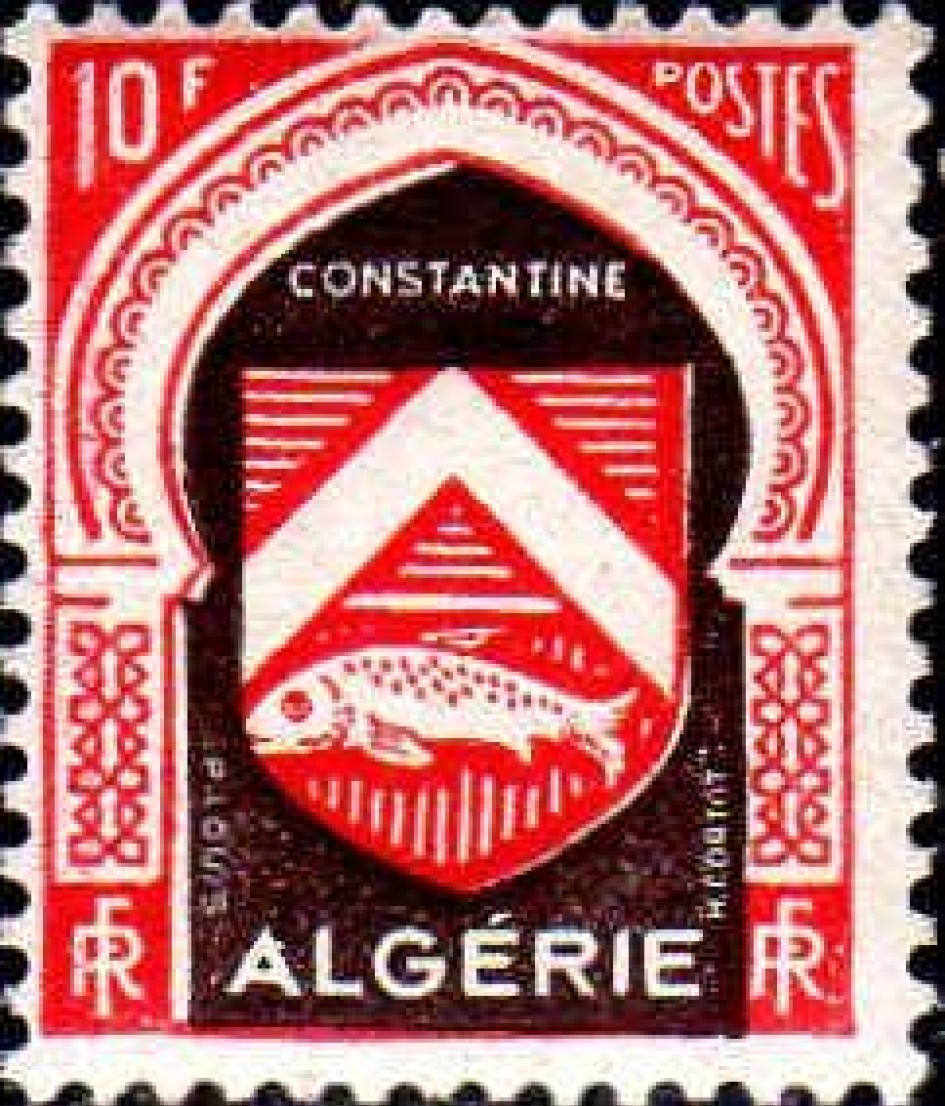
Coat of arms of Constantine
The coat of arms of Constantine
Cut Azure and Gueule seasoned Argent with Fish in point of the same Crowned with a wall crown Or with five battlements, On the gay horse Sable.
Azure represents the Algerian sky, gules (from a Persian word meaning colors) symbolize the desert; or, according to another meaning, the Rhumel gorges (described by Guy de Maupassant as a 'red abyss as if the eternal flames had burned it').
The chevron represents the confluence upstream and near Constantine of Oueds Rhumel and Bou Merzoug. Some believe they see the spur of the Arab horsemen there.
The barbel is the evocation of the Rhumel which crosses the town; common fish from the Algerian wadis (this should not be seen as the mark of the first Christians).
The mural crown is the normal stamp of city coats of arms. Here it has a special meaning. Constantine (formerly Cirta) was from ancient times a stronghold, surrounded by solid fortifications.
As for the horse, with its black coat from Numibia (gay meaning naked, i.e. neither saddled nor bridled), it recalls the importance of the saddle animal for the populations of the region. It can also recall the memory of the famous black mare Halilifa, passed into Arab legend, who through her instinct, her vigor and her gallop, contributed to the deliverance of Constantine besieged by the Tunisians in 1700.
Cut Azure and Gueule seasoned Argent with Fish in point of the same Crowned with a wall crown Or with five battlements, On the gay horse Sable.
Azure represents the Algerian sky, gules (from a Persian word meaning colors) symbolize the desert; or, according to another meaning, the Rhumel gorges (described by Guy de Maupassant as a 'red abyss as if the eternal flames had burned it').
The chevron represents the confluence upstream and near Constantine of Oueds Rhumel and Bou Merzoug. Some believe they see the spur of the Arab horsemen there.
The barbel is the evocation of the Rhumel which crosses the town; common fish from the Algerian wadis (this should not be seen as the mark of the first Christians).
The mural crown is the normal stamp of city coats of arms. Here it has a special meaning. Constantine (formerly Cirta) was from ancient times a stronghold, surrounded by solid fortifications.
As for the horse, with its black coat from Numibia (gay meaning naked, i.e. neither saddled nor bridled), it recalls the importance of the saddle animal for the populations of the region. It can also recall the memory of the famous black mare Halilifa, passed into Arab legend, who through her instinct, her vigor and her gallop, contributed to the deliverance of Constantine besieged by the Tunisians in 1700.