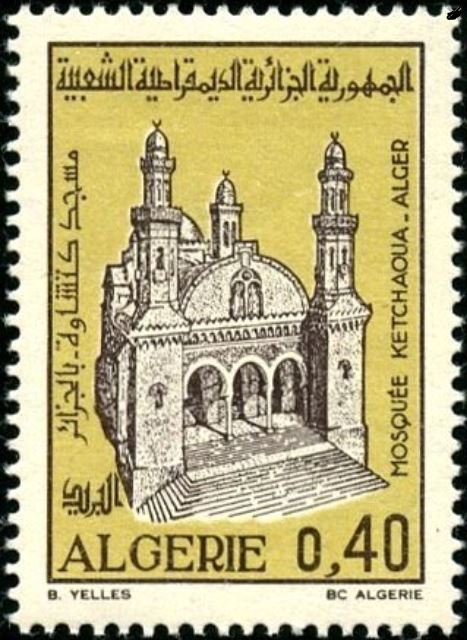
Ketchaoua Mosque, Algiers
Ketchaoua (goat plateau) is the name given in the 16th century to this part of old Algiers where no buildings were then erected.
At the beginning of the 17th century, the first Ketchaoua mosque was founded, which was enlarged and embellished by Pasha Hassan in 1794. This date is given by an inscription kept in the Algiers Museum as follows: “What a beautiful mosque! The one that the wishes desired with extreme ardor and which smiles on the horizon of the century with the brilliance of its completion... When I was finished, I was like bliss, with happiness and glory. 1209 A.H., 1794-1795 A.D.
An octagonal dome topped the immense prayer room, the four sides of which were lined with galleries. The French occupation modified the building which underwent a complete overhaul and profound transformations to become a cathedral in 1832.
Nearly one hundred and thirty years later, following the independence of Algeria, it was returned to Muslim worship. Since then, it has experienced a particular influx of the faithful, particularly on the occasion of the great Friday prayer.
Today, the Ketchaoua Mosque reflects the appearance of the ancient monument inspired by Turkish art through the style and location of the central dome as well as the luxurious black columns of the period.
At the beginning of the 17th century, the first Ketchaoua mosque was founded, which was enlarged and embellished by Pasha Hassan in 1794. This date is given by an inscription kept in the Algiers Museum as follows: “What a beautiful mosque! The one that the wishes desired with extreme ardor and which smiles on the horizon of the century with the brilliance of its completion... When I was finished, I was like bliss, with happiness and glory. 1209 A.H., 1794-1795 A.D.
An octagonal dome topped the immense prayer room, the four sides of which were lined with galleries. The French occupation modified the building which underwent a complete overhaul and profound transformations to become a cathedral in 1832.
Nearly one hundred and thirty years later, following the independence of Algeria, it was returned to Muslim worship. Since then, it has experienced a particular influx of the faithful, particularly on the occasion of the great Friday prayer.
Today, the Ketchaoua Mosque reflects the appearance of the ancient monument inspired by Turkish art through the style and location of the central dome as well as the luxurious black columns of the period.