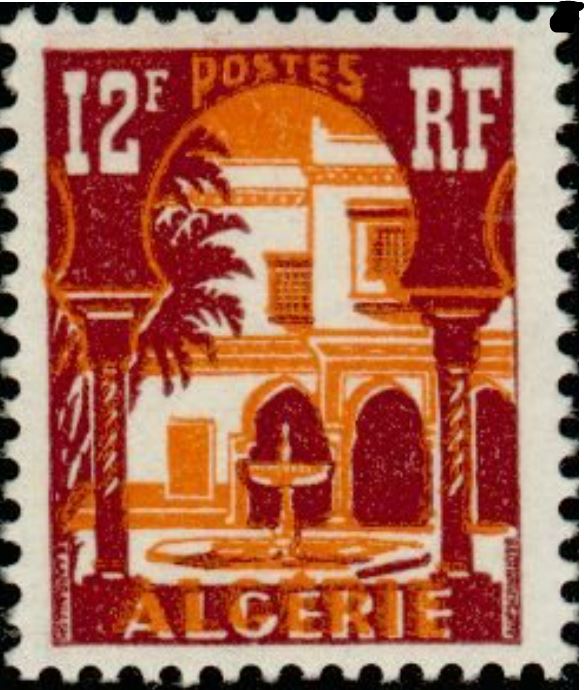
Moorish courtyard of the Bardo Museum
The National Museum of BARDO
On the green hillsides of the Mustapha estate, several white spots of country villas stand out.
Former villas of the Fahs of Ottoman Algiers, these summer residences built in the close suburbs of the capital, carried a custom which consisted of wealthy families spending the hot summer months in the countryside.
Formerly located in the suburbs of old Algiers, they are encompassed by the modern city and part of a new urban layout today.
Bordering the old road to Laghouat, one of the main arteries commonly called Rue Didouche Mourad, one of these villas appears, the Bardo.
HISTORY
About the past of this beautiful Algiers villa, the stories are quite confused.
However, having to be satisfied with a few clues, we will refer to the stories of Lucien Golvin who himself draws his sources from Henri Klein in his Feuillets d'El Djazair.
The villa would have been built in the 18th century. It is attributed to an exiled Tunisian prince, identified in the character of Prince “Mustapha Ben Omar”.
This origin would probably explain the name “BARDO” that the villa bears. Interpreted by Klein, this name is a distortion of “PRADO”; sumptuous summer villa inhabited by the Beys in the suburbs of Tunis and whose possession fell to the Hafcid Sultans from the 15th century.
Assigned, from 1830, the date of the French conquest, to General Exelmans, the villa would have belonged to the following owners:
• Mr. Lichetlin in 1846.
• Monsieur Baccuet in 1851.
• Mr. Grauby in 1868.
• Madame Aziza Fao, daughter of Bacri in 1874.
In 1875, the villa came into the hands of Ali Bey, Agha of Biskra.
Very wealthy, this man of taste made many changes to the villa. Without defacing the place, however, he imported the richest earthenware from Holland, Tunisia and Morocco, Iran and Turkey. Ali Bey's taste made him create elegant frescoes.
Furthermore, he decorated the gardens with the most beautiful and luxuriant foliage where tropical flora and familiar foliage mingle. He built outbuildings in the lower part of the residence where he fitted out sheds and stables. Under conditions that would have been desirable to know, Ali Bey sold the villa to Mr Joret who became the owner in 1879.
Loved by art and music, this passionate owner added to the adornment of the rooms which he enriched with beautiful and precious collections.
The luxury of the furniture combined with the elegance of the porcelain, the tone of the polychrome carpets enhanced the subtlety of the embroidered silks...
To all these things was added the charm of the collections of lamps, braziers, chests, musical instruments...etc. all coming from the Orient, Persia, Italy, Tunisia and Morocco.
This influence was all the greater for history; a taste which led to the acquisition of a collection rich in prehistory.
To house these valuable collections, Mr Joret adapted the villa to his needs. He added to the lower part large passages cut into the walls with glazed ceilings.
Other additions to the villa are attributed to him, including a large room overlooking an upper courtyard. According to historical accounts, this room which houses very beautiful collections of rural ethnography, was intended to be a “Snack Room”; a room where the most beautiful piano notes still resonate.
These additions which blended into the mass of the monument and preserved the original part earned Mr Joret the congratulations of the Committee of Old Algiers during his visit to the villa in 1912/1913, for its conservation and respect for the nature of the place.
The new elements introduced by Mr Joret were not the only ones to stratify themselves in the “Villa” organization.
On the death of Mr Joret, the villa rightfully belonged to Mrs Frémont, sister and heir of Pierre Joret, until 1926 when the BARDO villa was transferred to the estates.
It was only in 1930 that the villa became the Museum of Ethnography and Prehistory.
For this new vocation, other modifications have occurred.
Due to a lack of sources and insufficient information, the attribution of its additions remains secret.
The important thing to remember in this diachronic evolution is that in any practice on the differentiated spaces of the Bardo, whether attributed to Mr Joret or otherwise, the coherence of the place was not attacked and had in no way lost its potential and its homogeneity.
Due to its architectural and historical richness, the villa was classified as a “Historic Monument” on September 1, 1985.
On November 12, 1985, the Museum was established as a “National Museum” with an international vocation under Decree No. 85-280 creating the said Museum.
On the green hillsides of the Mustapha estate, several white spots of country villas stand out.
Former villas of the Fahs of Ottoman Algiers, these summer residences built in the close suburbs of the capital, carried a custom which consisted of wealthy families spending the hot summer months in the countryside.
Formerly located in the suburbs of old Algiers, they are encompassed by the modern city and part of a new urban layout today.
Bordering the old road to Laghouat, one of the main arteries commonly called Rue Didouche Mourad, one of these villas appears, the Bardo.
HISTORY
About the past of this beautiful Algiers villa, the stories are quite confused.
However, having to be satisfied with a few clues, we will refer to the stories of Lucien Golvin who himself draws his sources from Henri Klein in his Feuillets d'El Djazair.
The villa would have been built in the 18th century. It is attributed to an exiled Tunisian prince, identified in the character of Prince “Mustapha Ben Omar”.
This origin would probably explain the name “BARDO” that the villa bears. Interpreted by Klein, this name is a distortion of “PRADO”; sumptuous summer villa inhabited by the Beys in the suburbs of Tunis and whose possession fell to the Hafcid Sultans from the 15th century.
Assigned, from 1830, the date of the French conquest, to General Exelmans, the villa would have belonged to the following owners:
• Mr. Lichetlin in 1846.
• Monsieur Baccuet in 1851.
• Mr. Grauby in 1868.
• Madame Aziza Fao, daughter of Bacri in 1874.
In 1875, the villa came into the hands of Ali Bey, Agha of Biskra.
Very wealthy, this man of taste made many changes to the villa. Without defacing the place, however, he imported the richest earthenware from Holland, Tunisia and Morocco, Iran and Turkey. Ali Bey's taste made him create elegant frescoes.
Furthermore, he decorated the gardens with the most beautiful and luxuriant foliage where tropical flora and familiar foliage mingle. He built outbuildings in the lower part of the residence where he fitted out sheds and stables. Under conditions that would have been desirable to know, Ali Bey sold the villa to Mr Joret who became the owner in 1879.
Loved by art and music, this passionate owner added to the adornment of the rooms which he enriched with beautiful and precious collections.
The luxury of the furniture combined with the elegance of the porcelain, the tone of the polychrome carpets enhanced the subtlety of the embroidered silks...
To all these things was added the charm of the collections of lamps, braziers, chests, musical instruments...etc. all coming from the Orient, Persia, Italy, Tunisia and Morocco.
This influence was all the greater for history; a taste which led to the acquisition of a collection rich in prehistory.
To house these valuable collections, Mr Joret adapted the villa to his needs. He added to the lower part large passages cut into the walls with glazed ceilings.
Other additions to the villa are attributed to him, including a large room overlooking an upper courtyard. According to historical accounts, this room which houses very beautiful collections of rural ethnography, was intended to be a “Snack Room”; a room where the most beautiful piano notes still resonate.
These additions which blended into the mass of the monument and preserved the original part earned Mr Joret the congratulations of the Committee of Old Algiers during his visit to the villa in 1912/1913, for its conservation and respect for the nature of the place.
The new elements introduced by Mr Joret were not the only ones to stratify themselves in the “Villa” organization.
On the death of Mr Joret, the villa rightfully belonged to Mrs Frémont, sister and heir of Pierre Joret, until 1926 when the BARDO villa was transferred to the estates.
It was only in 1930 that the villa became the Museum of Ethnography and Prehistory.
For this new vocation, other modifications have occurred.
Due to a lack of sources and insufficient information, the attribution of its additions remains secret.
The important thing to remember in this diachronic evolution is that in any practice on the differentiated spaces of the Bardo, whether attributed to Mr Joret or otherwise, the coherence of the place was not attacked and had in no way lost its potential and its homogeneity.
Due to its architectural and historical richness, the villa was classified as a “Historic Monument” on September 1, 1985.
On November 12, 1985, the Museum was established as a “National Museum” with an international vocation under Decree No. 85-280 creating the said Museum.