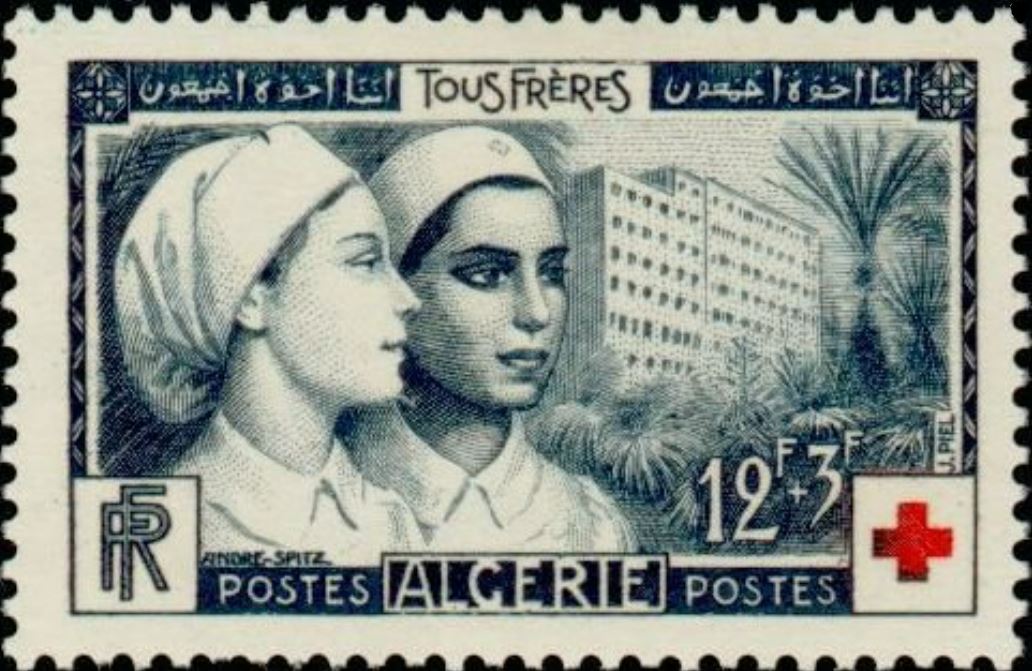
Nurses and Verdun Hospital in Algiers
For the benefit of the Works of the Red Cross
In the Province of Mantua, in the north of Italy, a small village entered history that day: it was Solferino.
Emperor Napoleon III, at the head of a Franco-Piedmontese army, crushes the Austrians. This is an extremely deadly battle. Thousands of injured people are dying from lack of care. Calls for help remain unanswered. Witness to this tragedy, a Swiss citizen, Henry Dunant, improvised relief with the help of local civilian populations.
He assists soldiers from both camps without discrimination. Then the first volunteers of this aid to the victims of the war exclaimed: “Tutti fratelli. We are all brothers.” Strongly shaken by what he has just seen, Henry Dunant will publish on his return one of the first war reports: “A Memory of Solferino” in which he denounces the horrors of the fighting.
...The Red Cross is born!
From this day on, thousands of men, civilians, soldiers and prisoners will be entitled to these fraternal gestures which make hours of trial and suffering less cruel.
5 years after Solférino, Henry Dunant's idea took hold. A committee of 5 people was formed in Geneva to examine the means to be implemented to protect the wounded on the battlefields.
An international conference meets in Geneva. Sixteen nations are participating, including France. They decided to create relief committees in each country and chose an emblem: a red cross on a white background. States adopt international rules defining the fate of people in the hands of the enemy and who do not participate in combat: these are the Geneva Conventions, the first of which came into being on August 22, 1864.
The Geneva conventions
In the Province of Mantua, in the north of Italy, a small village entered history that day: it was Solferino.
Emperor Napoleon III, at the head of a Franco-Piedmontese army, crushes the Austrians. This is an extremely deadly battle. Thousands of injured people are dying from lack of care. Calls for help remain unanswered. Witness to this tragedy, a Swiss citizen, Henry Dunant, improvised relief with the help of local civilian populations.
He assists soldiers from both camps without discrimination. Then the first volunteers of this aid to the victims of the war exclaimed: “Tutti fratelli. We are all brothers.” Strongly shaken by what he has just seen, Henry Dunant will publish on his return one of the first war reports: “A Memory of Solferino” in which he denounces the horrors of the fighting.
...The Red Cross is born!
From this day on, thousands of men, civilians, soldiers and prisoners will be entitled to these fraternal gestures which make hours of trial and suffering less cruel.
5 years after Solférino, Henry Dunant's idea took hold. A committee of 5 people was formed in Geneva to examine the means to be implemented to protect the wounded on the battlefields.
An international conference meets in Geneva. Sixteen nations are participating, including France. They decided to create relief committees in each country and chose an emblem: a red cross on a white background. States adopt international rules defining the fate of people in the hands of the enemy and who do not participate in combat: these are the Geneva Conventions, the first of which came into being on August 22, 1864.
The Geneva conventions