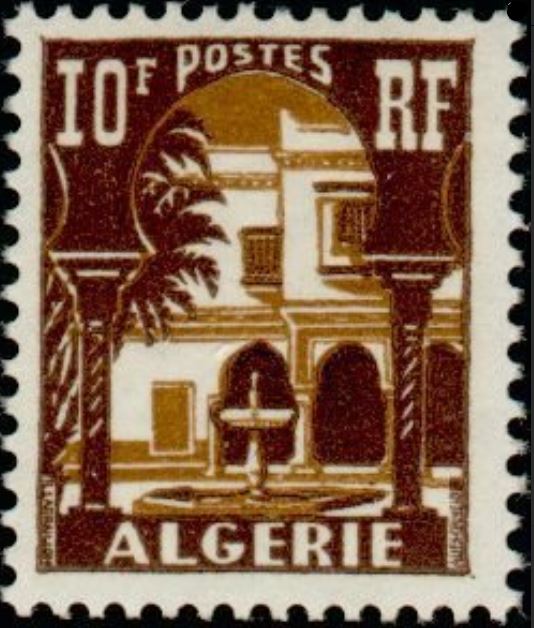
Moorish courtyard of the Bardo Museum
The National Museum of BARDO
On the green hillsides of the Mustapha estate, several white spots of country villas stand out.
Former villas of the Fahs of Ottoman Algiers, these summer residences built in the close suburbs of the capital, carried a custom which consisted of wealthy families spending the hot summer months in the countryside.
Formerly located in the suburbs of old Algiers, they are encompassed by the modern city and part of a new urban layout today.
Bordering the old road to Laghouat, one of the main arteries commonly called Rue Didouche Mourad, one of these villas appears, the Bardo.
HISTORY
About the past of this beautiful Algiers villa, the stories are quite confused.
However, having to be satisfied with a few clues, we will refer to the stories of Lucien Golvin who himself draws his sources from Henri Klein in his Feuillets d'El Djazair.
The villa would have been built in the 18th century. It is attributed to an exiled Tunisian prince, identified in the character of Prince “Mustapha Ben Omar”.
This origin would probably explain the name “BARDO” that the villa bears. Interpreted by Klein, this name is a distortion of “PRADO”; sumptuous summer villa inhabited by the Beys in the suburbs of Tunis and whose possession fell to the Hafcid Sultans from the 15th century.
Assigned, from 1830, the date of the French conquest, to General Exelmans, the villa would have belonged to the following owners:
• Mr. Lichetlin in 1846.
• Monsieur Baccuet in 1851.
• Mr. Grauby in 1868.
• Madame Aziza Fao, daughter of Bacri in 1874.
In 1875, the villa came into the hands of Ali Bey, Agha of Biskra.
On the green hillsides of the Mustapha estate, several white spots of country villas stand out.
Former villas of the Fahs of Ottoman Algiers, these summer residences built in the close suburbs of the capital, carried a custom which consisted of wealthy families spending the hot summer months in the countryside.
Formerly located in the suburbs of old Algiers, they are encompassed by the modern city and part of a new urban layout today.
Bordering the old road to Laghouat, one of the main arteries commonly called Rue Didouche Mourad, one of these villas appears, the Bardo.
HISTORY
About the past of this beautiful Algiers villa, the stories are quite confused.
However, having to be satisfied with a few clues, we will refer to the stories of Lucien Golvin who himself draws his sources from Henri Klein in his Feuillets d'El Djazair.
The villa would have been built in the 18th century. It is attributed to an exiled Tunisian prince, identified in the character of Prince “Mustapha Ben Omar”.
This origin would probably explain the name “BARDO” that the villa bears. Interpreted by Klein, this name is a distortion of “PRADO”; sumptuous summer villa inhabited by the Beys in the suburbs of Tunis and whose possession fell to the Hafcid Sultans from the 15th century.
Assigned, from 1830, the date of the French conquest, to General Exelmans, the villa would have belonged to the following owners:
• Mr. Lichetlin in 1846.
• Monsieur Baccuet in 1851.
• Mr. Grauby in 1868.
• Madame Aziza Fao, daughter of Bacri in 1874.
In 1875, the villa came into the hands of Ali Bey, Agha of Biskra.