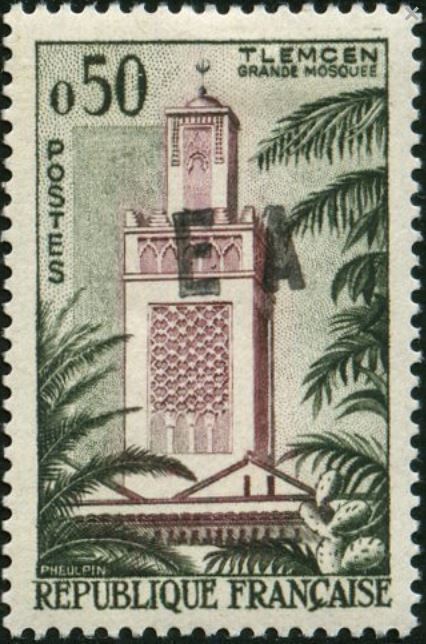
Tlemcen Mosque
The city of Tlemcen was founded in the 4th century as a military camp on the border of the Roman Empire. The city then played a religious role since it became the seat of a Catholic diocese: Bishop Victor who sat there played an important role at the Council of Carthage of 411.
At the end of the 8th century and during the 9th century, the city became one of the strongholds of Kharijism in North Africa. In the 11th century, under the Almohads, Tlemcen was a leading commercial center.
The kingdom of Tlemcen, founded in 1282, has an extraordinary destiny. This kingdom is ruled by the Abdalwadid dynasty. At its peak, this state controlled a territory stretching from the Atlas to present-day Tunisia in the 15th century. In 1553, the kingdom came under Ottoman protection.
Located at the crossroads of roads leading from Morocco to Algeria and from the Mediterranean to the Sahara.
Tlemcen had a considerable commercial role. In 1248, it formed a Berber kingdom, independent of the Almohad empire and became the capital of the Abdelwadid kingdom which extended in the 14th century to most of present-day Algeria. Tlemcen, which was already a religious center in the 12th century, then became a center of Islamic culture. In the 16th century, it came under the sovereignty of the Spanish governor of Oran, then under the domination of Arudj Barbarossa and finally the Turks in 1553.
The mosque of Sidi Bou Médine which was built in the 14th century by a sultan of Fez, the 'black sultan', in pure Hispano-Moorish style, as in Fez or Granada. The minaret is decorated with polychrome bricks and ceramics.
Bou Medine was actually called Chaïb Ibn Hussein El Andalousi, because he was born in Seville, Ibn Chaib taught successively in Baghdad, Seville, Cordoba and, finally in Bougie, he was of extraordinary intelligence.
The Tlemcenians gave him an imposing funeral and buried him in the very place of which he had said: “What a place conducive to sleep”.
Of all the towns in western Oran, Tlemcen is the one least penetrated by Spanish immigration. The limit of this Iberian exodus of the mid-19th century seems to have been the region of Rio Salado, Sidi - Bel - Abbès and Beni - Saf.
Djéma el Kébir, the great mosque, built in the 12th century, extraordinarily bare, modern in lines.
However, the Andalusian influence in Tlemcen dates back to the 15th century, when the reconquest led and completed by the Catholic kings brought back to North Africa the Moros who are at the origin of these Andalusian communities that we find from Fez to Bizerte and who have kept, with the keys of their abandoned houses in Granada or Malaga, their musical and poetic folklore.
There are also, on the road to Morocco, the imposing ruins of Mansoura the Victorious, this temporary metropolis of red brick that Abou Yacoub, known as El -Mansour (the victorious), built within an arrow's reach of the capital he wanted to conquer and which became, after the capture of Tlemcen by the black sultan Abou Hassen, the seat of the Marinid government for the central Maghreb.
The very cold winter, snowy due to the altitude (over 800 m) but sunny, was followed by an early spring which brought cherry and peach blossoms into bloom from February. Then it was the famous cherry festival which brought tens of thousands of visitors to Tlemcen.
At the end of the 8th century and during the 9th century, the city became one of the strongholds of Kharijism in North Africa. In the 11th century, under the Almohads, Tlemcen was a leading commercial center.
The kingdom of Tlemcen, founded in 1282, has an extraordinary destiny. This kingdom is ruled by the Abdalwadid dynasty. At its peak, this state controlled a territory stretching from the Atlas to present-day Tunisia in the 15th century. In 1553, the kingdom came under Ottoman protection.
Located at the crossroads of roads leading from Morocco to Algeria and from the Mediterranean to the Sahara.
Tlemcen had a considerable commercial role. In 1248, it formed a Berber kingdom, independent of the Almohad empire and became the capital of the Abdelwadid kingdom which extended in the 14th century to most of present-day Algeria. Tlemcen, which was already a religious center in the 12th century, then became a center of Islamic culture. In the 16th century, it came under the sovereignty of the Spanish governor of Oran, then under the domination of Arudj Barbarossa and finally the Turks in 1553.
The mosque of Sidi Bou Médine which was built in the 14th century by a sultan of Fez, the 'black sultan', in pure Hispano-Moorish style, as in Fez or Granada. The minaret is decorated with polychrome bricks and ceramics.
Bou Medine was actually called Chaïb Ibn Hussein El Andalousi, because he was born in Seville, Ibn Chaib taught successively in Baghdad, Seville, Cordoba and, finally in Bougie, he was of extraordinary intelligence.
The Tlemcenians gave him an imposing funeral and buried him in the very place of which he had said: “What a place conducive to sleep”.
Of all the towns in western Oran, Tlemcen is the one least penetrated by Spanish immigration. The limit of this Iberian exodus of the mid-19th century seems to have been the region of Rio Salado, Sidi - Bel - Abbès and Beni - Saf.
Djéma el Kébir, the great mosque, built in the 12th century, extraordinarily bare, modern in lines.
However, the Andalusian influence in Tlemcen dates back to the 15th century, when the reconquest led and completed by the Catholic kings brought back to North Africa the Moros who are at the origin of these Andalusian communities that we find from Fez to Bizerte and who have kept, with the keys of their abandoned houses in Granada or Malaga, their musical and poetic folklore.
There are also, on the road to Morocco, the imposing ruins of Mansoura the Victorious, this temporary metropolis of red brick that Abou Yacoub, known as El -Mansour (the victorious), built within an arrow's reach of the capital he wanted to conquer and which became, after the capture of Tlemcen by the black sultan Abou Hassen, the seat of the Marinid government for the central Maghreb.
The very cold winter, snowy due to the altitude (over 800 m) but sunny, was followed by an early spring which brought cherry and peach blossoms into bloom from February. Then it was the famous cherry festival which brought tens of thousands of visitors to Tlemcen.