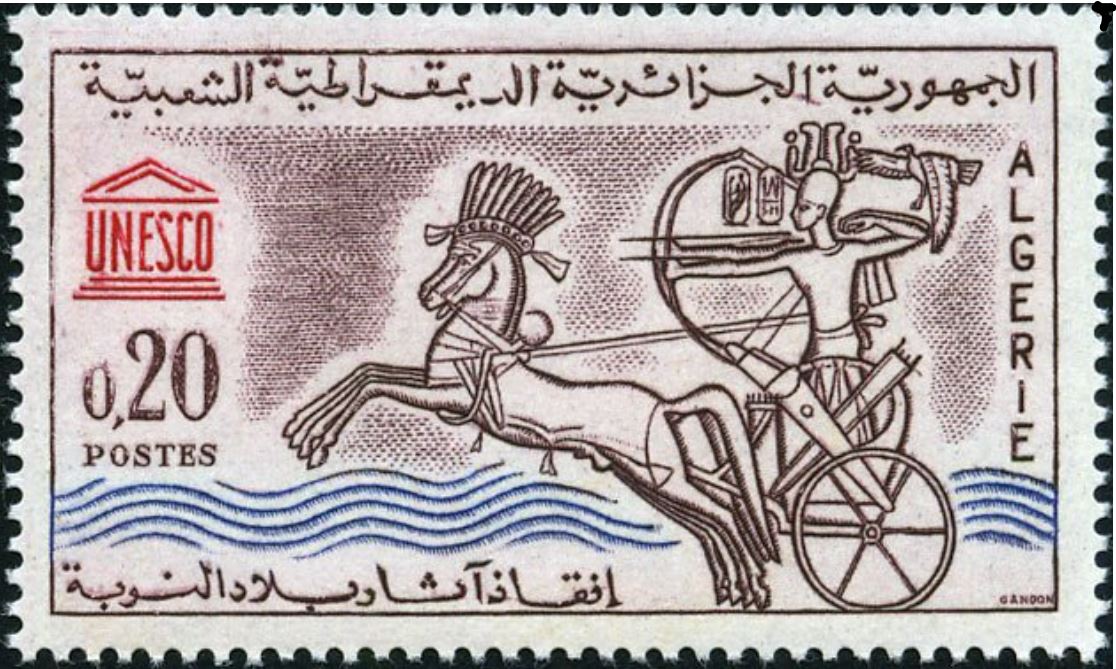
Safeguarding the monuments of Nubia
In 1964, a vast campaign to save the monuments of Nubia, threatened by the rising waters of the lake, was led by UNESCO, at the express request of the Egyptian and Sudanese governments.
The appeal launched four years earlier by the director general of the UN body, Vittorio Veronese, to member states had the desired effect since several countries including Algeria, newly independent, took part in this gigantic safeguarding plan, thus managing to save these masterpieces bequeathed by Antiquity from engulfment and total destruction.
Archaeological excavations are being carried out. They will lead to the preservation of thousands of objects and monuments including the famous temple of Abu-Simbel, erected on the banks of the Nile, around 1250 BC. BC, to the glory of the king of Egypt Ramses II and his wife Nefertari.
Like some other sanctuaries, it will be cut into blocks to then be reconstituted in a place located higher up.
The temple complex on the island of Philae, whose sanctuary is dedicated to the goddess Isis, will also be very seriously affected, as will dozens of others, stretching from Aswan, in Egypt, to the Dal Cataract, in Sudan.
The appeal launched four years earlier by the director general of the UN body, Vittorio Veronese, to member states had the desired effect since several countries including Algeria, newly independent, took part in this gigantic safeguarding plan, thus managing to save these masterpieces bequeathed by Antiquity from engulfment and total destruction.
Archaeological excavations are being carried out. They will lead to the preservation of thousands of objects and monuments including the famous temple of Abu-Simbel, erected on the banks of the Nile, around 1250 BC. BC, to the glory of the king of Egypt Ramses II and his wife Nefertari.
Like some other sanctuaries, it will be cut into blocks to then be reconstituted in a place located higher up.
The temple complex on the island of Philae, whose sanctuary is dedicated to the goddess Isis, will also be very seriously affected, as will dozens of others, stretching from Aswan, in Egypt, to the Dal Cataract, in Sudan.