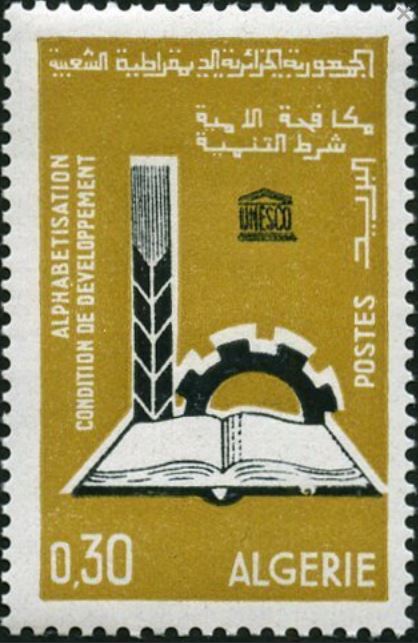
Literacy Condition of Development
Education is the priority of independent Algeria, which has very few graduates at the end of the War of National Liberation. At the first school year in 1962, the number of primary schools was 2,263.
Reception capacities were unable to meet the social demand for education. But three years later, the number of schools has almost doubled. Indeed, since 1965, the budget devoted to national education represents a quarter of Algeria's budget. It is among the highest in the world.
This year, it is estimated at 630 million dinars out of a total budget of 3,200 million dinars. In 1965-1966, the school enrollment rate for children aged 6 to 13 was around 45%. In other words, a little more than half of the children in this age group have not attended school.
These people left behind will therefore swell, in a few years, the ranks of illiterate adults who have entered the era of independence as such. The early dropout rate remains high.
The relevance of the subject is such that on a doctrinal and legal level, the Charters of Tripoli and Algiers, adopted in 1962 and 1964 respectively, will underline: “The fight against ignorance concerns the entire country. (…) It will be the first national duty.”
Reception capacities were unable to meet the social demand for education. But three years later, the number of schools has almost doubled. Indeed, since 1965, the budget devoted to national education represents a quarter of Algeria's budget. It is among the highest in the world.
This year, it is estimated at 630 million dinars out of a total budget of 3,200 million dinars. In 1965-1966, the school enrollment rate for children aged 6 to 13 was around 45%. In other words, a little more than half of the children in this age group have not attended school.
These people left behind will therefore swell, in a few years, the ranks of illiterate adults who have entered the era of independence as such. The early dropout rate remains high.
The relevance of the subject is such that on a doctrinal and legal level, the Charters of Tripoli and Algiers, adopted in 1962 and 1964 respectively, will underline: “The fight against ignorance concerns the entire country. (…) It will be the first national duty.”