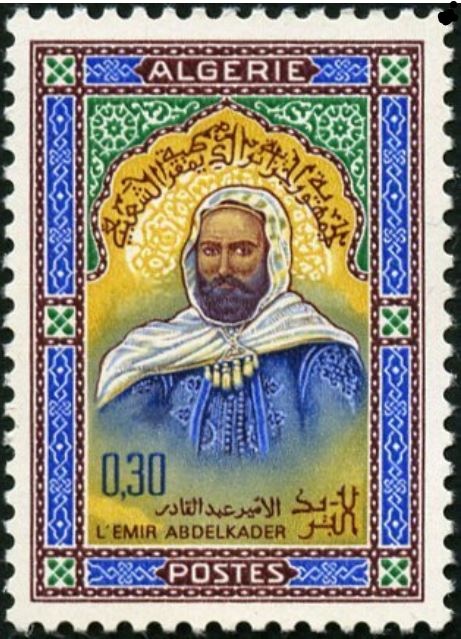
Return from the Ashes of Emir Abdelkader
On July 5, 1966, the Algerian people celebrated in meditation and respect the return of the ashes of Emir Abdelkader, buried in the martyrs' square of the El Alia cemetery. The remains of Emir Abdelkader, who died on May 22, 1883 in Damascus, Syria, had rested for more than eighty years in the former capital of the Umayyads.
Abdelkader Ibn Mahieddine was born in 1808 in Mascara in an environment of study and piety. His youth was studious. He was introduced to science at a young age. The sheikhs and tolbas of his father's zaouïa introduced him to and appreciated the works of Arab poets and writers.
Passionate about theology and a lover of literature, he made contact with intellectuals from the East during the pilgrimage he made to Mecca in 1826. The trip, which was to last two years, made a strong impression on the young Abdelkader. From then on, his ambition was to become a great scholar. But events would shatter his dream and decide his destiny. Misfortune befell his country with the colonialist landing of July 5, 1830.
Abdelkader was one of the first to fight under the walls of Oran where he was wounded. And on November 22, 1832, he was elected Emir by a congress of the tribes of the Mascara region. Barely 24 years old, Abdelkader, whom nothing seemed destined for the art of war, would show that he was not only a very sensitive poet, but also a remarkable warrior and an ingenious head of state.
As a fighter, Abdelkader was able, with paltry means, to inflict heavy losses on the invader. His knowledge of the terrain and the war strategies of the time, his intelligence and his enthusiasm allowed the Algerian forces to achieve great victories...
The enemy saw in him “a formidable adversary and a resolute warrior”. At the same time, the Emir strove to bring together the Algerian lands by putting an end to the treason of the feudal lords, anxious to defend their interests more than their homeland. This is how at the end of 1838, apart from the points controlled by the French expeditionary force, Abdelkader exercised his authority over all of Algeria.
As head of state, Abdelkader began by securing external support. He then imposed social and moral transformations which responded to the most important aspirations of the moment: to defend the national territory. By destroying the very structures of feudalism, he laid the foundations of a centralized state with a standing army and a government of paid civil servants.
Sometimes waging war, sometimes compromising with the enemy, he organized trade and created a real war industry. But the numerical superiority and the advanced weaponry of the expeditionary force were to overcome this valiant warrior. He offered his surrender on conditions which he himself chose and which were accepted. Despite captivity and exile, the Emir always remained faithful to himself and his people.
Abdelkader will therefore have experienced both glory and misfortune. He personifies the qualities of his people and his time. And it is all these qualities that took him out of history and into legend.
Abdelkader Ibn Mahieddine was born in 1808 in Mascara in an environment of study and piety. His youth was studious. He was introduced to science at a young age. The sheikhs and tolbas of his father's zaouïa introduced him to and appreciated the works of Arab poets and writers.
Passionate about theology and a lover of literature, he made contact with intellectuals from the East during the pilgrimage he made to Mecca in 1826. The trip, which was to last two years, made a strong impression on the young Abdelkader. From then on, his ambition was to become a great scholar. But events would shatter his dream and decide his destiny. Misfortune befell his country with the colonialist landing of July 5, 1830.
Abdelkader was one of the first to fight under the walls of Oran where he was wounded. And on November 22, 1832, he was elected Emir by a congress of the tribes of the Mascara region. Barely 24 years old, Abdelkader, whom nothing seemed destined for the art of war, would show that he was not only a very sensitive poet, but also a remarkable warrior and an ingenious head of state.
As a fighter, Abdelkader was able, with paltry means, to inflict heavy losses on the invader. His knowledge of the terrain and the war strategies of the time, his intelligence and his enthusiasm allowed the Algerian forces to achieve great victories...
The enemy saw in him “a formidable adversary and a resolute warrior”. At the same time, the Emir strove to bring together the Algerian lands by putting an end to the treason of the feudal lords, anxious to defend their interests more than their homeland. This is how at the end of 1838, apart from the points controlled by the French expeditionary force, Abdelkader exercised his authority over all of Algeria.
As head of state, Abdelkader began by securing external support. He then imposed social and moral transformations which responded to the most important aspirations of the moment: to defend the national territory. By destroying the very structures of feudalism, he laid the foundations of a centralized state with a standing army and a government of paid civil servants.
Sometimes waging war, sometimes compromising with the enemy, he organized trade and created a real war industry. But the numerical superiority and the advanced weaponry of the expeditionary force were to overcome this valiant warrior. He offered his surrender on conditions which he himself chose and which were accepted. Despite captivity and exile, the Emir always remained faithful to himself and his people.
Abdelkader will therefore have experienced both glory and misfortune. He personifies the qualities of his people and his time. And it is all these qualities that took him out of history and into legend.