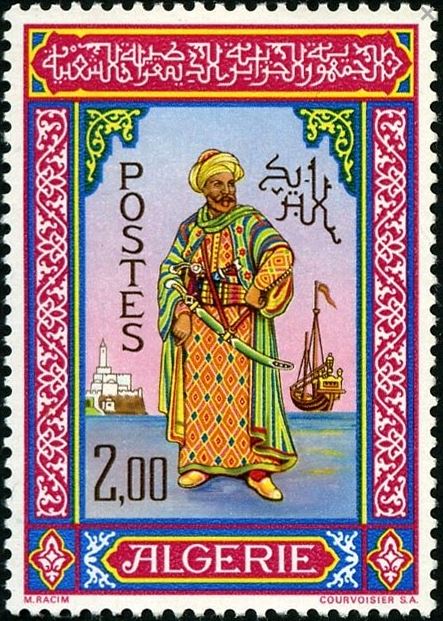
Miniatures of Mohamed Racim Barbarossa in front of the Admiralty
Algerian miniatures by Mohamed Racim
It was from the 11th century that the first illuminations of Islamic manuscripts appeared.
This art would only reach its peak at the end of the 13th century.
The 16th century was the golden age of Muslim miniatures.
History has remembered the remarkable contribution of the Persian painter Behzad and his disciples of the same origin Aghamirak and Sultan Mohamed whose works, illustrations of chronicles or collections of poetry further enrich the funds of libraries and other museums around the world.
Rather than conforming to the Persian school, Racim preferred to evolve off the beaten track by drawing inspiration from the family heritage.
He thus creates his own miniature by imposing other influences and proposing themes which essentially relate to Algerian habits and customs before 1830.
The Racimian school was born.
Barbarossa
Khayr-Eddine Barberousse, this formidable and reckless sailor, left his mark on the history of El Djazaïr El Mahroussa (well-kept Algiers).
This sailor, who placed himself in the service of Sultan Selim I, built the fortune and reputation of the Ottoman Empire through a keen sense of strategy and command.
Born in 1466 on the island of Lesbos and died in 1546 in Istanbul, he is considered, with the Genoese Andrea Doria, as the greatest corsair of all time.
It was from the 11th century that the first illuminations of Islamic manuscripts appeared.
This art would only reach its peak at the end of the 13th century.
The 16th century was the golden age of Muslim miniatures.
History has remembered the remarkable contribution of the Persian painter Behzad and his disciples of the same origin Aghamirak and Sultan Mohamed whose works, illustrations of chronicles or collections of poetry further enrich the funds of libraries and other museums around the world.
Rather than conforming to the Persian school, Racim preferred to evolve off the beaten track by drawing inspiration from the family heritage.
He thus creates his own miniature by imposing other influences and proposing themes which essentially relate to Algerian habits and customs before 1830.
The Racimian school was born.
Barbarossa
Khayr-Eddine Barberousse, this formidable and reckless sailor, left his mark on the history of El Djazaïr El Mahroussa (well-kept Algiers).
This sailor, who placed himself in the service of Sultan Selim I, built the fortune and reputation of the Ottoman Empire through a keen sense of strategy and command.
Born in 1466 on the island of Lesbos and died in 1546 in Istanbul, he is considered, with the Genoese Andrea Doria, as the greatest corsair of all time.