Tipaza
Tipaza is originally a Punic foundation in North Africa. Like all the cities of the Mediterranean basin, it was conquered by the Romans and was part of the Roman province of Mauretania-Caesarea.
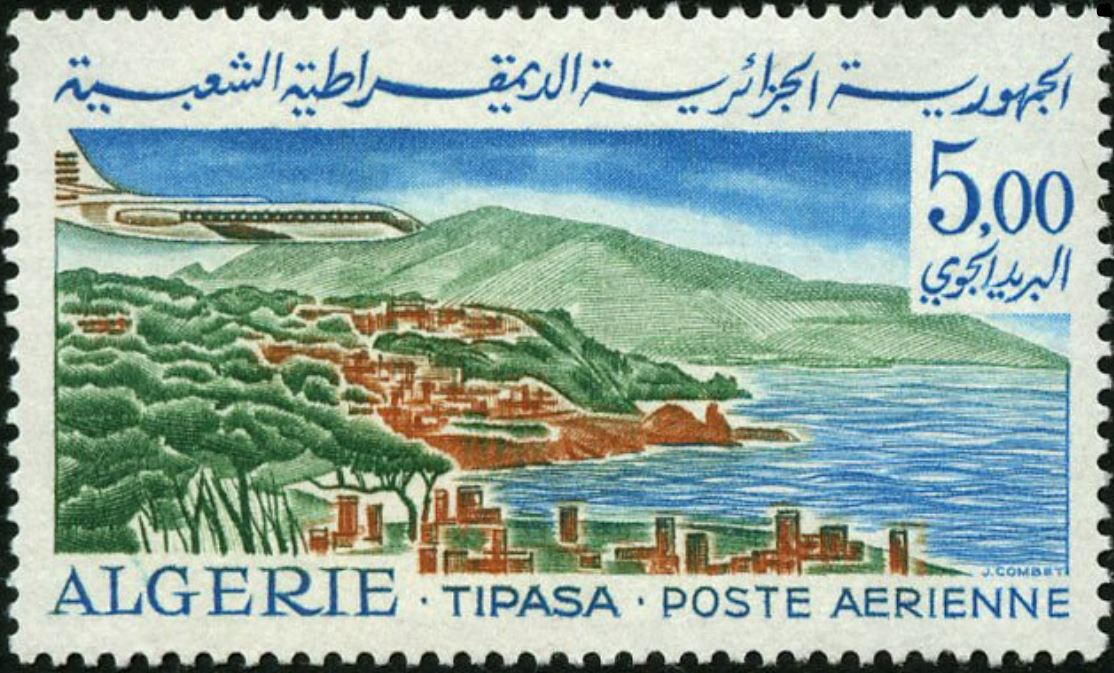
The presence of the sea, the reliefs of Chenoua and Dahra give a particular landscape and tourist interest. Numerous Punic, Roman, Christian and African remains attest to the rich history of this city.
The Phoenicians founded a trading post there around the 5th century BC. AD: it is from this origin that the city takes its name which means “place of passage” or “stopover”.
The city experienced its growth under the Numidian king Juba II and became with Caesaria (current Cherchell) one of the centers of Greco-Roman culture in North Africa. Tipasa then had the type of Punic city because it was located in the area of influence of Carthage. At the end of the Third Punic War and the siege of Carthage in 146 BC. BC, Rome annexes Mauretania.
Under the Roman Emperor Claudius I, in 39, Tipasa took on the status of a Latin municipality and acquired a wall more than two kilometers long. Hadrian subsequently elevated Tipasa to the rank of honorary colony. At the end of the 2nd century, the city reached its peak with a population which, according to Stéphane Gsell's estimates, amounted to 20,000 inhabitants.
In the 2nd century, this Romanized city expanded towards the west at the expense of an ancient Punic necropolis. Although it was surrounded by a 2 km long wall, this did not prevent its destruction in the year 430 by the Vandals led by Genseric.
Tipasa is, as a port, less important than Caesarea. Its maritime traffic being reduced to cabotage. The archaeological site of Tipasa contains various remains, including the remains of a basilica. Its theater was of an honorable size.
Unlike Timgad and Djémila, whose ruins appear compact and easily readable, Tipasa presents a fragmented site: not everything has been cleared and a good part of the city, explored in 1891 by Stéphane Gsell3, is still under the sediments.
In their current state, the ruins form two large groups. The first, located outside the walls, at the entrance to the current city, to the right of the road coming from Algiers, corresponds to a large necropolis with the funerary basilica of Sainte Salsa. The second is the archaeological park, located at the western exit of the modern city, which brings together the majority of the monuments unearthed.
The presence of the sea, the reliefs of Chenoua and Dahra give a particular landscape and tourist interest. Numerous Punic, Roman, Christian and African remains attest to the rich history of this city.
The Phoenicians founded a trading post there around the 5th century BC. AD: it is from this origin that the city takes its name which means “place of passage” or “stopover”.
The city experienced its growth under the Numidian king Juba II and became with Caesaria (current Cherchell) one of the centers of Greco-Roman culture in North Africa. Tipasa then had the type of Punic city because it was located in the area of influence of Carthage. At the end of the Third Punic War and the siege of Carthage in 146 BC. BC, Rome annexes Mauretania.
Under the Roman Emperor Claudius I, in 39, Tipasa took on the status of a Latin municipality and acquired a wall more than two kilometers long. Hadrian subsequently elevated Tipasa to the rank of honorary colony. At the end of the 2nd century, the city reached its peak with a population which, according to Stéphane Gsell's estimates, amounted to 20,000 inhabitants.
In the 2nd century, this Romanized city expanded towards the west at the expense of an ancient Punic necropolis. Although it was surrounded by a 2 km long wall, this did not prevent its destruction in the year 430 by the Vandals led by Genseric.
Tipasa is, as a port, less important than Caesarea. Its maritime traffic being reduced to cabotage. The archaeological site of Tipasa contains various remains, including the remains of a basilica. Its theater was of an honorable size.
Unlike Timgad and Djémila, whose ruins appear compact and easily readable, Tipasa presents a fragmented site: not everything has been cleared and a good part of the city, explored in 1891 by Stéphane Gsell3, is still under the sediments.
In their current state, the ruins form two large groups. The first, located outside the walls, at the entrance to the current city, to the right of the road coming from Algiers, corresponds to a large necropolis with the funerary basilica of Sainte Salsa. The second is the archaeological park, located at the western exit of the modern city, which brings together the majority of the monuments unearthed.