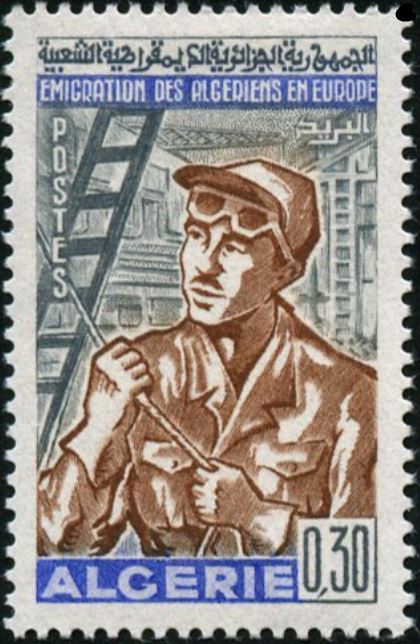
Emigration of Algerians to Europe
Although it is not necessary to dwell on the reasons which motivated the emigration of Algerians to Europe, it is nevertheless useful to recall that these political reasons are linked to historical, economic and demographic causes.
From the beginning of political and military domination, France decided to make Algeria a settlement colony and sent its surplus population there. In 1848, these were the outlaws, in 1871 the Alsatians-Lorrainers and in 1905 the peasants of the South ruined by phylloxera.
Other Mediterranean populations emigrated to Algeria where a new law facilitated their settlement. The fellahs, driven from their land, found no compensation in the industry then existing. Without land and without work, they constituted the majority of emigration to France; during the 1914-1918 war, more than 120,000 men, fighters or workers placed under military authority, crossed the Mediterranean.
Subsequently, between 1920 and 1924, the influx of immigrants continued to increase for the needs of reconstruction, a consequence of the war. From 1936, the demographic factor became decisive in explaining the migratory flow. The Algerian population, like that of third world countries, was increasing rapidly, while the transition from the agricultural economy to the industrial economy was to make France, like most European countries, a country of immigration.
This is how from 38,000 in 1945, when the authorities at the time considered the Algerian workforce to rebuild France, departures to this country alone rose to 65,000 in 1947 and reached 80,000 in 1948. At that date, and notwithstanding the increase in the number of migrants, there were almost a million more people in the countryside. and 500,000 people out of work in the cities.
Emigration subsequently increased and the number of Algerians in Europe reached half a million at the time of our country's independence. The Algerian government was quick to become concerned about this and began looking for ways to resolve this problem which, due to its dimensions, had become a question of national order.
It was a question, on the one hand, of preparing in Algeria itself the working conditions which would allow emigrants to return to their country and, on the other hand, of striving to improve their living conditions and facilitate their access to education and professional training.
Indeed, through their learning of the industrial activity of the countries which welcome them and the training they acquire there, they are able to become a driving force in the development of our country. Sooner or later, they will join Algeria and will then actively participate in the economic struggle, as they previously participated, from foreign countries, in the liberation struggle.
Certainly, the task is immense and the objectives important. Also, in order to fully play the role assigned to it, Algerian emigration to Europe has organized itself in a friendly manner. With the support of the government and consular authorities, it intends not only to provide its members with the assistance necessary to raise their material and intellectual standard of living, but also and above all to open up future prospects for them.
From the beginning of political and military domination, France decided to make Algeria a settlement colony and sent its surplus population there. In 1848, these were the outlaws, in 1871 the Alsatians-Lorrainers and in 1905 the peasants of the South ruined by phylloxera.
Other Mediterranean populations emigrated to Algeria where a new law facilitated their settlement. The fellahs, driven from their land, found no compensation in the industry then existing. Without land and without work, they constituted the majority of emigration to France; during the 1914-1918 war, more than 120,000 men, fighters or workers placed under military authority, crossed the Mediterranean.
Subsequently, between 1920 and 1924, the influx of immigrants continued to increase for the needs of reconstruction, a consequence of the war. From 1936, the demographic factor became decisive in explaining the migratory flow. The Algerian population, like that of third world countries, was increasing rapidly, while the transition from the agricultural economy to the industrial economy was to make France, like most European countries, a country of immigration.
This is how from 38,000 in 1945, when the authorities at the time considered the Algerian workforce to rebuild France, departures to this country alone rose to 65,000 in 1947 and reached 80,000 in 1948. At that date, and notwithstanding the increase in the number of migrants, there were almost a million more people in the countryside. and 500,000 people out of work in the cities.
Emigration subsequently increased and the number of Algerians in Europe reached half a million at the time of our country's independence. The Algerian government was quick to become concerned about this and began looking for ways to resolve this problem which, due to its dimensions, had become a question of national order.
It was a question, on the one hand, of preparing in Algeria itself the working conditions which would allow emigrants to return to their country and, on the other hand, of striving to improve their living conditions and facilitate their access to education and professional training.
Indeed, through their learning of the industrial activity of the countries which welcome them and the training they acquire there, they are able to become a driving force in the development of our country. Sooner or later, they will join Algeria and will then actively participate in the economic struggle, as they previously participated, from foreign countries, in the liberation struggle.
Certainly, the task is immense and the objectives important. Also, in order to fully play the role assigned to it, Algerian emigration to Europe has organized itself in a friendly manner. With the support of the government and consular authorities, it intends not only to provide its members with the assistance necessary to raise their material and intellectual standard of living, but also and above all to open up future prospects for them.