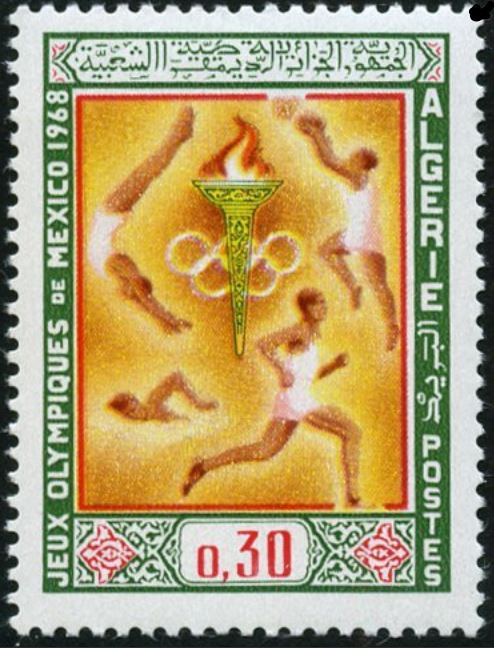
Olympic Games in Mexico City (Mexico)
19th Olympic Games Mexico 1968
In ancient Greece, near the city of Olympia, the Greeks celebrated games every four years, in honor of the Olympian god Zeus, at the end of which the winner received the Olympic crown.
In 1892, there was talk, for the first time, of the project to renovate the Olympic Games. Shortly thereafter, an international congress, bringing together the world's most important sports associations, discussed the revival, rules and regulations of the Olympic Games.
On June 23, 1894, twelve countries from Europe and America, which attended the congress, unanimously accepted the project. This is how the games of the first Olympiad of modern times were organized.
They were celebrated in Athens in 1896 and since then they have been held every four years in various countries. The goals of the Olympic movement are:
- broadcast worldwide
- without racial, religious or political discrimination
– the benefits obtained through physical culture and sports competitions which, by improving the health and developing the strength of young people, make them better citizens;
- instill the principles of loyalty and camaraderie to apply them to various human activities;
- teach that sport is a game and a distraction in itself and not a pretext for profit;
- create a spirit of international friendship that can bring peace to the world.
Therefore, the Olympic ideal is based on effort, on friendly and chivalrous competition and not on the chauvinistic glorification of triumphs won.
The Olympic Games are based on the spontaneous and totally disinterested collaboration of thousands of men and women. The Olympic flag was raised for the first time during the Antwerp Olympic Games in 1920.
The Olympic emblem consists of five intertwined rings, blue, yellow, black, green and red, linked by the motto “Citius, Altius, Fortius” (Faster, Higher, Stronger). The five circles represent the five continents united within the Olympic movement.
During the golden age of ancient Greece, there was a close relationship between sports and the arts. In 1912, art events, including architecture, literature, music and sculpture, were included in the Olympic program. Subsequently, stamp collecting and photography were added, but later they were removed from the Olympic jousts.
In 1968, Mexico, a country with many and very brilliant civilizations, will bring together on its soil, in an ideal of friendship and fraternity, youth from around the world, on the occasion of the 19th Olympic Games.
In ancient Greece, near the city of Olympia, the Greeks celebrated games every four years, in honor of the Olympian god Zeus, at the end of which the winner received the Olympic crown.
In 1892, there was talk, for the first time, of the project to renovate the Olympic Games. Shortly thereafter, an international congress, bringing together the world's most important sports associations, discussed the revival, rules and regulations of the Olympic Games.
On June 23, 1894, twelve countries from Europe and America, which attended the congress, unanimously accepted the project. This is how the games of the first Olympiad of modern times were organized.
They were celebrated in Athens in 1896 and since then they have been held every four years in various countries. The goals of the Olympic movement are:
- broadcast worldwide
- without racial, religious or political discrimination
– the benefits obtained through physical culture and sports competitions which, by improving the health and developing the strength of young people, make them better citizens;
- instill the principles of loyalty and camaraderie to apply them to various human activities;
- teach that sport is a game and a distraction in itself and not a pretext for profit;
- create a spirit of international friendship that can bring peace to the world.
Therefore, the Olympic ideal is based on effort, on friendly and chivalrous competition and not on the chauvinistic glorification of triumphs won.
The Olympic Games are based on the spontaneous and totally disinterested collaboration of thousands of men and women. The Olympic flag was raised for the first time during the Antwerp Olympic Games in 1920.
The Olympic emblem consists of five intertwined rings, blue, yellow, black, green and red, linked by the motto “Citius, Altius, Fortius” (Faster, Higher, Stronger). The five circles represent the five continents united within the Olympic movement.
During the golden age of ancient Greece, there was a close relationship between sports and the arts. In 1912, art events, including architecture, literature, music and sculpture, were included in the Olympic program. Subsequently, stamp collecting and photography were added, but later they were removed from the Olympic jousts.
In 1968, Mexico, a country with many and very brilliant civilizations, will bring together on its soil, in an ideal of friendship and fraternity, youth from around the world, on the occasion of the 19th Olympic Games.