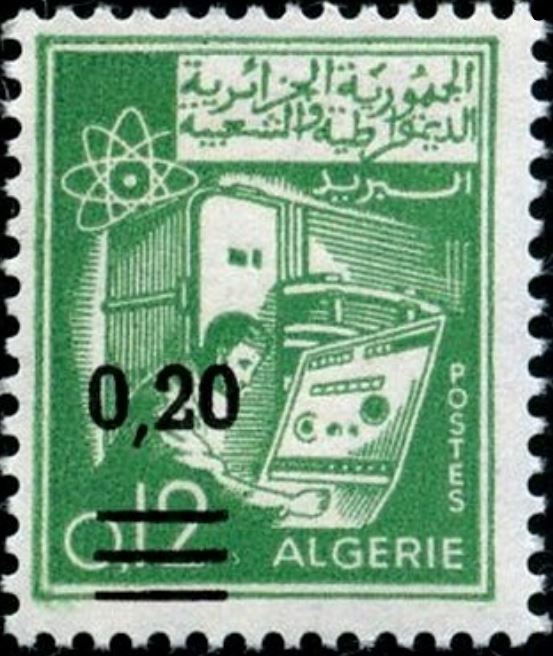
Automation profession
Punched card and tape were the first media used as mass memory in computer systems. The invention of the punched card machine by the American Herman Hollerith in 1884, for use in the 1890 American census, constituted a revolution in the field of automation.
It is the first information processing machine. It marks a break with manual accounting and the start of the generalization of automatic data management. The 80-column card is the best-known model of punched cards. It is a thin rectangular sheet of card stock with one corner truncated as a guide to determine the direction of insertion into machines and card feeders.
The characters are shown arranged in 80 columns parallel to the width and in 13 lines parallel to the length. The cards are punched by specialized operators working from entry slips, verified by re-typing by other operators (perfos-verifs) whose normal entry rate is around 15,000 characters per hour.
The characters are read by passing a needle over the columns and lines. Due to the presence of a tub of mercury under the card, contact of the needle with the mercury indicates the presence of a hole, therefore a defect or irregularity, and causes an electric current which blocks the system.
Card sorting can be done using machines called sorters-interclasseurs. Punched cards are used by mechanographic machines.
It is the first information processing machine. It marks a break with manual accounting and the start of the generalization of automatic data management. The 80-column card is the best-known model of punched cards. It is a thin rectangular sheet of card stock with one corner truncated as a guide to determine the direction of insertion into machines and card feeders.
The characters are shown arranged in 80 columns parallel to the width and in 13 lines parallel to the length. The cards are punched by specialized operators working from entry slips, verified by re-typing by other operators (perfos-verifs) whose normal entry rate is around 15,000 characters per hour.
The characters are read by passing a needle over the columns and lines. Due to the presence of a tub of mercury under the card, contact of the needle with the mercury indicates the presence of a hole, therefore a defect or irregularity, and causes an electric current which blocks the system.
Card sorting can be done using machines called sorters-interclasseurs. Punched cards are used by mechanographic machines.