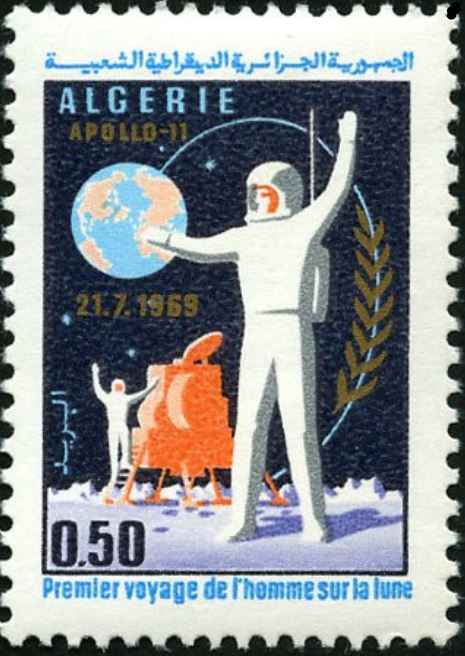
Man's First Trip to the Moon
July 1969 – Man’s first trip to the Moon
The most extraordinary space adventure of all time began on Wednesday July 16, 1969 at 1:32 p.m. (GMT) at Cape Kennedy (United States). The Apollo 11 capsule, with three American astronauts on board, Neil Armstrong, Edwin Aldrin and Michael Collins, would allow man to set foot on the lunar surface for the first time in the history of humanity.
Progress of the Apollo 11-LM flight
On Wednesday July 16, 1969 at 1:32 p.m. (GMT), the enormous Saturn 5 rocket, carrying the Apollo 11 cabin and the LM lunar module, was ignited. The Apollo 11-LM space train sets off with a deafening roar.
The powerful rocket pushed by the five engines of its first stage lifts the approximately 3,100 tons of the space train. The ignition of the third stage of the carrier rocket increases the speed from 28,100 km/h to 39,200 km/h. Apollo 11 breaks away from Earth's attraction to enter the translunar trajectory.
It is then that the separation maneuver of the three-seater cabin and the third stage of the carrier rocket begins. Apollo 11 makes a 180 degree turn, pointing its nose towards the upper hatch of the LM. Once the junction is made, the third stage of the rocket is released into solar orbit, the LM mother cabin coupler heads towards the Moon.
The lunar orbit took place on July 19, 1969 at 5:22 p.m. The main engine is fired, the direction of the engine thrust in the direction of travel produces a braking effect. A second firing makes the orbit perfectly circular.
Sunday July 20, Edwin Aldrin enters the module followed shortly after by Neil Armstrong. The LM separates from the mother cabin, the two machines fly in formation 12 m apart. A push from the module's Reaction Control System takes it 630 m away from the Apollo 11 cabin where Michael Collins is now alone.
The final phase of the descent towards the Sea of Tranquility begins. At 8:17 p.m., the first crewed spacecraft from Earth touches the lunar surface. Monday, at 2:51 a.m., Neil Armstrong leaves the LM and at 2:56 a.m., he sets foot on the lunar surface. At 3:15 a.m., Aldrin comes out as well. For two hours, the two men walked and worked on the Moon.
Edwin Aldrin returned to the module at 5:11 a.m., followed, twenty minutes later, by Neil Armstrong. At 5:54 p.m., the LM takes off from the Moon. The junction with the Apollo cabin, still in lunar orbit, takes place at 9:35 p.m. Armstrong and Aldrin pass through Apollo. Released, the LM will continue to rotate around the Moon empty. Tuesday July 22 at 5:37 a.m., the main thruster is ignited; the increase in speed takes the Apollo cabin out of lunar orbit.
It is the triumphant return to Earth. Thursday July 24 at 4:51 p.m., Apollo 11 landed in the Pacific Ocean, 1,930 km southwest of Honolulu.
The most extraordinary space adventure of all time began on Wednesday July 16, 1969 at 1:32 p.m. (GMT) at Cape Kennedy (United States). The Apollo 11 capsule, with three American astronauts on board, Neil Armstrong, Edwin Aldrin and Michael Collins, would allow man to set foot on the lunar surface for the first time in the history of humanity.
Progress of the Apollo 11-LM flight
On Wednesday July 16, 1969 at 1:32 p.m. (GMT), the enormous Saturn 5 rocket, carrying the Apollo 11 cabin and the LM lunar module, was ignited. The Apollo 11-LM space train sets off with a deafening roar.
The powerful rocket pushed by the five engines of its first stage lifts the approximately 3,100 tons of the space train. The ignition of the third stage of the carrier rocket increases the speed from 28,100 km/h to 39,200 km/h. Apollo 11 breaks away from Earth's attraction to enter the translunar trajectory.
It is then that the separation maneuver of the three-seater cabin and the third stage of the carrier rocket begins. Apollo 11 makes a 180 degree turn, pointing its nose towards the upper hatch of the LM. Once the junction is made, the third stage of the rocket is released into solar orbit, the LM mother cabin coupler heads towards the Moon.
The lunar orbit took place on July 19, 1969 at 5:22 p.m. The main engine is fired, the direction of the engine thrust in the direction of travel produces a braking effect. A second firing makes the orbit perfectly circular.
Sunday July 20, Edwin Aldrin enters the module followed shortly after by Neil Armstrong. The LM separates from the mother cabin, the two machines fly in formation 12 m apart. A push from the module's Reaction Control System takes it 630 m away from the Apollo 11 cabin where Michael Collins is now alone.
The final phase of the descent towards the Sea of Tranquility begins. At 8:17 p.m., the first crewed spacecraft from Earth touches the lunar surface. Monday, at 2:51 a.m., Neil Armstrong leaves the LM and at 2:56 a.m., he sets foot on the lunar surface. At 3:15 a.m., Aldrin comes out as well. For two hours, the two men walked and worked on the Moon.
Edwin Aldrin returned to the module at 5:11 a.m., followed, twenty minutes later, by Neil Armstrong. At 5:54 p.m., the LM takes off from the Moon. The junction with the Apollo cabin, still in lunar orbit, takes place at 9:35 p.m. Armstrong and Aldrin pass through Apollo. Released, the LM will continue to rotate around the Moon empty. Tuesday July 22 at 5:37 a.m., the main thruster is ignited; the increase in speed takes the Apollo cabin out of lunar orbit.
It is the triumphant return to Earth. Thursday July 24 at 4:51 p.m., Apollo 11 landed in the Pacific Ocean, 1,930 km southwest of Honolulu.