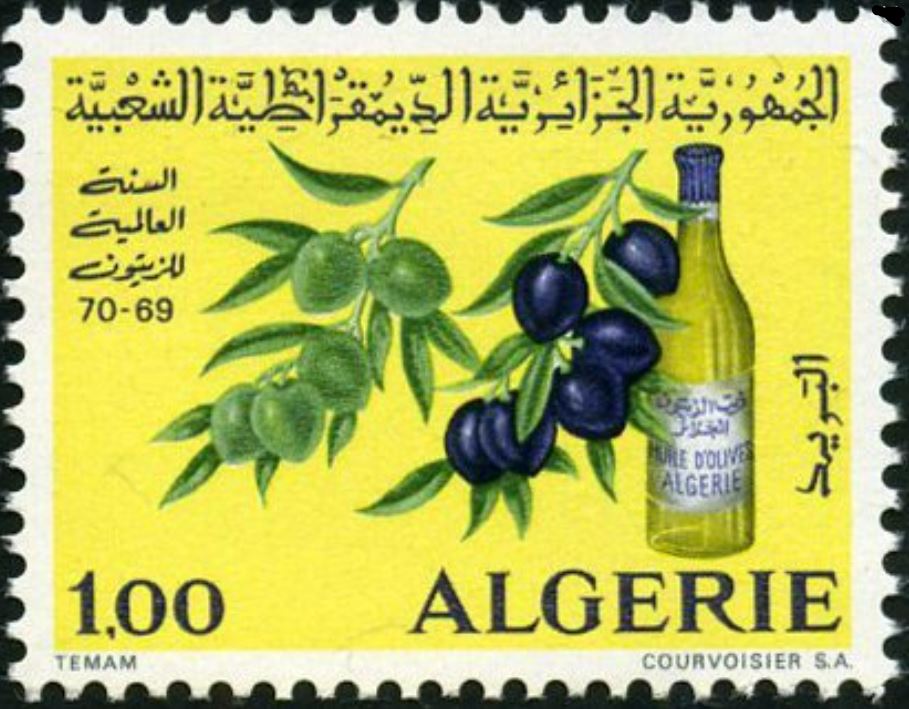
World olive year 1969-1970
The International Olive Council, an intergovernmental organization responsible for administering and implementing the international agreement on olive oil, decided, during one of its last plenary meetings, to dedicate the 1969-1970 olive growing season, corresponding to its 10th anniversary, to the World Olive Year. As part of the celebration of this anniversary, the main member countries of the International Olive Council have planned a number of events related to their olive activities. For its part, Algeria organized its World Olive Day on January 20, 1970 in Tizi Ouzou. The Algerian olive presents two olive cultivations, one traditional and the other intensive, very distinct in their appearance, their management and their orientation. Traditional olive growing, which represents 90% of Algerian olives, covers an area of 110,000 ha. It extends over the areas of the traditional sector of Constantinois and Algiers. It specializes in the production of oil which varies, depending on the year, between 15,000 and 20,000 tonnes. Production is intended primarily for the self-consumption of the very dense populations of these regions for which the olive tree constitutes one of the main sources of life. Intensive olive growing represents 10% of Algerian olives, or an area of around 10,000 ha. Concentrated in the west of the country, it specializes in the production of canned olives. This production, which amounts to around 20,000 tonnes, is intended for export.