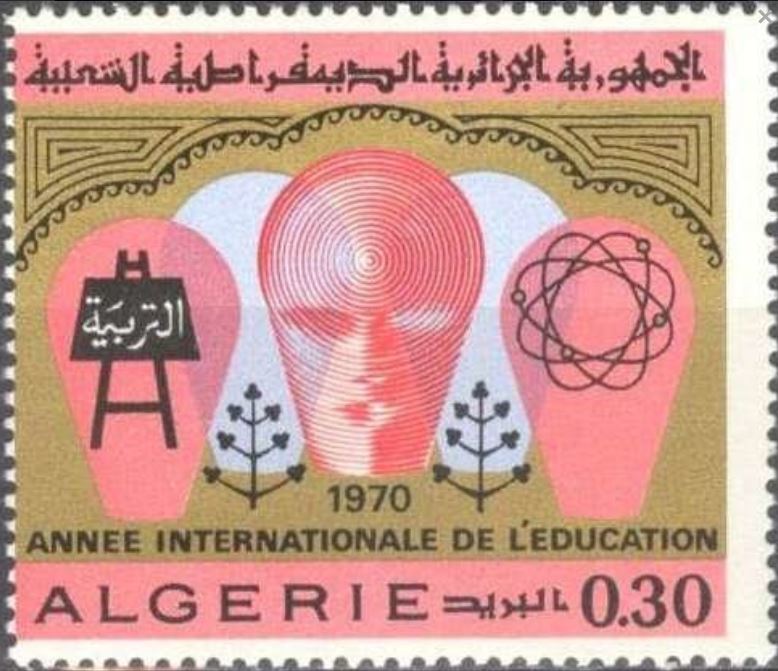
International Year of Education
By adopting resolution 2412 at its 23rd session on December 17, 1968, the United Nations General Assembly officially proclaimed 1970 as the International Year of Education (IEA). By this decision, the General Assembly approved the action program drawn up by UNESCO at the request of the United Nations. The choice of 1970 as the International Year of Education is timely given the crisis facing education in both industrialized countries and the developing world. The International Year of Education stands on the threshold of the 2nd United Nations Development Decade, providing a new opportunity for concerted global efforts to address and resolve education challenges. These problems make reforms and transformations of current education systems necessary. The AIE program is thus based on three principles: - education must mean all types of training and instruction, hence the idea that education, far from ending with school-type teaching, is a permanent process; - despite the place that will be given to national programs, the AIE must be designed as a concerted activity of the entire United Nations system based on the contribution that education makes to economic and social development; - programs must aim to develop the thinking and action of governments and the international community as a whole. With the aim of popularizing this global effort to develop and improve education and training, the Post and Telecommunications Administration is issuing two postage stamps. The first has the theme “The Universal Man” proposed by UNESCO and the second reproduces an illumination by the Algerian painter Racim, illustrating a hadith (quotation from the Prophet QSSSL): “Ask for science from the cradle to the grave.”