Mosques of Algeria
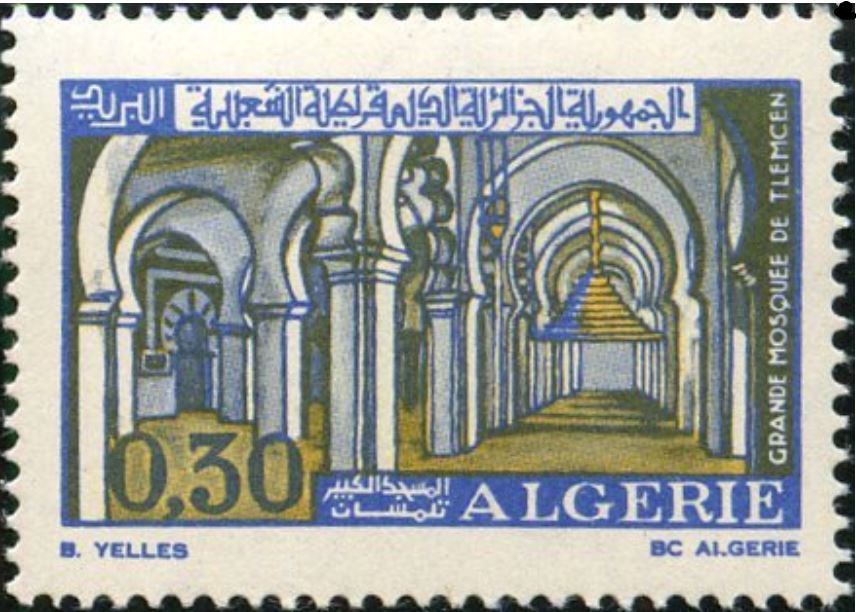
The Great Mosque of Tlemcen In the second half of the 11th century, the Almoravids strove to unify the Maghreb and reconquered a large part of Spain. They were devout Muslims and great builders of mosques. From their time, Algeria still retains three venerable mosques in Algiers, Nedroma and Tlemcen. The Great Mosque of Tlemcen was founded around 1082 then embellished and completed under the reign of Ali Ben Youssouf in 530 AH as we learn from a cursive inscription on the dome of the mihrab. The entire building measures 60 m by 50 m. The prayer hall is made up of 13 naves. The central nave, the mihrab and the dome which precedes it bear witness to the influence of Andalusian art. The head arch of the mihrab with the sculpted plaster decoration of its keystones and spandrels and the epigraphic bands which frame it reflect the Cordoba model. The beautiful dome is enriched by the intertwined arches which support the sections with openwork plant decoration like the foliage of an arbor. Later, in the 13th century, Sultan Abdelouadid Yaghmoracen, founder of the Zianid dynasty, endowed the mosque with an imposing minaret. It is a square tower soberly decorated with arcatures and networks punctuated by a few enameled earthenware inlays. The Great Mosque of Tlemcen, a center of piety for more than eight centuries, still continues to welcome the faithful and remains a masterpiece of Muslim architecture where local art, Andalusian art and Oriental art are harmoniously brought together. The Sidi Okba Mosque In the 7th century, the expansion of Islam in North Africa was remarkably illustrated by the legendary ride of Okba Ibn Nafaâ who, after founding the city of Kairouan, succumbed on the outskirts of Aurès in 64 AH. On the very spot where he fell, a mausoleum was erected which perpetuates the memory of the hero. His body rests in the mosque of the Sidi Okba oasis, south of Biskra. This mosque, with archaic decorations, is a precious vestige of cultural heritage. Reflecting the layout of the ancient mosque of Medina, the prayer room still presents one of the rare examples of the plan and ordering of primitive religious buildings. The famous carved wooden door and the inscription which decorated the lintel date from the beginning of the 11th century. The Sidi Okba mosque has remained a center of fervor and religious teaching, as well as a major place of pilgrimage.