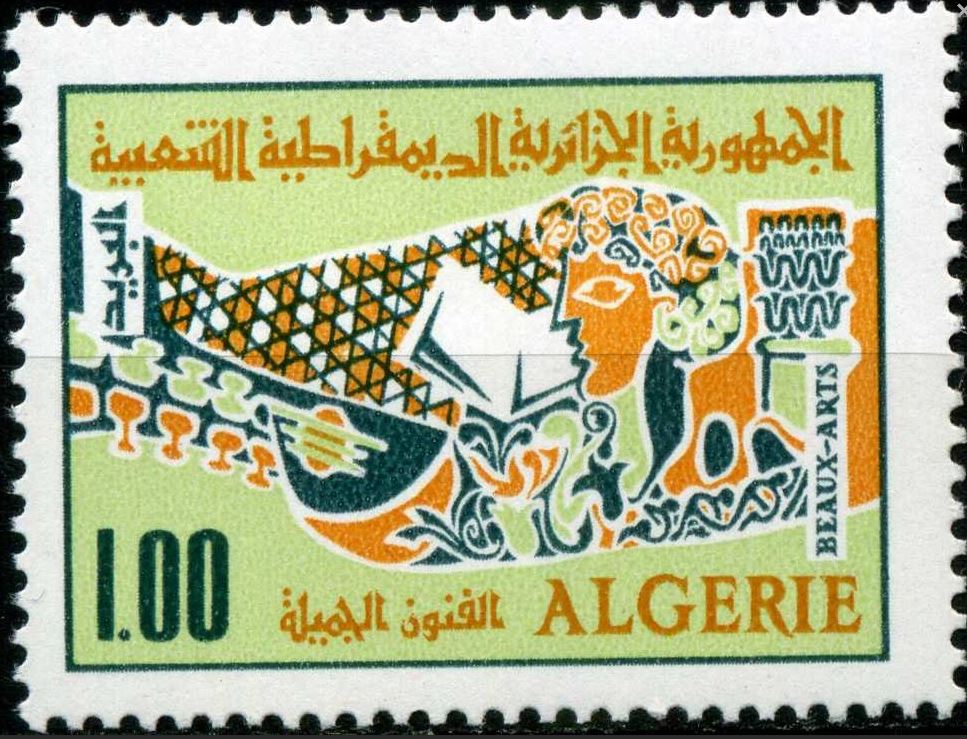
Fine arts
Algeria, land of a civilization several thousand years old, is currently experiencing a true renaissance thanks to the ongoing effort to restore and flourish its culture. Through the inexhaustible richness of each of its components, the diversity of its branches, the field of fine arts constitutes one of the main pillars. Aware of the crucial role that they must play in this decisive stage of nation-building, the responsible services are increasing their ardor in the face of the growing importance of existing or to-be-accomplished tasks. The essential characteristic of these activities consists of the exhumation of artistic heritage and, therefore, of national historical heritage. The goal is to learn from the knowledge acquired during discoveries through excavations of a past that is as immensely rich as it is varied. The concrete bases of the past that are the remains still constitute the prerogative of Algerian tourism. The successive phases of the splendid Mediterranean civilization, the successive passages of valiant peoples and noble dynasties through Algeria bear witness to the majesty and grandeur of this past, the traces of which can still be admired today in several museums, notably those of classical and Muslim antiquities in Algiers, Constantine, Oran, Cherchell, Tipasa, Timgad and Djemila, the National Museums of Fine Arts and Popular Traditions. of Algiers and the Ethnographic Museum of Ouargla. From prehistory to modern times, it is certainly difficult to make a choice from an inexhaustible mine of documents, testimonies and masterpieces. From such an eclectic repertoire, we must mention the impressive discovery of the cave paintings of Tassili, the charm of the world-famous ancient cities bathing the Mediterranean, the prestigious legacy of Arab-Muslim civilization, ranging from the simple popular jewel to the most grandiose monuments such as those of Mansourah or the Kalaâ des Béni Hammad, as well as the fascinating face of the South. Depending on the particular light of Algeria, ancient traditional artistic activities are still found today in increasingly developed crafts (fire arts, mosaics, tapestry, weaving, brassware, wood sculpture, etc.). This continuity can also be seen in the development of an architecture which increasingly refers to local geographical conditions and the cultural imperatives imposed by an original aesthetic. Finally, it is necessary to note the growing role of the plastic arts, as well as the growing importance and progress of the teaching provided in schools of fine arts across the national territory, in particular at the National School of Fine Arts of Algiers.