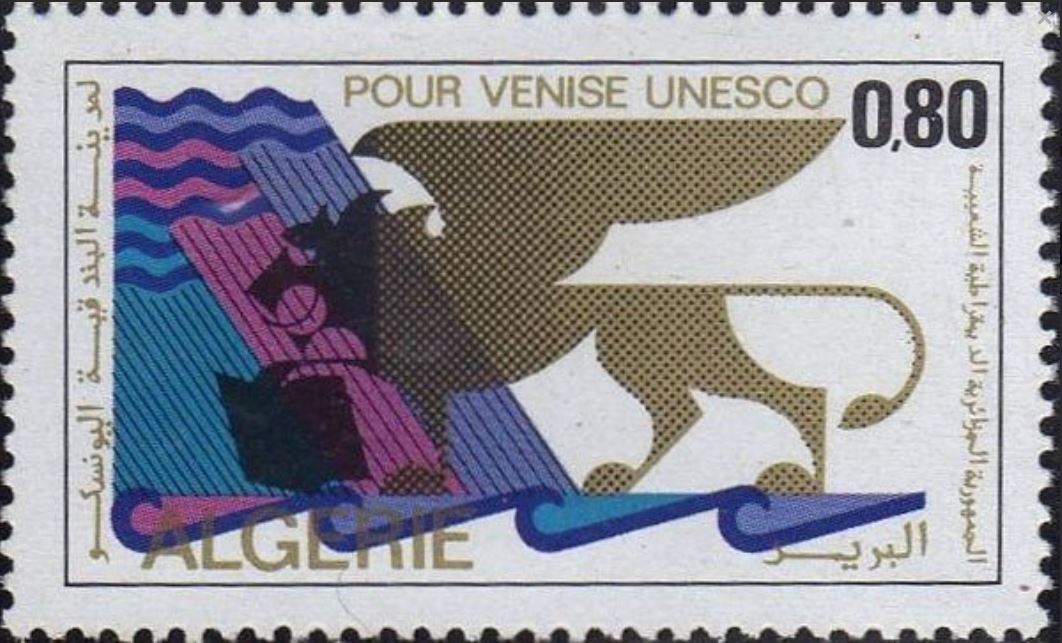
UNESCO Safeguarding the Artistic Heritage of Venice
Built on the lagoon, crossed by countless canals, Venice presents an urban structure unique in the world. Connections between the different points of the city are made by means of boats. The city was founded by populations who, in the 5th and 6th centuries AD, took refuge from the mainland on the islets of the lagoons which bordered the western coast of the upper Adriatic.
Venice, which escaped the feudal organization of the mainland, began by the free routes of the sea to exercise the function of intermediary of exchanges between the East and the West. At the beginning of the 13th century, a whole chain of Venetian ports of call extended along the Adriatic and the Aegean to the Dardanelles and the Sea of Marmara. In the 14th and 15th centuries, Venice began its expansion on dry land, in Veneto and Lombardy. At the end of the 15th century and the beginning of the 16th, the splendor of Venice was at its peak. But the rivalry and long wars with Genoa marked, from the 15th century, the beginning of the descending parable of the Republic of Saint Mark.
Its decadence lasted more than two centuries and did not lack splendor: the city was tolerant, characterized by a mature and human civilization and enriched with extraordinary works of art. At the end of the 18th century, on October 18, 1797, the Republic of Venice was ceded to Austria. In 1866, it was united with the Kingdom of Italy.
The progressive and inexorable rise in sea level, aggravated by a slow sinking of the soil of the islands, the micro-organisms which attack the piles on which the foundations of some buildings rest, the humidity and the pollution of the air threaten Venice as a whole. Messenger of peace and communication between men, the postage stamp was once again requested to inform world opinion of the grandiose undertaking undertaken by the Italian government and by Unesco so that the art treasures accumulated by Venice over the centuries do not disappear forever.
Venice, which escaped the feudal organization of the mainland, began by the free routes of the sea to exercise the function of intermediary of exchanges between the East and the West. At the beginning of the 13th century, a whole chain of Venetian ports of call extended along the Adriatic and the Aegean to the Dardanelles and the Sea of Marmara. In the 14th and 15th centuries, Venice began its expansion on dry land, in Veneto and Lombardy. At the end of the 15th century and the beginning of the 16th, the splendor of Venice was at its peak. But the rivalry and long wars with Genoa marked, from the 15th century, the beginning of the descending parable of the Republic of Saint Mark.
Its decadence lasted more than two centuries and did not lack splendor: the city was tolerant, characterized by a mature and human civilization and enriched with extraordinary works of art. At the end of the 18th century, on October 18, 1797, the Republic of Venice was ceded to Austria. In 1866, it was united with the Kingdom of Italy.
The progressive and inexorable rise in sea level, aggravated by a slow sinking of the soil of the islands, the micro-organisms which attack the piles on which the foundations of some buildings rest, the humidity and the pollution of the air threaten Venice as a whole. Messenger of peace and communication between men, the postage stamp was once again requested to inform world opinion of the grandiose undertaking undertaken by the Italian government and by Unesco so that the art treasures accumulated by Venice over the centuries do not disappear forever.