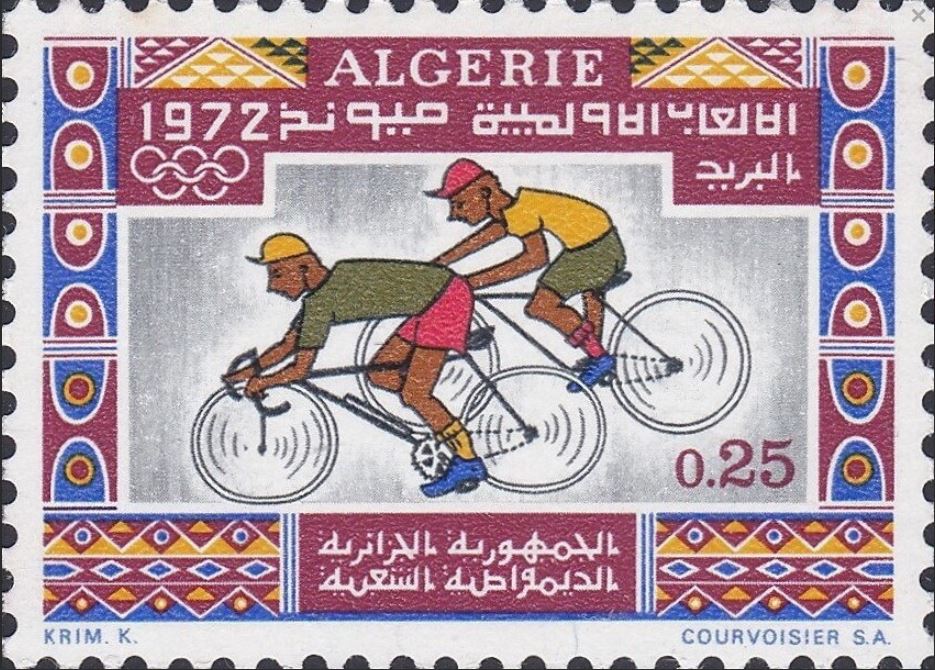
Munich Olympic Games 72
The award of the organization of the 1972 Summer Olympic Games in Munich, in the Federal Republic of Germany (FRG), undoubtedly carries several symbols and it is undoubtedly with the aim of promoting these symbols of sport that the evaluation committee of the candidatures preferred Berlin to Montreal (Canada), Detroit (United States) and Madrid (Spain).
These games took place 27 years after the end of the Second World War and therefore many of the athletes participating in these games in Germany did not experience the war. These games also mark the end of a long period marked by conflicts and armed struggles for decolonization. Moments of tension unfortunately not conducive to highlighting the Olympic values of peace and fraternity between peoples.
Furthermore, these games return to Germany 36 years after the Berlin Olympic Games in 1936 which saw the perversion of the Olympic spirit through the attempted politicization of sporting events for the purpose of serving Nazi and fascist ideology. There is no doubt that these games will turn this painful page and open a new era where the Olympic values, promoted and defended by Baron Pierre de Coubertin, father of the modern Olympic Games, will also be on the podium at each medal ceremony.
These sports reconciliation games will see the participation of no less than 129 nations, a record in the history of the Olympic Games, several of whom, newly independent, are participating for the first time. The athletes (more than 7,000) will compete, from August 26 to September 11, in 195 events in 23 disciplines.
In addition to the official disciplines, two demonstration disciplines are included in the program: water skiing and badminton. For these games, the official poster aims to promote, beyond the sporting events, the Munich games in their entirety. It expresses the specific spirit of these games.
The chosen design evokes the modern architecture of sports sites dedicated to these games in a deliberately simple and pure style and colors. In the background, in the center, the famous Olympic Tower can be clearly seen. As for the symbol of the games, it represents a crown of rays of light. It is a design that highlights the spirit of the Munich games: light, freshness, generosity, expressed by the concept “Radiant Munich”. It was created by Otl Aicher, the designer and director of the Visual Design Commission. His project was selected after a competition which included a total of 2,332 proposals.
These games took place 27 years after the end of the Second World War and therefore many of the athletes participating in these games in Germany did not experience the war. These games also mark the end of a long period marked by conflicts and armed struggles for decolonization. Moments of tension unfortunately not conducive to highlighting the Olympic values of peace and fraternity between peoples.
Furthermore, these games return to Germany 36 years after the Berlin Olympic Games in 1936 which saw the perversion of the Olympic spirit through the attempted politicization of sporting events for the purpose of serving Nazi and fascist ideology. There is no doubt that these games will turn this painful page and open a new era where the Olympic values, promoted and defended by Baron Pierre de Coubertin, father of the modern Olympic Games, will also be on the podium at each medal ceremony.
These sports reconciliation games will see the participation of no less than 129 nations, a record in the history of the Olympic Games, several of whom, newly independent, are participating for the first time. The athletes (more than 7,000) will compete, from August 26 to September 11, in 195 events in 23 disciplines.
In addition to the official disciplines, two demonstration disciplines are included in the program: water skiing and badminton. For these games, the official poster aims to promote, beyond the sporting events, the Munich games in their entirety. It expresses the specific spirit of these games.
The chosen design evokes the modern architecture of sports sites dedicated to these games in a deliberately simple and pure style and colors. In the background, in the center, the famous Olympic Tower can be clearly seen. As for the symbol of the games, it represents a crown of rays of light. It is a design that highlights the spirit of the Munich games: light, freshness, generosity, expressed by the concept “Radiant Munich”. It was created by Otl Aicher, the designer and director of the Visual Design Commission. His project was selected after a competition which included a total of 2,332 proposals.