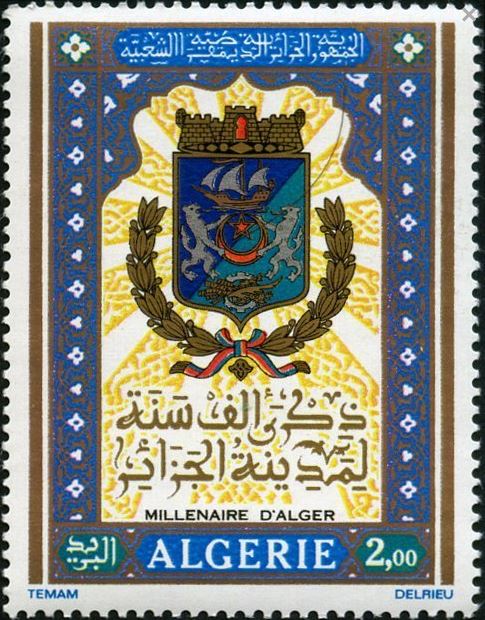
Millennium of Algiers
At the beginning of the 10th century, the central Maghreb had Ziri Ibn Manad as its ruler and Achir, southeast of Médéa, as its capital. Bologhine, son of Ziri, founded three new cities in the second half of the 10th century: Miliana, Médéa and El Djazaïr.
Algiers was then called Djazaïr Béni Mezghena: El Djazaïr for the islets which were offshore and which, connected to the mainland, currently form the Admiralty pier, and Béni Mezghena in reference to the tribe which lived in the region.
Over the following centuries, Arab geographers and travelers described the activities of El Djazaïr as a merchant city and a prosperous port which undertook commercial exchanges with the countries of the Mediterranean, some of which had a free quarter there.
But it was only from the 16th century that Algiers established itself as a true capital and established itself as the mistress of the Mediterranean in the struggles between European countries and Muslim countries for the domination of navigation routes. Indeed, in 1510, the Spanish laid siege to Algiers and aimed their cannons on the city. Threatened, the Algerians found an ally in the person of the Turkish corsair Arroudj.
In 1518, his brother Khayr-Eddine took power and succeeded in driving out the Spaniards. He established a state whose capital, Dar Es-Soltan, experienced great economic and political growth and a reputation for invincibility which did not end until 1830 with the long period of colonial domination.
During the War of National Liberation, Algiers gave, like the entire country, the finest example of courage and sacrifice. Since July 1962, it has become the capital of the democratic and popular Algerian Republic. Algiers celebrates the 11th anniversary of independence and the millennium of its foundation.
Algiers was then called Djazaïr Béni Mezghena: El Djazaïr for the islets which were offshore and which, connected to the mainland, currently form the Admiralty pier, and Béni Mezghena in reference to the tribe which lived in the region.
Over the following centuries, Arab geographers and travelers described the activities of El Djazaïr as a merchant city and a prosperous port which undertook commercial exchanges with the countries of the Mediterranean, some of which had a free quarter there.
But it was only from the 16th century that Algiers established itself as a true capital and established itself as the mistress of the Mediterranean in the struggles between European countries and Muslim countries for the domination of navigation routes. Indeed, in 1510, the Spanish laid siege to Algiers and aimed their cannons on the city. Threatened, the Algerians found an ally in the person of the Turkish corsair Arroudj.
In 1518, his brother Khayr-Eddine took power and succeeded in driving out the Spaniards. He established a state whose capital, Dar Es-Soltan, experienced great economic and political growth and a reputation for invincibility which did not end until 1830 with the long period of colonial domination.
During the War of National Liberation, Algiers gave, like the entire country, the finest example of courage and sacrifice. Since July 1962, it has become the capital of the democratic and popular Algerian Republic. Algiers celebrates the 11th anniversary of independence and the millennium of its foundation.