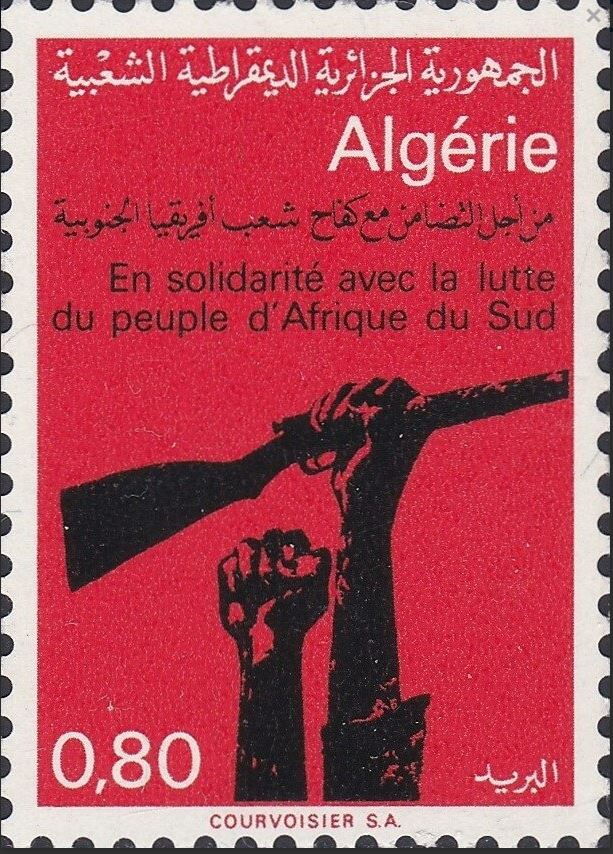
Solidarity with the People of South Africa
It is universally accepted that the level of racism and exploitation in South Africa is unparalleled in the history of colonization of the African continent.
Loving freedom and justice, humanity has not limited itself to condemning, at every opportunity, the policy of apartheid as being an inhumane policy and a danger to world peace and international security.
Through the United Nations, which proclaimed March 21 as the International Day for the Elimination of Racism, the legitimacy of the armed struggle for the national liberation of this country was recognized, while an appeal was launched to all UN member states to contribute moral, political and material aid to support the liberation movement leading this struggle.
It all began on March 6, 1652 with the landing at the point on the coast where present-day Cape Town is located of the team of the Dutch East India Company led by Jan Van Riebeek.
The project of invasion and conquest appeared to the indigenous populations as a simple human need to resupply themselves en route to the Orient. The expropriation of lands roamed by the Khoi-Khoi and Khoison, two nomadic ethnic groups in the region, began quickly on a large scale with the physical liquidation of these groups.
The colonial invasion force was constantly maintained by successive waves of settlers from all European countries. The rivalries between the Dutch settlers and the English settlers who arrived later resulted in a bipartisan invasion, opposed to a heroic armed resistance of the indigenous populations who, through the wars they waged, sought to safeguard their national sovereignty for almost two hundred years.
The last of these wars took place in 1906. The superiority of the rifle over the spear, as well as the lack of coordination of efforts on the part of the different ethnic groups resulted in the domination by foreign hegemonic forces of the richest region of the African continent.
This domination continues to this day and the arrivals of settlers increased after the discovery of the fabulous mineral riches. The quarrel over spoils between the Dutch and the English ended with the Anglo-Boer War of 1899. The struggles between these two forces were stifled in the face of the common enemy: the indigenous populations.
The Africans had not given up the fight; they only modified their method of struggle. The time and the geographical location of the country had dictated the continuation of the fight through political struggle and non-violent methods. The isolation of the Pretoria regime from the whole world, with the exception of its partners, the great Western powers, Israel, Portugal and Rhodesia, is undoubtedly the culmination point reached by this long struggle.
Today, the African populations are ready to wage a long war of national liberation. The fight against this regime is part of the liberation of the continent. It deserves active and complete assistance on the moral, political and material levels of all African countries and of all humanity loving peace and justice.
Loving freedom and justice, humanity has not limited itself to condemning, at every opportunity, the policy of apartheid as being an inhumane policy and a danger to world peace and international security.
Through the United Nations, which proclaimed March 21 as the International Day for the Elimination of Racism, the legitimacy of the armed struggle for the national liberation of this country was recognized, while an appeal was launched to all UN member states to contribute moral, political and material aid to support the liberation movement leading this struggle.
It all began on March 6, 1652 with the landing at the point on the coast where present-day Cape Town is located of the team of the Dutch East India Company led by Jan Van Riebeek.
The project of invasion and conquest appeared to the indigenous populations as a simple human need to resupply themselves en route to the Orient. The expropriation of lands roamed by the Khoi-Khoi and Khoison, two nomadic ethnic groups in the region, began quickly on a large scale with the physical liquidation of these groups.
The colonial invasion force was constantly maintained by successive waves of settlers from all European countries. The rivalries between the Dutch settlers and the English settlers who arrived later resulted in a bipartisan invasion, opposed to a heroic armed resistance of the indigenous populations who, through the wars they waged, sought to safeguard their national sovereignty for almost two hundred years.
The last of these wars took place in 1906. The superiority of the rifle over the spear, as well as the lack of coordination of efforts on the part of the different ethnic groups resulted in the domination by foreign hegemonic forces of the richest region of the African continent.
This domination continues to this day and the arrivals of settlers increased after the discovery of the fabulous mineral riches. The quarrel over spoils between the Dutch and the English ended with the Anglo-Boer War of 1899. The struggles between these two forces were stifled in the face of the common enemy: the indigenous populations.
The Africans had not given up the fight; they only modified their method of struggle. The time and the geographical location of the country had dictated the continuation of the fight through political struggle and non-violent methods. The isolation of the Pretoria regime from the whole world, with the exception of its partners, the great Western powers, Israel, Portugal and Rhodesia, is undoubtedly the culmination point reached by this long struggle.
Today, the African populations are ready to wage a long war of national liberation. The fight against this regime is part of the liberation of the continent. It deserves active and complete assistance on the moral, political and material levels of all African countries and of all humanity loving peace and justice.