Tuberculosis Prevention
Tuberculosis is not a hereditary disease. It is not transmitted from a mother with tuberculosis to her child. It does not only affect certain families who are predisposed while sparing others who are privileged.
Tuberculosis is an acquired disease that can affect any individual if they become contagious. Tuberculosis is in fact an infectious and contagious disease caused by a microbe called Koch's bacillus.
This microbe is present in countless quantities in the lungs of patients with tuberculosis. Transmission of tuberculosis is human-to-human. The disease spreads from the sick subject, when the latter is not recognized and is not treated, to the healthy subjects in his entourage: his parents, his comrades, his children and all the people who approach him.
A tuberculosis patient who is not treated can contaminate on average five people per year around him by spreading – when he coughs or when he speaks – Koch bacilli which will remain suspended in the air and which can be inhaled by those around him.
It is these inhaled bacilli that will cause the disease in healthy people living in contact with untreated tuberculosis patients. But also accidentally, in the street, the markets, in any public place, any healthy person can be in contact with a tuberculosis patient who ignores himself, who coughs and spits; this is why tuberculosis can affect any of us.
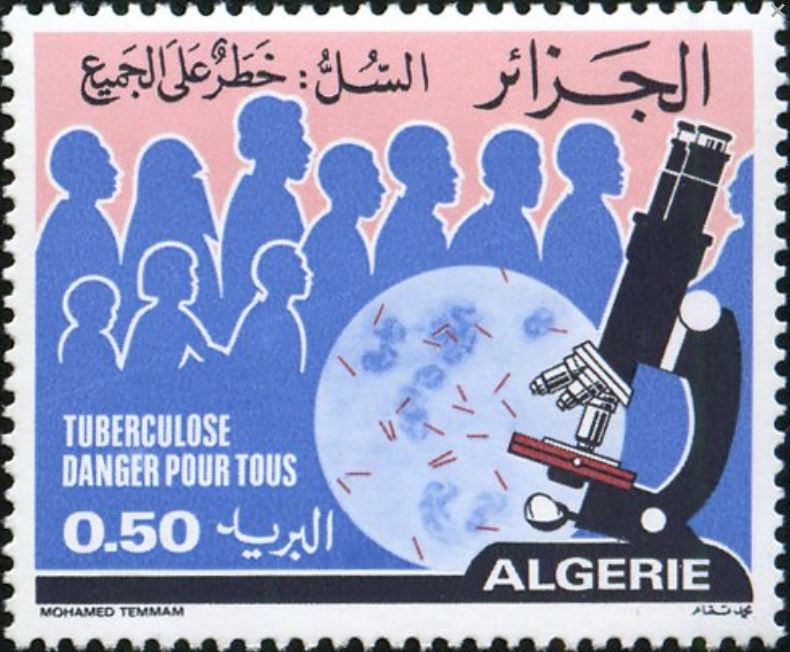
In other words, tuberculosis is a danger for everyone. And yet, it is very easy to recognize tuberculosis patients and treat them definitively, to protect young people against tuberculosis. To recognize tuberculosis, simply examine under a microscope the sputum of people who show signs of a respiratory system disease, that is to say, people who cough and spit up pus or sometimes blood for several days. This examination is carried out in all anti-tuberculosis dispensaries. Even if the patient lives far from an anti-tuberculosis clinic, he can obtain a sputum examination by going to any health center in the country.
When tuberculosis bacilli are found in the sputum, the patient can be treated with medications so powerful that we will no longer see bacilli in the sputum after 1 or 2 months of treatment. The treated patient is therefore no longer dangerous to those around him a few weeks after the start of his treatment. But to be cured permanently, the tuberculosis patient must be treated for a year.
This treatment can be followed at the dispensary: the patient then lives with his family and can return to work quickly, three to six months after the start of his treatment. To protect young people against tuberculosis and more particularly newborns and small children who are the most vulnerable, it is enough to vaccinate them with BCG.
This vaccination is compulsory and is practiced in all maternity wards, in all health centers, in all hospitals and in all PMIs. To avoid the risk of developing tuberculosis, all newborns must be vaccinated with BCG from birth. Provided we recognize tuberculosis patients, treat them, and provided we prevent the disease in very young children by vaccinating them with BCG, tomorrow, tuberculosis will no longer be a danger for anyone.
Tuberculosis is an acquired disease that can affect any individual if they become contagious. Tuberculosis is in fact an infectious and contagious disease caused by a microbe called Koch's bacillus.
This microbe is present in countless quantities in the lungs of patients with tuberculosis. Transmission of tuberculosis is human-to-human. The disease spreads from the sick subject, when the latter is not recognized and is not treated, to the healthy subjects in his entourage: his parents, his comrades, his children and all the people who approach him.
A tuberculosis patient who is not treated can contaminate on average five people per year around him by spreading – when he coughs or when he speaks – Koch bacilli which will remain suspended in the air and which can be inhaled by those around him.
It is these inhaled bacilli that will cause the disease in healthy people living in contact with untreated tuberculosis patients. But also accidentally, in the street, the markets, in any public place, any healthy person can be in contact with a tuberculosis patient who ignores himself, who coughs and spits; this is why tuberculosis can affect any of us.
In other words, tuberculosis is a danger for everyone. And yet, it is very easy to recognize tuberculosis patients and treat them definitively, to protect young people against tuberculosis. To recognize tuberculosis, simply examine under a microscope the sputum of people who show signs of a respiratory system disease, that is to say, people who cough and spit up pus or sometimes blood for several days. This examination is carried out in all anti-tuberculosis dispensaries. Even if the patient lives far from an anti-tuberculosis clinic, he can obtain a sputum examination by going to any health center in the country.
When tuberculosis bacilli are found in the sputum, the patient can be treated with medications so powerful that we will no longer see bacilli in the sputum after 1 or 2 months of treatment. The treated patient is therefore no longer dangerous to those around him a few weeks after the start of his treatment. But to be cured permanently, the tuberculosis patient must be treated for a year.
This treatment can be followed at the dispensary: the patient then lives with his family and can return to work quickly, three to six months after the start of his treatment. To protect young people against tuberculosis and more particularly newborns and small children who are the most vulnerable, it is enough to vaccinate them with BCG.
This vaccination is compulsory and is practiced in all maternity wards, in all health centers, in all hospitals and in all PMIs. To avoid the risk of developing tuberculosis, all newborns must be vaccinated with BCG from birth. Provided we recognize tuberculosis patients, treat them, and provided we prevent the disease in very young children by vaccinating them with BCG, tomorrow, tuberculosis will no longer be a danger for anyone.