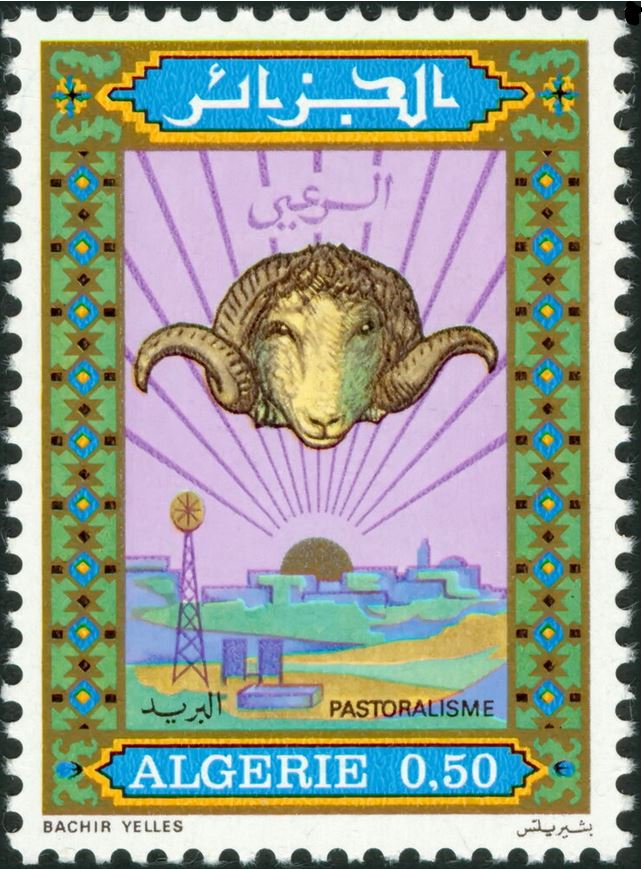
Pastoralism
After having radically transformed the living and working conditions of peasants in the agricultural regions of the country, the Agrarian Revolution, in its third phase, is aimed at the inhabitants of the steppe regions, those who live mainly from pastoral livestock farming.
The steppe is the immense area where, due to the aridity of the climate, no cultivation is possible without irrigation, but where permanent vegetation allows sheep farming. It is the “country of the sheep” which extends south of the isohyet of 400 mm of rain on average per year to the isohyet of 100 mm, to the south of which the Saharan desert begins.
Defined in this way, the steppe covers approximately 20 million hectares, of which 15 million would actually be usable for herds. It is estimated that at least 8 to 10 million sheep currently live on the steppe. This herd constitutes the main meat and wool production capacity of the country.
The herd is the main or sole resource of approximately 170,000 families, livestock breeding and the activities directly linked to it being the only important production in the steppe regions. The exploitation of man by man is, in the production conditions of pastoral livestock farming, constant and particularly serious: the herd is very unevenly distributed, with half of the population belonging to 5% of the breeders.
The large owners of herds have them looked after by shepherds who, not having the possibility of subsisting otherwise and not being able to defend themselves due to the isolation imposed by the living conditions in the steppe, cannot refuse the draconian conditions of the azela contract.
The misery of shepherds' families is further accentuated by the constraints specific to this work which imposes isolation and constant movement in search of pastures. In fact, these families have difficulty accessing social and cultural services, school and medical care. It is the injustice of these social relations that the Agrarian Revolution must put an end to in the steppe and in a definitive and radical manner.
The Agrarian Revolution in the steppe regions aims to radically transform production relations, the conditions of use of rangelands and the living conditions of breeders. It must put an end to the exploitation of shepherds and small breeders by large owners by applying the principle: “Pastures and livestock to those who make them productive through their work and who live directly from them”.
The Agrarian Revolution in pastoral environments is also a special development and development program to achieve better use of rangelands, reconstitute the soil and plant cover, and eliminate the current causes of pasture degradation.
The steppe is the immense area where, due to the aridity of the climate, no cultivation is possible without irrigation, but where permanent vegetation allows sheep farming. It is the “country of the sheep” which extends south of the isohyet of 400 mm of rain on average per year to the isohyet of 100 mm, to the south of which the Saharan desert begins.
Defined in this way, the steppe covers approximately 20 million hectares, of which 15 million would actually be usable for herds. It is estimated that at least 8 to 10 million sheep currently live on the steppe. This herd constitutes the main meat and wool production capacity of the country.
The herd is the main or sole resource of approximately 170,000 families, livestock breeding and the activities directly linked to it being the only important production in the steppe regions. The exploitation of man by man is, in the production conditions of pastoral livestock farming, constant and particularly serious: the herd is very unevenly distributed, with half of the population belonging to 5% of the breeders.
The large owners of herds have them looked after by shepherds who, not having the possibility of subsisting otherwise and not being able to defend themselves due to the isolation imposed by the living conditions in the steppe, cannot refuse the draconian conditions of the azela contract.
The misery of shepherds' families is further accentuated by the constraints specific to this work which imposes isolation and constant movement in search of pastures. In fact, these families have difficulty accessing social and cultural services, school and medical care. It is the injustice of these social relations that the Agrarian Revolution must put an end to in the steppe and in a definitive and radical manner.
The Agrarian Revolution in the steppe regions aims to radically transform production relations, the conditions of use of rangelands and the living conditions of breeders. It must put an end to the exploitation of shepherds and small breeders by large owners by applying the principle: “Pastures and livestock to those who make them productive through their work and who live directly from them”.
The Agrarian Revolution in pastoral environments is also a special development and development program to achieve better use of rangelands, reconstitute the soil and plant cover, and eliminate the current causes of pasture degradation.