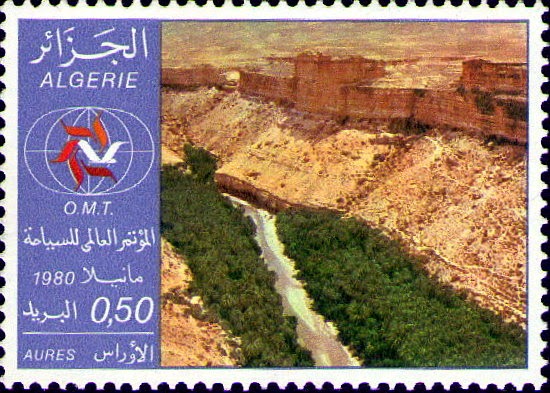
World Tourism Conference in Manila
It was to promote and energize the tourism industry that the World Tourism Organization was created in 1975. Thanks to its efforts, the UNWTO has continually worked for fruitful and harmonious cooperation between all States.
Its awareness-raising action during the latest work has motivated political leaders to strengthen their aid to the tourism sector in developing countries. The UNWTO conference, which took place in September 1980 in Manila, opened a new era on a new theme: social tourism.
From then on, tourism is no longer considered based on economic criteria, but social ones. The essential principles that emerge from national and international tourism policies are, on the one hand, the need to offer all the working masses the opportunity to spend holidays tending to balance physical and mental forces and, on the other hand, to establish a friendly dialogue by creating a flow of exchanges allowing a better knowledge of the human, natural and cultural resources of the world.
Aware of the importance of tourism as a factor of international exchanges and bonds of friendship between peoples, Algeria has always strived to develop its atavistic traditions of welcome and hospitality. With its 2,381,741 km2, it offers modern hotel infrastructure and rich and endearing sites.
From the Mediterranean to the dunes of the Sahara, the landscapes present such contrasts that they would seem to belong to different countries if they were not all bathed in the same African light. Departing from the white capital located at the bottom of a gulf comparable to an immense amphitheater, it is Algiers with its proud plain, the riches of its land and its self-managed domains which border the shores of the gentlest seas on the globe; then come the Atlas Mountains covered with pines, crowned with cedars, sometimes white with snow which defend the treasures of agriculture against the encroachments of the desert.
These are the impressive canyons of the Aurès, bastion of the Revolution, with their inhabitants living in curious villages clinging to the cliff of the “balcony of Rhoufi” which watch over a smiling valley… and over the archaeological remains of the Roman towns of Timgad and Lambèse. Further south, the Oases, including that of El Oued, “city of a thousand domes” which presents architectural originality, famous for its palm groves and its golden dunes.
Then, 2,000 km from Algiers, in the extraordinary landscapes of Tassili N'Ajjer, the artistic center of a gigantic open-air museum where strange paintings evoke the life of civilizations from the time when the Sahara was populated, humid and fertile. In addition to its natural potential, Algeria also has archaeological remains that bear witness to a very rich history but also a people steeped in Arab-Islamic civilization who have kept their culture and hospitable tradition.
Its awareness-raising action during the latest work has motivated political leaders to strengthen their aid to the tourism sector in developing countries. The UNWTO conference, which took place in September 1980 in Manila, opened a new era on a new theme: social tourism.
From then on, tourism is no longer considered based on economic criteria, but social ones. The essential principles that emerge from national and international tourism policies are, on the one hand, the need to offer all the working masses the opportunity to spend holidays tending to balance physical and mental forces and, on the other hand, to establish a friendly dialogue by creating a flow of exchanges allowing a better knowledge of the human, natural and cultural resources of the world.
Aware of the importance of tourism as a factor of international exchanges and bonds of friendship between peoples, Algeria has always strived to develop its atavistic traditions of welcome and hospitality. With its 2,381,741 km2, it offers modern hotel infrastructure and rich and endearing sites.
From the Mediterranean to the dunes of the Sahara, the landscapes present such contrasts that they would seem to belong to different countries if they were not all bathed in the same African light. Departing from the white capital located at the bottom of a gulf comparable to an immense amphitheater, it is Algiers with its proud plain, the riches of its land and its self-managed domains which border the shores of the gentlest seas on the globe; then come the Atlas Mountains covered with pines, crowned with cedars, sometimes white with snow which defend the treasures of agriculture against the encroachments of the desert.
These are the impressive canyons of the Aurès, bastion of the Revolution, with their inhabitants living in curious villages clinging to the cliff of the “balcony of Rhoufi” which watch over a smiling valley… and over the archaeological remains of the Roman towns of Timgad and Lambèse. Further south, the Oases, including that of El Oued, “city of a thousand domes” which presents architectural originality, famous for its palm groves and its golden dunes.
Then, 2,000 km from Algiers, in the extraordinary landscapes of Tassili N'Ajjer, the artistic center of a gigantic open-air museum where strange paintings evoke the life of civilizations from the time when the Sahara was populated, humid and fertile. In addition to its natural potential, Algeria also has archaeological remains that bear witness to a very rich history but also a people steeped in Arab-Islamic civilization who have kept their culture and hospitable tradition.